



 India
India

RELATED POSTS
India on Saturday firmly rejected claims emerging from the newly released Epstein Files that make a reference to Prime Minister Narendra Modi and his 2017 state visit to Israel, calling the mention “trashy ruminations of a convicted criminal” and unworthy of any serious consideration.
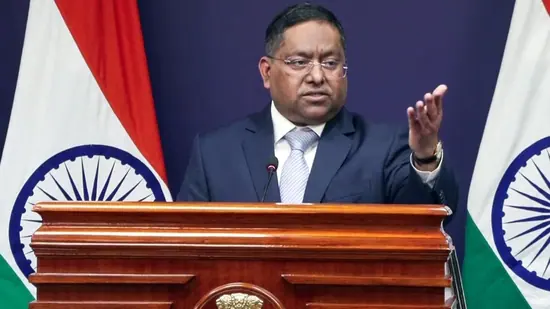
In a sharply worded statement, the Ministry of External Affairs (MEA) said that apart from the established fact of Prime Minister Modi’s official visit to Israel in July 2017, all other suggestions contained in the email are baseless and deserve to be dismissed with “utmost contempt.”
“We have seen reports of an email message from the so-called Epstein files that has a reference to the Prime Minister and his visit to Israel. Beyond the fact of the Prime Minister’s official visit to Israel in July 2017, the rest of the allusions in the email are little more than trashy ruminations by a convicted criminal, which deserve to be dismissed with the utmost contempt,” MEA spokesperson Randhir Jaiswal said.
The reference surfaced as part of a fresh tranche of documents released in the United States under a congressional mandate requiring the disclosure of all files linked to disgraced financier Jeffrey Epstein, who was convicted of sex offences and later died in custody in 2019. The documents include emails, court filings, videos and images collected over years as part of federal investigations into Epstein’s network.
The mention of Prime Minister Modi reportedly appears in an email within the files, sparking online speculation and political chatter. However, Indian officials moved quickly to shut down the narrative, stressing that the claim carries no credibility and should not be linked to India’s leadership or diplomatic engagements.
Prime Minister Modi’s 2017 visit to Israel was a landmark moment in India-Israel relations, marking the first-ever visit by an Indian prime minister to the country. The trip focused on strengthening cooperation in defence, agriculture, water management, innovation and counter-terrorism, and was widely covered and documented as a formal state visit.
The latest batch of Epstein Files was announced by US Deputy Attorney General Todd Blanche, who said the release marked the final set of disclosures planned by the Donald Trump administration under the transparency law passed by Congress. According to Blanche, the cache includes more than three million pages of documents, 2,000 videos and around 180,000 images.
Many of the documents remain heavily redacted to protect victims and ongoing investigations, a move Blanche said was in line with legal provisions. In some cases, entire documents were blacked out except for a single page.
The release comes weeks after the December 19 deadline mandated by Congress, which passed the bipartisan law despite months of resistance from the Trump administration. While the disclosures have reignited debates around Epstein’s global connections, governments and public figures named in unverified or speculative references have increasingly pushed back against what they describe as misleading or sensational interpretations.
India’s response signals a clear attempt to prevent unfounded allegations from gaining traction and to draw a firm line between official diplomatic history and what it calls discredited, contemptible speculation.





 English
 Gujarati
 Hindi
Hindi Kannada
 Malayalam
 Marathi
 Punjabi
 Tamil
Tamil Telugu