
 India
India

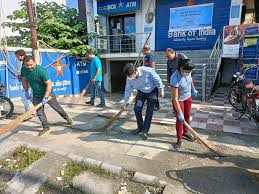
A ₹1,000 crore initiative focused on making India’s hill cities cleaner and more resilient will be rolled out in January under Swachh Bharat Mission (SBM) 2.0, senior officials from the Union Ministry of Housing and Urban Affairs (MoHUA) said on Tuesday. The programme marks a significant shift in urban sanitation and water management strategy, moving away from one-size-fits-all models designed for the plains toward decentralised, locally adapted solutions for difficult terrain.
Announcing the plan at a preparatory workshop in New Delhi, MoHUA secretary Srinivas K said the mission would specifically address the unique challenges faced by hill towns, including fragile ecosystems, limited accessibility and extreme climatic conditions. The workshop was attended by officials from 12 Himalayan and northeastern states, along with representatives from five hill cities in West Bengal.
Roopa Mishra, joint secretary at MoHUA, said states have been asked to develop their own implementation templates under the mission, customised to local geography, climate and administrative capacity. “These templates must be scalable, implementable and replicable within their regions,” she said, stressing that local ownership would be key to the programme’s success.
Senior officials acknowledged that earlier sanitation and waste management projects in hill cities often failed because they relied on centralised, capital-intensive technologies. Many solid waste processing plants and treatment facilities became non-functional due to poor road access, a lack of trained local manpower and technologies that could not operate reliably in sub-zero temperatures.
The new framework under SBM 2.0 seeks to institutionalise decentralisation by promoting small, modular systems that can be operated, repaired and managed locally. Officials said such systems have proven more resilient in high-altitude and remote settings than large “mega” facilities.
Another challenge highlighted during the workshop was the sharp rise in waste generation during peak tourist seasons. Modern packaging waste, officials noted, places disproportionate pressure on mountain ecosystems with limited recycling capacity. States have been encouraged to document and share successful local models to enable peer learning.
States are expected to submit their proposals by the end of January. The initiative will be supported by additional funding and aims to close long-standing implementation gaps, even as concerns remain over the underutilisation of SBM 2.0 funds by states in the mission’s final year.

 English
 Gujarati
 Hindi
Hindi Kannada
 Malayalam
 Marathi
 Punjabi
 Tamil
Tamil Telugu