




 India
India

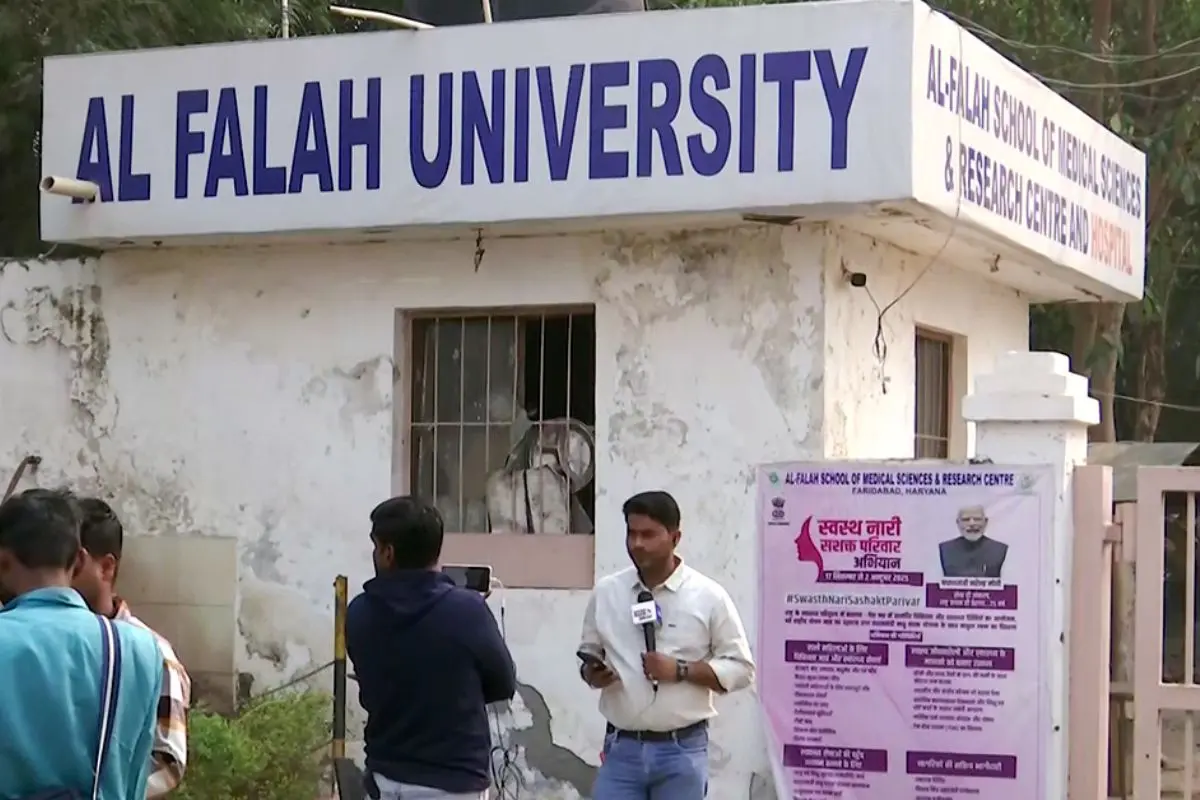
The National Medical Commission (NMC), India’s top medical education regulator, is keeping a close watch on the ongoing probe into the Delhi car blast and the recovery of ammonium nitrate, explosives, and firearms in Faridabad. Al Falah Medical College, which operates under Al Falah University in Faridabad, has emerged as a key point of focus in the investigation, officials confirmed on Wednesday.
According to investigators, Umar Un Nabi, a faculty member of Al Falah Medical College, was reportedly driving the car that exploded in Delhi. Further, Room 13 in Building 17 of the college campus has become the centre of attention, as it was allegedly used by one of the suspects, Muzammil Ahmad Ganaia from Pulwama, Jammu and Kashmir. Police believe the room served as a hub for planning logistics and transportation routes for ammonium nitrate, potentially meant for multiple explosions.
Officials said that while the NMC has not yet issued any communication to the college, it will take appropriate regulatory action once it receives findings from the investigating agencies. “The matter is currently under investigation. As the medical regulatory authority, the NMC will take appropriate action in accordance with statutory regulations once the findings of the investigating agencies are received,” an NMC official said on condition of anonymity.
Al Falah University’s Vice Chancellor, Bhupinder Kaur, maintained that the institution has no direct link to the accused doctors beyond their official employment. She clarified that no chemicals or explosives such as ammonium nitrate are stored within the campus and added that the university is fully cooperating with security agencies. The medical college, established under Al Falah University, received approval from NMC to admit its first batch of MBBS students in 2019.
Meanwhile, questions have arisen over the university’s accreditation status. National Assessment and Accreditation Council (NAAC) officials pointed out that the university’s claims on its website about NAAC accreditation are misleading. They clarified that Al Falah’s engineering college received an ‘A’ grade in 2013 and its teacher education school in 2011—both of which have long since lapsed, as accreditation is valid only for five years.
“We will write to the university asking them to correct the information on their website, as it violates our norms. We will also inform the University Grants Commission (UGC) to consider further action,” a NAAC official said. However, neither the UGC nor Al Falah University responded to queries regarding the expired accreditation status.
As the investigation continues, the role of faculty members and the use of university premises remain under the scanner, while regulatory bodies prepare to take corrective action if any institutional violations are found.




 English
 Gujarati
 Hindi
Hindi Kannada
 Malayalam
 Marathi
 Punjabi
 Tamil
Tamil Telugu