

 India
India

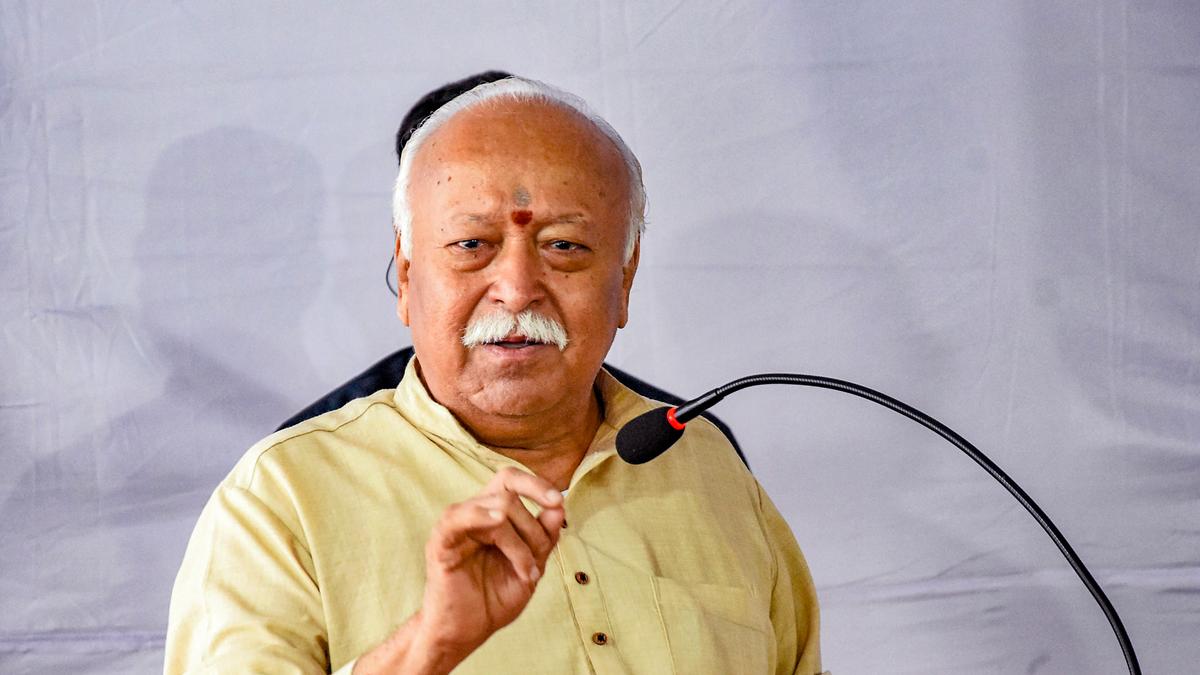
Rashtriya Swayamsevak Sangh (RSS) chief Mohan Bhagwat addressed questions on the organisation’s legal status, registration, and tax exemptions during an event in Bengaluru. Responding to the debate over why RSS is not formally registered, Bhagwat drew a comparison with Hindu dharma, saying, “Many things are not registered. Even Hindu dharma is not registered.”
He cited the three occasions when the RSS faced bans, arguing that these reflected government recognition of its presence. “If we were not there, whom did they ban?” he said, pointing out the organisation’s long history and continued relevance. Reflecting on its founding in 1925, Bhagwat noted that registering with the British government at the time was unnecessary, and after India’s independence in 1947, registration was not made compulsory.
On the tax front, Bhagwat highlighted that the income tax department and courts have recognised RSS as a body of individuals, granting it tax exemption.
Bhagwat also emphasised the RSS’s mission, stating that the organisation is focused on organising Hindu society rather than seeking political power. “When an organised force is raised in the form of Sangh, it doesn’t want power or prominence. It wants to serve and organise society for the glory of Bharat Mata,” he said. He described Hindus as being responsible for the nation and reiterated the RSS’s belief that the core culture of India is rooted in Hindu traditions, while also acknowledging the diverse religious communities in the country.
Speaking on the organisation’s journey, Bhagwat said, “There were bans, opposition, criticism, and even violence against Swayamsevaks. Yet, they give their all without expecting anything in return.” He stressed that the RSS is an organisation “of” society, not “in” society, with the goal of individual and collective development to strengthen the nation.
Delivering a lecture titled ‘100 Years of Sangh Journey: New Horizons,’ Bhagwat concluded by linking the progress of Sanatan Dharma with the progress of India, framing the organisation’s century-long mission as a service to the nation rather than a pursuit of power.




 English
 Gujarati
 Hindi
Hindi Kannada
 Malayalam
 Marathi
 Punjabi
 Tamil
Tamil Telugu