





 India
India

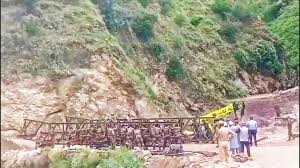
Braving incessant rains and challenging terrain, the Indian Army on Tuesday successfully constructed a Bailey bridge over the Jangalwar stream along National Highway-244, restoring critical connectivity to Doda and Kishtwar districts in Jammu and Kashmir. This marks the second temporary bridge erected by the Army following record rainfall that wreaked havoc across the region, leaving behind a trail of destruction and loss of life.
In a statement shared by the Defence Public Relations Officer (PRO) in Jammu on X, the Army highlighted the joint efforts of engineer troops from the Northern Command, White Knight Corps, and local civil administration. The combined operation ensured that the Bailey bridge was built in record time, despite adversities posed by rough terrain and ongoing rainfall.
“The bridge will be opened for vehicular traffic after all necessary validations in coordination with civil administration,” the PRO stated. The Army’s swift action comes in the wake of massive floods that submerged villages, destroyed homes and bridges, and disrupted vital road links. NH-244, considered the lifeline to Doda and Kishtwar, had been washed away near Thatri, cutting off access to multiple communities.
Earlier, Army engineers carried out mobilization of bridging stores and began full-scale construction over Jangalwar Nallah, closely coordinating with civil authorities. Troops provided area security while J&K Police managed traffic to ensure smooth progress. In a similar operation on August 29, Army engineers erected a 110-foot Bailey bridge over the flood-hit Tawi bridge in Jammu city, reopening a key vehicular route.
The Ramban district administration has also requested Army assistance to erect a temporary Bailey bridge at Batti after flash floods in the Chenab river damaged the existing bridge, affecting connectivity to Gool sub-division and strategic national projects.
Since August 14, cloudbursts, landslides, and flash floods in Kishtwar, Kathua, Reasi, and Ramban districts have claimed over 130 lives, injured more than 120 people, and left 33 missing. The unprecedented rainfall on August 26-27 also caused extensive flooding in Jammu plains, damaging public and private infrastructure. The Army’s swift deployment of engineering units has been crucial in restoring essential transportation links and providing relief to affected communities.






 English
 Gujarati
 Hindi
Hindi Kannada
 Malayalam
 Marathi
 Punjabi
 Tamil
Tamil Telugu