

 India
India

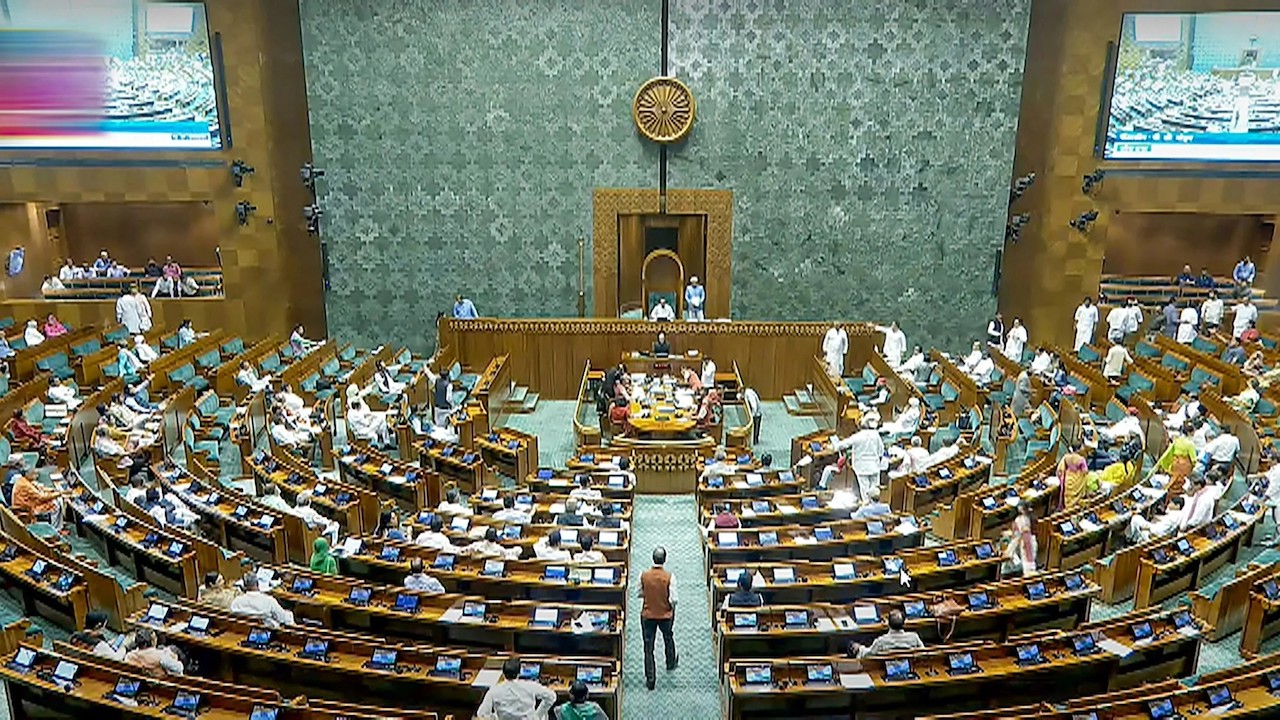

The central government is set to introduce three significant bills in the Lok Sabha on Wednesday, August 20, aimed at establishing a clear legal framework for the removal of the prime minister, union ministers, chief ministers, and ministers in states and Union Territories (UTs) if they are arrested on serious criminal charges.
According to the official list of business circulated by the parliamentary affairs ministry to the Lok Sabha secretariat, the bills to be tabled are: the Constitution (One Hundred and Thirtieth Amendment) Bill, 2025, the Government of Union Territories (Amendment) Bill, 2025, and the Jammu and Kashmir Reorganisation (Amendment) Bill, 2025. The government, however, clarified that there is no immediate move to restore statehood to Jammu and Kashmir.
Union home minister Amit Shah is expected to move a motion referring these bills to a joint committee of Parliament, PTI reported. The move is anticipated to draw stiff opposition as the proposals do not require a conviction but are based solely on arrests and custody extending beyond 30 consecutive days.
The proposed constitutional amendment seeks to alter Articles 75, 164 and 239AA of the Constitution. It specifies that if the prime minister, union ministers, or ministers of Delhi NCT are arrested and remain in custody for 30 days for offences carrying a minimum punishment of five years, they will be required to resign on the 31st day or face automatic removal. Similar provisions are proposed for chief ministers and ministers of other states and UTs.
Recent high-profile cases, including the arrests of Delhi chief minister Arvind Kejriwal and former Jharkhand chief minister Hemant Soren on corruption allegations, have highlighted gaps in existing law, where no provision currently mandates removal of such leaders while under arrest. The “Objects and Reasons” section of the bills argues that amendments to the 1963 Union Territories Act and Section 54 of the Jammu and Kashmir Reorganisation Act are essential to close this legal loophole.
The constitutional amendment requires a special majority of at least two-thirds of the total strength of Parliament, a threshold the BJP-led NDA does not currently possess on its own. However, the bills concerning UTs, including Jammu and Kashmir, can be passed with a simple majority.
The introduction of these bills comes amid heightened tensions in Parliament, with the Opposition already protesting against alleged voter roll irregularities in Bihar and accusing the government of undermining democratic norms. The proposed legislation is therefore expected to spark fierce debate both inside and outside the House.


 English
 Gujarati
 Hindi
Hindi Kannada
 Malayalam
 Marathi
 Punjabi
 Tamil
Tamil Telugu