




 India
India

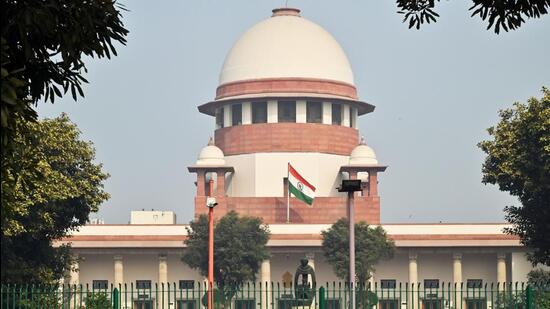
The Supreme Court of India has issued a landmark judgment calling for urgent reforms in prison infrastructure and policies to protect the rights of incarcerated persons with disabilities. In a strongly worded verdict, the apex court emphasized that denial of basic facilities to disabled prisoners is a violation of their fundamental rights under Articles 14 and 21 of the Constitution and breaches provisions of the Rights of Persons with Disabilities (RPwD) Act, 2016.
A bench comprising Justices JB Pardiwala and R Mahadevan directed that prison authorities must identify disabled inmates at the time of admission and ensure they receive information about prison life in accessible formats such as sign language or Braille. The court also expressed concern that while the National Crime Records Bureau (NCRB) maintains data on the caste, gender, and religion of inmates, it does not collect disability-related information—an omission that must be corrected.
The verdict was delivered in response to a petition filed by L. Muruganantham, a man suffering from Becker’s Muscular Dystrophy, who spent 11 days in a Tamil Nadu prison in 2020 without access to facilities necessary for his condition. While the petitioner initially sought an enhancement of the ₹5 lakh compensation granted by the Madras High Court, the Supreme Court used the case to address systemic failures affecting disabled prisoners nationwide.
Justice Mahadevan, writing for the bench, observed, “Lawful incarceration does not suspend the right to human dignity. The punishment lies only in the restriction of liberty—not in the denial of humane treatment or reasonable accommodations.”
The court ordered an accessibility audit of all prisons in Tamil Nadu within six months and mandated training and sensitisation of prison staff. The Director General of Prisons has been asked to submit a compliance report to the State Human Rights Commission (SHRC) within three months.
Highlighting the lack of accessible infrastructure in most Indian prisons, the court noted that individuals with mobility, sensory, or cognitive impairments struggle to access basic facilities like toilets, dining areas, libraries, and health clinics. Without trained caregivers or appropriate custodial policies, they are often denied help with essential daily tasks like bathing, eating, or dressing.
“This is not just administrative apathy but a fundamental rights violation,” the bench noted, citing the RPwD Act and Article 15 of the UN Convention on the Rights of Persons with Disabilities (UNCRPD), which India has ratified. The court underscored that the state, as the custodian of prisoners, must act with compassion—not indifference.

“All prison premises must now be equipped with wheelchair-friendly spaces, accessible toilets, ramps, and sensory-safe environments,” the judgment declared. It also called for the establishment of dedicated areas within prisons for physiotherapy, psychotherapy, and other therapeutic services. Additionally, prison authorities must collaborate with public healthcare systems to ensure uninterrupted medical care and access to assistive devices like wheelchairs, hearing aids, or crutches.
“Financial or logistical constraints cannot be used as excuses,” the court emphasized. “The state has a constitutional and moral obligation to uphold the rights of prisoners with disabilities.”
The judgment concluded with a powerful reminder: the structural and social discrimination faced by disabled persons outside prison walls only intensifies once they are incarcerated. The court called for systemic transformation rooted in constitutional values of dignity, equality, and inclusion.




 English
 Gujarati
 Hindi
Hindi Kannada
 Malayalam
 Marathi
 Punjabi
 Tamil
Tamil Telugu