


 India
India

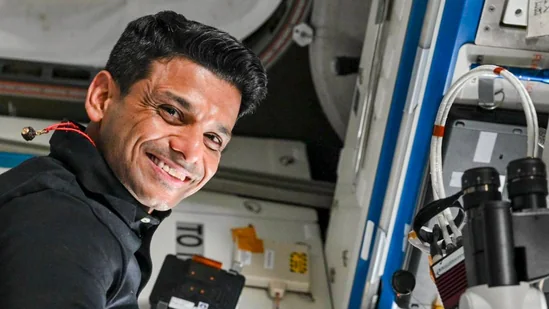
Indian astronaut Shubhanshu Shukla, currently stationed aboard the International Space Station (ISS) as part of the Axiom-4 mission, held a direct conversation with ISRO Chairman V Narayanan on July 6. During the call, Shukla praised the efforts of the Indian Space Research Organisation (ISRO) in facilitating his safe travel to space and ensuring mission success.
The high-level discussion was attended by top ISRO officials, including Dr Unnikrishnan Nair, Director of the Vikram Sarabhai Space Centre (VSSC) and Chairman of the Program Management Council for the Human Space Programme. The conversation focused on both personal and scientific aspects of Shukla’s stay on the ISS.
Narayanan inquired about Shukla’s well-being and the progress of the scientific experiments being conducted aboard the space station. Shukla shared updates on the range of experiments, including their objectives and the challenges faced in a microgravity environment. He emphasized the potential breakthroughs these experiments could offer in space medicine, material science, and life sciences.
The ISRO chief underlined the significance of documenting the findings and experiences once Shukla returns to Earth. According to Narayanan, these insights will be crucial in enhancing India’s Gaganyaan human spaceflight programme, helping refine training modules and mission planning for future Indian astronauts.
Earlier, on July 4, Shukla had interacted with school students via Ham Radio, where he candidly spoke about life on the ISS. When asked about the most challenging task in space, he remarked, “The most difficult task is to go to sleep.” He explained that the excitement of being in space and the drive to contribute more can often override the need for rest, though it remains essential for performing scientific duties effectively.
Shukla is slated for a two-week stay on the ISS, during which he will conduct seven indigenous Indian experiments and five scientific studies. Reflecting on his launch experience, he called the rocket journey “exhilarating,” adding that the increasing speed and acceleration during liftoff were particularly memorable.
His mission marks another major milestone for India’s growing presence in international human spaceflight and scientific collaboration.



 English
 Gujarati
 Hindi
Hindi Kannada
 Malayalam
 Marathi
 Punjabi
 Tamil
Tamil Telugu