

 India
India

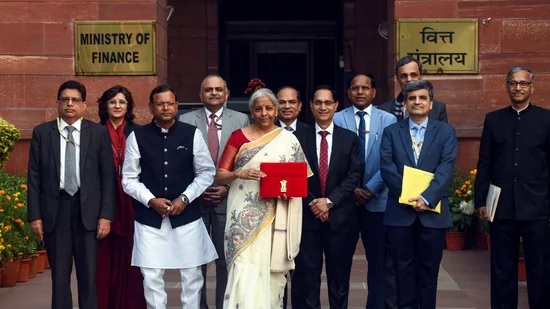
India’s Union Budget is far more than a statement of numbers. Presented annually ahead of the new financial year, it sets the tone for economic growth, welfare priorities, taxation, and governance. From policymakers and investors to ordinary citizens, the Budget is closely watched not just within India but across global markets.
As Finance Minister Nirmala Sitharaman gets ready to present the Union Budget 2026 in Parliament on February 1, continuing a tradition followed over recent years, here are five interesting facts that reveal how the Budget has evolved—blending history, symbolism, and reform.
Why the timing of Budget presentation changed
For decades after Independence, India followed the colonial-era practice of presenting the Union Budget at 5 PM. The reason was logistical rather than ceremonial. Since Britain was several hours behind India, an evening presentation ensured that financial announcements could reach London on the same working day.
This tradition was broken in 1999, when then Finance Minister Yashwant Sinha, under Atal Bihari Vajpayee’s NDA government, shifted the presentation to 11 AM, aligning it better with Indian administrative and market needs.
Another major reform came in 2017, when the Narendra Modi government advanced the Budget date from the last working day of February to February 1. The change was aimed at allowing ministries more time to implement policies before the new fiscal year begins on April 1, reducing uncertainty for businesses and state governments.
Who presented India’s first Budget?

The first-ever Union Budget of India was presented on April 7, 1860, during British rule. It was delivered by James Wilson, India’s first finance member, at a time when the colonial administration was recovering from the 1857 uprising and transitioning from East India Company control to Crown rule.
After Independence, India’s first Budget was presented on November 26, 1947, by Finance Minister R.K. Shanmukham Chetty. Coming just months after Partition, the interim Budget addressed an economy grappling with displacement, communal violence, and fiscal uncertainty, ahead of the first full financial year of independent India starting April 1, 1948.
The halwa ceremony and the secrecy of the Budget
One of the most symbolic traditions associated with the Union Budget is the halwa ceremony, usually held around 10 days before Budget Day at the North Block. The ceremony marks the start of printing Budget documents.
Once the halwa is served, officials involved in preparing the Budget are “locked in” to prevent leaks. During this period, the finance ministry effectively becomes a sealed zone, ensuring confidentiality until the Budget is tabled in Parliament.
From briefcase to bahikhata
For years, finance ministers carried the Budget documents in a red briefcase. In 2019, Nirmala Sitharaman replaced it with a traditional bahikhata, symbolising a departure from colonial imagery and an embrace of Indian heritage.
In 2021, the Budget went completely paperless, presented on a tablet carried in a bahikhata-style cover—blending tradition with Digital India’s push for modern governance.
The longest Budget speech on record
Nirmala Sitharaman also holds the record for delivering the longest Budget speech in India’s history. In 2020, her address lasted 2 hours and 42 minutes, surpassing her own 2019 record.
The speech introduced major reforms, including a new income tax regime and the announcement of the historic LIC IPO. Midway, Sitharaman felt unwell, and Lok Sabha Speaker Om Birla read out the final two pages—marking a rare moment in parliamentary history.

 English
 Gujarati
 Hindi
Hindi Kannada
 Malayalam
 Marathi
 Punjabi
 Tamil
Tamil Telugu