

 India
India

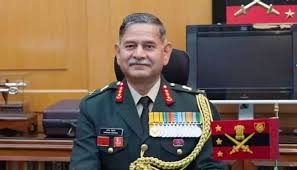
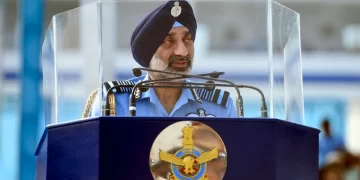
Indian Army chief General Upendra Dwivedi has disclosed new details about Operation Sindoor, stating that India was fully prepared for a possible ground offensive if tensions with Pakistan had escalated following the deadly Pahalgam terror attack in Jammu and Kashmir.
Speaking at a public event amid renewed security concerns along the Line of Control (LoC), the Army chief said India carried out “major mobilisation” during the operation launched in May 2025. His remarks underline the level of military preparedness maintained by New Delhi during the four-day military standoff with Pakistan that followed precision strikes on terror infrastructure.
General Dwivedi noted that while he could not share operational specifics, the situation in Jammu and Kashmir remains “sensitive but firmly under control.” His comments come days after multiple drone sightings were reported along the LoC, raising fresh concerns about cross-border surveillance and infiltration attempts.
Addressing the Army’s annual press conference, the chief confirmed that Operation Sindoor is still underway, nearly eight months after it was launched. “As far as our eyes and ears are concerned, since Operation Sindoor is underway, they will remain fully alert,” he said, emphasising that all necessary counter-terror measures are firmly in place.
Responding to questions on terror infrastructure in Pakistan-occupied Kashmir (PoK), General Dwivedi said Indian intelligence assessments indicate that nearly eight terror camps remain active. Of these, two are believed to be located opposite the International Border, while six are positioned across the LoC. He added that some level of presence or training activity continues in these camps.
The Army chief issued a clear warning, stating that any renewed hostile activity would invite a decisive response from India.
Operation Sindoor was launched after the April 22, 2025 terror attack in Pahalgam, in which 26 tourists were killed, marking the deadliest strike in the Kashmir Valley since the 2019 Pulwama attack. India blamed The Resistance Front, an offshoot of Pakistan-based Lashkar-e-Taiba, for the massacre. While both TRF and Pakistan denied involvement, India carried out coordinated tri-services strikes targeting nine terror camps across Pakistan and PoK.

The operation triggered a brief but intense military standoff, marked by blackouts, air raid sirens, and heightened alert along the LoC and International Border.

 English
 Gujarati
 Hindi
Hindi Kannada
 Malayalam
 Marathi
 Punjabi
 Tamil
Tamil Telugu