


 India
India

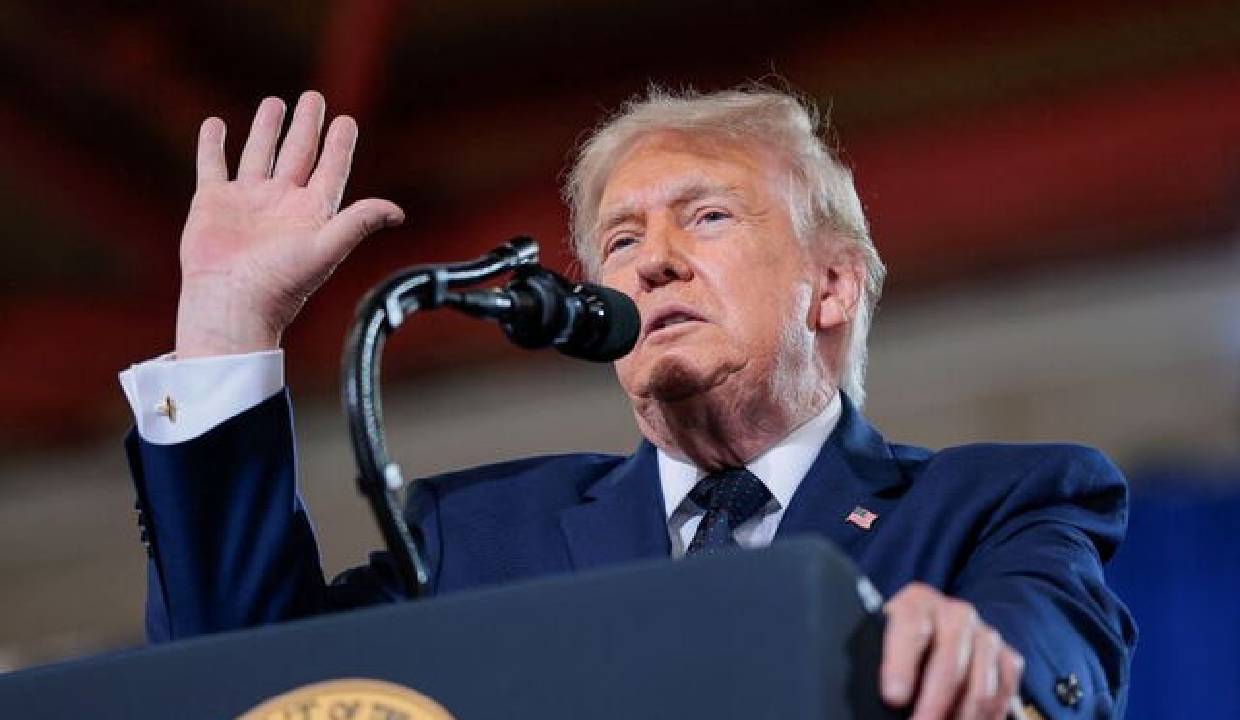

The United States is preparing to significantly scale back the military capabilities it makes available to NATO during a crisis, in a move that could reshape the alliance’s security structure and deepen concerns among European allies over Washington’s long-term commitment to the region.
According to reports citing German outlet Spiegel and Reuters, the Trump administration plans to reduce a range of military assets that have traditionally served as critical support for NATO operations. These include fighter jets, strategic bombers, warships, submarines, aerial refuelling aircraft, and reconnaissance drones — capabilities that have long underpinned the alliance’s military strength in Europe.
The proposed changes come at a sensitive time for NATO, as tensions continue to simmer within the alliance over burden-sharing, defence spending, and Washington’s increasingly vocal criticism of European partners.
US President Donald Trump has repeatedly accused NATO allies of failing to spend enough on defence and relying too heavily on American military power. His administration has argued that Europe must shoulder a larger share of its own security burden rather than depending on US military resources.
According to the Spiegel report, NATO officials were briefed on the proposed military cutbacks during a closed-door meeting in Brussels late last week by an envoy representing US Defense Secretary Pete Hegseth. The briefing reportedly outlined major reductions in the military assets Washington would make available to NATO in the event of a crisis.
Among the key changes under discussion, the US is expected to cut the number of strategic bombers it allocates to NATO by half. The number of fighter jets available for alliance operations could also be reduced by roughly one-third.
The US Navy may also reduce the number of destroyers assigned to NATO missions, while submarines may no longer be offered as part of alliance crisis-response capabilities.
In addition, European NATO members may be required to provide their own reconnaissance drones, as the US reportedly plans to sharply scale back the number of armed and surveillance drones it contributes.
The proposed reductions signal a strategic shift in NATO force planning, one that could place greater pressure on European countries to build up military capabilities that have historically depended on US support.
A NATO spokeswoman reportedly acknowledged that there had been an “over-reliance” on the United States in alliance force planning, adding that increased defence spending by Europe and Canada could allow military responsibilities to be reorganised.
Trump has also fueled concerns in Europe through repeated criticism of NATO’s collective defence framework. In recent months, he has questioned whether the United States should remain fully committed to the alliance’s mutual defence obligations and has warned that Washington may reconsider its role if allies do not increase their contributions.
The tensions have been compounded by Trump’s criticism of European allies during the Iran conflict, where he accused them of not doing enough to support efforts to reopen the Strait of Hormuz for global shipping.
Separately, Washington has already ordered the drawdown of around 5,000 troops from Germany over the next year, marking a significant change in America’s military footprint in Europe.
However, Trump has simultaneously announced that 5,000 additional US troops would be sent to Poland, framing the move as support for a key Eastern European ally following the election of Polish President Karol Nawrocki.
As of late 2025, the US had nearly 68,000 active-duty troops permanently stationed across Europe, supported by dozens of military bases and access sites spread across the continent.
The Pentagon has described the troop reshuffle as part of a broader review of America’s force posture in Europe based on operational requirements and strategic conditions.
With NATO expected to discuss further details during a force generation conference in early June, European allies now face growing pressure to prepare for a future in which US military backing may no longer be as extensive as it once was.


 English
 Gujarati
 Hindi
Hindi Kannada
 Malayalam
 Marathi
 Punjabi
 Tamil
Tamil Telugu