Former Bangladesh Prime Minister Sheikh Hasina’s son, Sajeeb Wazed Joy, has raised serious concerns about the security situation in Bangladesh, alleging that Pakistan’s intelligence agency, the Inter-Services Intelligence (ISI), is operating with significant influence in the country. Speaking at a press conference alongside his mother on Wednesday, Joy warned that recent developments in Bangladesh could have far-reaching implications for India and regional stability.
Joy claimed that the current administration in Bangladesh had released hundreds of individuals who had previously been arrested, convicted, and imprisoned during the Awami League government’s tenure. According to him, many of those released were linked to extremist activities and militant organizations.
“Pakistan’s ISI has an open hand in Bangladesh. Hundreds of militants we had arrested have been released. This is a problem for India and the world,” Joy said. He further alleged that groups once restricted by the previous government are now operating openly, creating an environment that could foster extremism.
Warning about the broader implications of these developments, Joy argued that Bangladesh could become a future source of international terrorism if corrective measures are not taken. He described the situation as a growing concern not only for Bangladesh but also for neighboring India and the wider global community.
Drawing a comparison with Pakistan, Joy claimed that India now faces security challenges on both its western and eastern borders. He alleged that foreign intelligence agencies, particularly Pakistan’s ISI, have gained substantial influence in Bangladesh, making the situation increasingly complex from a regional security perspective.
Joy also urged Indian media organizations to continue covering developments in Bangladesh and maintain international attention on the country’s political and security environment. He noted that geopolitical alliances can change rapidly, citing shifting relations between the United States and Pakistan as an example.
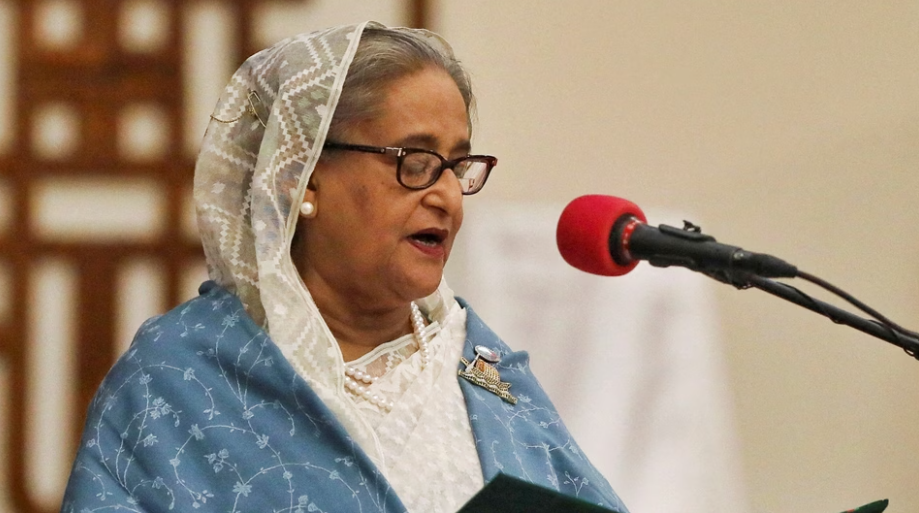
The press conference also featured an important announcement from Sheikh Hasina herself. The former Bangladeshi leader said she intends to return to Bangladesh in December, nearly two years after leaving the country following the political turmoil of 2024 that led to the collapse of her government.
Hasina stated that she was prepared to face imprisonment or even death upon her return, emphasizing that her decision was driven by a sense of responsibility toward the people of Bangladesh rather than a desire to regain power. She said the country’s citizens deserve security, prosperity, development, and peace.
The former prime minister described the events of July and August 2024, which culminated in her resignation and departure from the country, as a coordinated effort aimed at regime change rather than a spontaneous student-led movement. She argued that violence and unrest were carried out under the cover of student protests.
Reflecting on her time in exile, Hasina said she had remained emotionally connected to Bangladesh despite being forced to leave. She expressed concern over the country’s current direction and said she hoped to contribute to restoring stability and development upon her return.
Hasina also described India as a “great friend” of Bangladesh and thanked the Indian government for hosting her since August 2024. Joy praised New Delhi for providing his mother with security and respect, stating that she has been treated with the dignity accorded to a head of state during her stay in India.







 India
India






 English
 Gujarati
 Hindi
Hindi Kannada
 Malayalam
 Marathi
 Punjabi
 Tamil
Tamil Telugu