




 India


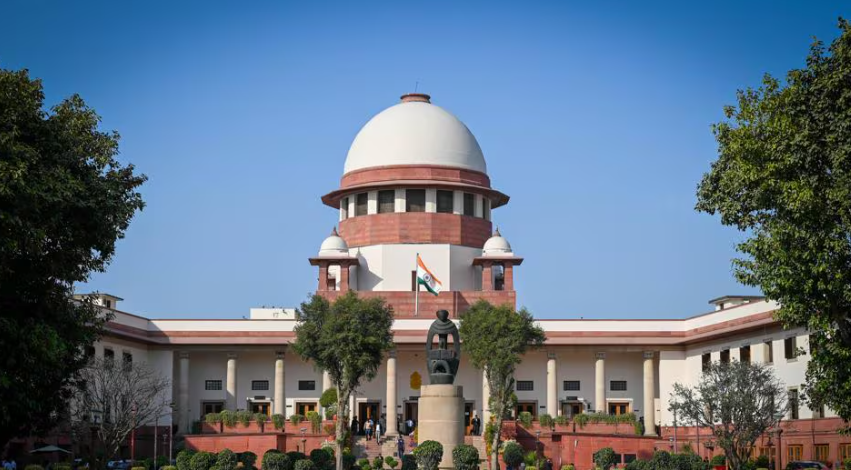
The Supreme Court on Monday issued notices to the Union government and the Chhattisgarh government over a petition challenging the constitutional validity of the state’s anti-conversion law. The court also directed that the matter be heard alongside pending challenges to similar legislation enacted in Uttar Pradesh and Rajasthan.
A bench comprising Chief Justice of India Surya Kant and Justices Joymalya Bagchi and V Mohana took up the plea filed by the Isai Adivasi Mahasabha, an organisation representing tribal Christians. The petition questions whether several provisions of the Chhattisgarh law infringe fundamental rights, particularly the freedom of religion guaranteed under Article 25 of the Constitution.
Passed by the Chhattisgarh Assembly in March, the legislation seeks to prevent religious conversions allegedly carried out through force, fraud, inducement or misrepresentation. It prescribes stringent penalties, including life imprisonment in cases involving mass conversion.
The law has drawn criticism from civil rights groups, which argue that such legislation can restrict individual religious freedom and potentially interfere with interfaith relationships and marriages.
Supreme Court Considers Whether to Hear the Matter
During the hearing, the bench noted that a similar challenge to the Chhattisgarh legislation was already pending before the state’s high court. The judges initially suggested that the petitioner pursue the matter there, offering to request an expedited hearing.
However, senior advocate Colin Gonsalves, appearing for the petitioner, argued that challenges to similar laws in other states were already pending before the Supreme Court. He maintained that a decision on those cases could determine the legal questions arising from the Chhattisgarh legislation as well.
Gonsalves also informed the bench that he was in contact with petitioners who had approached the Chhattisgarh High Court and that they believed the challenge should have been brought before the Supreme Court. He agreed to consult them about filing a transfer petition to bring the pending proceedings before the apex court.

The bench, however, clarified that it could not compel litigants who had approached the high court to transfer their cases to the Supreme Court.
Petition Raises Concerns Over Religious Freedom
The plea argues that the original framework of the Chhattisgarh law was limited to prohibiting conversions through force, fraud or allurement, without restricting voluntary changes of faith. It contends that the expanded definitions in the legislation could bring constitutionally protected religious expression within the scope of criminal law.
One provision under challenge defines a promise of a “better lifestyle” as a form of allurement. Another treats glorification of one religion over another as a prohibited inducement.
According to the petition, these formulations are broad enough to cover ordinary religious preaching, the explanation of religious doctrines, and humanitarian or charitable activities. The petitioner argues that such activities should not automatically be treated as unlawful inducements to convert.
The plea further questions the law’s exemption for a “reversion” to ancestral religion or faith, pointing out that the legislation does not clearly define what constitutes an ancestral religion.
Mandatory Public Declarations Under Scrutiny
Another major objection concerns the law’s requirement for advance declarations before conversion. Under the challenged provision, an applicant must disclose their name, existing religion and intended religion. These details are to be published on the competent authority’s website and displayed on notice boards at the tehsildar’s office, gram panchayat and local police station.
Failure to comply with the prescribed procedure renders the conversion illegal under the law.
The petition argues that mandatory disclosure exposes an intensely personal decision to public scrutiny and effectively makes the exercise of a fundamental right conditional on prior government notification.
It also challenges the requirement for a fresh declaration after conversion within 30 days, followed by a compulsory personal appearance within 21 days. Failure to complete the process can prevent the issuance of a conversion certificate and result in the conversion being treated as illegal and void.
Strict Penalties Also Challenged
The legislation provides for a minimum prison sentence of seven years, with punishment extending to 10 years when the person converting is a minor, a woman, or belongs to the Other Backward Classes, Scheduled Castes or Scheduled Tribes.
The law also provides for life imprisonment in cases of mass conversion.
The Supreme Court’s decision to issue notices marks a further step in the legal scrutiny of state anti-conversion laws. The central question raised by the petition is whether measures intended to prevent forced or fraudulent conversions impose restrictions that extend beyond those objectives and infringe the constitutional protections of religious freedom, privacy and personal autonomy.
The court has not yet ruled on the constitutional validity of the Chhattisgarh legislation. The Union and state governments will now have an opportunity to respond to the challenge as the matter proceeds alongside related cases concerning similar laws in other states.






 English
 Gujarati
 Hindi
 Kannada
 Malayalam
 Marathi
 Punjabi
 Tamil
 Telugu