




 India


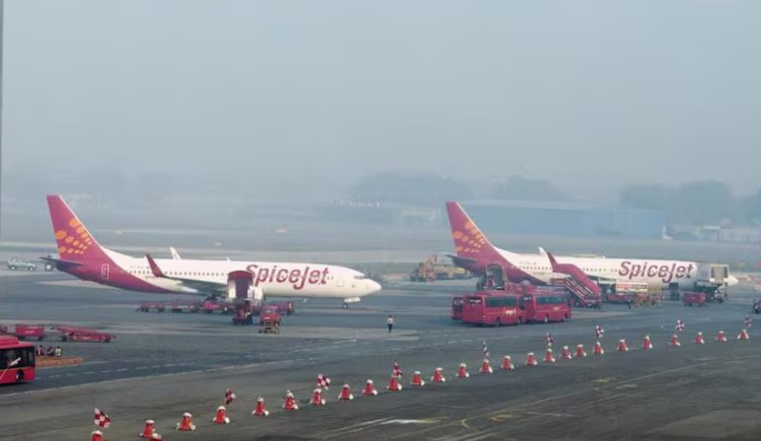
India’s cash-strapped airline SpiceJet is facing mounting financial and operational challenges, with widespread flight cancellations, prolonged delays and passenger complaints raising fresh questions about the carrier’s ability to maintain scheduled operations. Social media platforms have been flooded with complaints from frustrated travellers reporting last-minute cancellations, inadequate communication from the airline and difficulties obtaining refunds.
The crisis intensified on November 12 after Dubai Airports suspended SpiceJet’s check-in services over outstanding payments of approximately 14 million UAE dirhams, equivalent to around ₹35.85 crore. The development disrupted the airline’s international operations and forced it to cancel four flights scheduled to operate from Dubai to Amritsar, Jaipur, Mumbai and Delhi. Other departures from Dubai were also cancelled until the issue was resolved.
A SpiceJet spokesperson said the airline was working with the concerned authorities to resolve the matter. The airline maintained that it had adequate bank guarantee cover in place and was making efforts to settle the issue at the earliest.
The disruption has added to growing concerns about the airline’s financial position and its ability to honour flight schedules.
Passengers report last-minute cancellations
Several passengers have taken to social media platform X to highlight their experiences with SpiceJet’s services.
On November 5, a Bengaluru-bound passenger arriving at Delhi airport discovered that her flight had been cancelled at the last moment. According to her post, a help desk representative attributed the cancellation to a shortage of aircraft and the airline’s financial difficulties.
In another complaint posted on November 11, a passenger alleged that her father-in-law’s Kolkata-to-Mumbai flight had been cancelled on November 6 without any prior notification through email or WhatsApp. She questioned the airline’s accountability, pointing to the distress caused by sudden cancellations, prolonged delays, refund-related difficulties and alleged poor treatment of passengers at airports.

These complaints have brought renewed attention to the challenges faced by travellers when airlines fail to provide timely information or adequate assistance following disruptions.
Shrinking fleet and declining market share
SpiceJet’s operational difficulties are reflected in its declining fleet strength and rapidly shrinking market share.
According to a Mint report published on November 12, the airline’s fleet had reduced to approximately 12 aircraft, of which only nine were operational. Meanwhile, its domestic aviation market share dropped sharply to 0.6% in September, compared with 3.9% in January.
The decline is also visible in passenger numbers. SpiceJet carried approximately 73,000 domestic passengers in September, compared with nearly 5.92 lakh passengers in January.
Data from the Directorate General of Civil Aviation (DGCA) further highlights the airline’s operational difficulties. SpiceJet cancelled 20.29% of its scheduled flights in September, while its on-time performance at major airports fell to just 16.6%.
The airline has also struggled to clear payments to its suppliers. Regulatory filings indicate that ₹63.03 crore owed to small businesses remained unpaid beyond the stipulated 45-day period between April and September 2026.
During the financial year ending March 2026, SpiceJet operated 46,063 departures and carried approximately 6.24 million passengers, including international travellers. However, between April and September 2026, its departures declined to 13,422, while passenger numbers fell to approximately 1.8 million.
Outstanding dues add to operational pressure
The airline’s financial difficulties extend beyond airport payments. People familiar with the matter have indicated that SpiceJet has outstanding dues to several vendors, including aircraft and engine lessors, aviation fuel suppliers and airport operators.
The airline has also reportedly struggled to pay salaries to a majority of its employees for several months.
With oil companies and airport operators placing the carrier on a pay-as-you-fly arrangement, SpiceJet must make payments before its aircraft can operate. Failure to clear these dues can prevent flights from departing, contributing to prolonged delays and last-minute cancellations.
The airline’s shrinking operational fleet has further complicated its ability to maintain scheduled services.
For the ongoing winter aviation schedule, covering October 25, 2026, to March 2027, SpiceJet is estimated to have filed approximately 550 weekly arrivals and departures, translating into nearly 80 flights daily.
However, aircraft-tracking website Planespotter.net reported that the airline had only 11 aircraft, including two regional jets, in its fleet as of November 12. Its data also indicated that 38 aircraft were on the ground.
The widening gap between scheduled operations and available aircraft has raised questions about the airline’s capacity to deliver reliable services.
What are SpiceJet passengers entitled to?
Amid the growing disruptions, passengers should be aware of the protections available under the Ministry of Civil Aviation’s Passenger Charter, introduced in 2019 and implemented through the DGCA’s Civil Aviation Requirements.
Under these provisions, airlines are required to inform passengers about flight cancellations at least two weeks before the scheduled departure. In such cases, passengers must be offered an alternative flight or a full refund, depending on their preference.
If an airline fails to provide the required advance notice, passengers may be entitled to monetary compensation, subject to the applicable conditions. The compensation can range from ₹5,000 to ₹10,000, depending on factors such as the flight’s block time and the booked one-way basic fare plus airline fuel charge, whichever is lower.
Passengers facing flight delays are also entitled to meals and refreshments, provided they have reported for check-in within the stipulated time.
For domestic flights expected to be delayed by more than six hours, airlines must offer an alternative flight within six hours or provide a full refund.
If the overall delay exceeds 24 hours, passengers must be provided hotel accommodation, including transfers where applicable. The accommodation requirement also applies when flights scheduled to depart between 8 pm and 3 am are delayed by more than six hours.
However, airlines may be exempt from paying compensation when cancellations or delays are caused by extraordinary circumstances beyond their control. These may include adverse weather conditions, security risks, certain air traffic control restrictions and other qualifying force majeure events.
How can passengers file complaints?
Passengers who face difficulties obtaining refunds, compensation or assistance can initially approach the airline’s customer support and grievance redressal channels.
If the airline fails to resolve the complaint satisfactorily, travellers can register their grievances through the government’s AirSewa portal or mobile application.
Passengers dissatisfied with the outcome can also approach the appropriate statutory authority or court, depending on the nature of the grievance.
As SpiceJet continues to grapple with financial pressure, outstanding liabilities and a reduced operational fleet, the immediate concern remains its ability to maintain scheduled services and minimise passenger inconvenience.
With flight cancellations and refund complaints continuing to surface, the situation has once again highlighted the importance of stronger airline accountability and effective enforcement of passenger protection regulations in India’s aviation sector.






 English
 Gujarati
 Hindi
 Kannada
 Malayalam
 Marathi
 Punjabi
 Tamil
 Telugu