



• Home
    • All
    • Art
    • Bollywood
    • Business
    • Cricket
    • Crypto
    • Culture
    • Daily Horoscope
    • Economy
    • Elections
    • Entertainment
    • Fashion
    • Gaming
    • Health
    • History
    • India
    • Lifestyle
    • Movie Reviews
    • Photos
    • Politics
    • Sci-Tech
    • Science
    • Sports
    • Tech
    • Trending
    • TV
    • Uncategorized
    • Web Series
    • World News
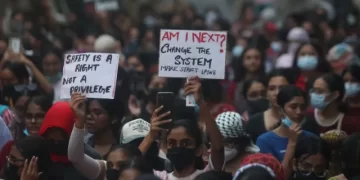
    NHRC Urges Police Sensitisation to Stop Victim-Shaming of Women, Calls for Patrolling at Crime Hotspots

    NHRC Urges Police Sensitisation to Stop Victim-Shaming of Women, Calls for Patrolling at Crime Hotspots

    India Calls for Stronger Global Cooperation on Disaster Risk Reduction, Resilient Infrastructure

    India Calls for Stronger Global Cooperation on Disaster Risk Reduction, Resilient Infrastructure

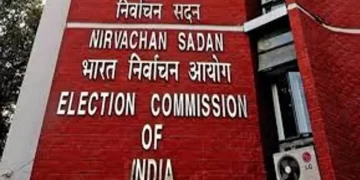
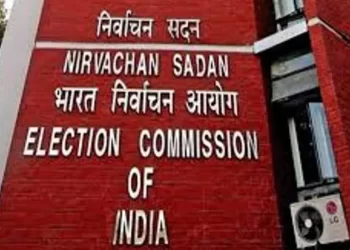
    ECI orders transfer of election-related officers in Goa, UP, 3 other states ahead of 2027 assembly polls The order covers EROs, ADMs, SDMs, tehsildars, block development officers, and divisional and municipal commissioners. Updated on: Oct 27, 2026, 18:20:24 IST By Himanshi Dahiya Prefer HTPrefer HT Prefer HT on Google Share The Election Commission of India (ECI) on Tuesday directed Goa, Manipur, Punjab, Uttar Pradesh and Uttarakhand to transfer officers associated with election work who are posted in their home districts or have served in the same district for three years or more, ahead of the 2027 Assembly elections.  The ECI stated that no officer covered by the directive would be allowed to continue in their present district if they meet the transfer criteria. (HT_PRINT) The ECI stated that no officer covered by the directive would be allowed to continue in their present district if they meet the transfer criteria. (HT_PRINT) In a letter to the chief secretaries and chief electoral officers of the five states, the Commission stated that no officer covered by the directive would be allowed to continue in their present district if they meet the transfer criteria.   The cut-off date for calculating the three-year tenure has been set as March 31, 2027, for Goa, Manipur, Punjab and Uttarakhand, and May 31, 2027, for Uttar Pradesh.  The Commission clarified that promotions to posts within the same district would be counted while calculating the three-year period. However, services rendered at the state headquarters during the past four years would not be included in the calculation, even if the headquarters falls within the same revenue district.  The state governments have also been instructed to ensure that transferred officers are not posted to their home districts. District election officers (DEOs), returning officers (ROs), assistant returning officers (AROs) and other designated officials cannot be posted back to the constituency or district where they served during the previous Assembly election or any by-election held since then.  The directive covers a wide range of administrative and election-related officials, including electoral registration officers (EROs), additional district magistrates (ADMs), sub-divisional magistrates (SDMs), tehsildars, block development officers, divisional commissioners and municipal commissioners.  In the police department, the order applies to officers from the rank of sub-inspector up to range inspector generals and police commissioners. Excise and transport department officials holding the rank of sub-inspector or above are also covered.  The Commission has made a separate provision for personnel involved in the ongoing Special Summary Revision of electoral rolls. Their transfer will take place only after the final publication of the electoral rolls and in consultation with the chief electoral officer.  Chief secretaries and directors general of police (DGPs) of the five states have been directed to submit compliance reports to the Commission by November 30.  Officers associated with election work will be required to submit a declaration within two days of the last date for filing nominations. The declaration must state that they are not close relatives of any contesting candidate and have no criminal cases pending against them.  The terms of the five state Assemblies are due to end between March 13, 2027, in Manipur and May 22, 2027, in Uttar Pradesh. The Election Commission has yet to announce the final schedule for the Assembly elections.

    ECI orders transfer of election-related officers in Goa, UP, 3 other states ahead of 2027 assembly polls The order covers EROs, ADMs, SDMs, tehsildars, block development officers, and divisional and municipal commissioners. Updated on: Oct 27, 2026, 18:20:24 IST By Himanshi Dahiya Prefer HTPrefer HT Prefer HT on Google Share The Election Commission of India (ECI) on Tuesday directed Goa, Manipur, Punjab, Uttar Pradesh and Uttarakhand to transfer officers associated with election work who are posted in their home districts or have served in the same district for three years or more, ahead of the 2027 Assembly elections. The ECI stated that no officer covered by the directive would be allowed to continue in their present district if they meet the transfer criteria. (HT_PRINT) The ECI stated that no officer covered by the directive would be allowed to continue in their present district if they meet the transfer criteria. (HT_PRINT) In a letter to the chief secretaries and chief electoral officers of the five states, the Commission stated that no officer covered by the directive would be allowed to continue in their present district if they meet the transfer criteria. The cut-off date for calculating the three-year tenure has been set as March 31, 2027, for Goa, Manipur, Punjab and Uttarakhand, and May 31, 2027, for Uttar Pradesh. The Commission clarified that promotions to posts within the same district would be counted while calculating the three-year period. However, services rendered at the state headquarters during the past four years would not be included in the calculation, even if the headquarters falls within the same revenue district. The state governments have also been instructed to ensure that transferred officers are not posted to their home districts. District election officers (DEOs), returning officers (ROs), assistant returning officers (AROs) and other designated officials cannot be posted back to the constituency or district where they served during the previous Assembly election or any by-election held since then. The directive covers a wide range of administrative and election-related officials, including electoral registration officers (EROs), additional district magistrates (ADMs), sub-divisional magistrates (SDMs), tehsildars, block development officers, divisional commissioners and municipal commissioners. In the police department, the order applies to officers from the rank of sub-inspector up to range inspector generals and police commissioners. Excise and transport department officials holding the rank of sub-inspector or above are also covered. The Commission has made a separate provision for personnel involved in the ongoing Special Summary Revision of electoral rolls. Their transfer will take place only after the final publication of the electoral rolls and in consultation with the chief electoral officer. Chief secretaries and directors general of police (DGPs) of the five states have been directed to submit compliance reports to the Commission by November 30. Officers associated with election work will be required to submit a declaration within two days of the last date for filing nominations. The declaration must state that they are not close relatives of any contesting candidate and have no criminal cases pending against them. The terms of the five state Assemblies are due to end between March 13, 2027, in Manipur and May 22, 2027, in Uttar Pradesh. The Election Commission has yet to announce the final schedule for the Assembly elections.

    New rules on animal testing must take India forward, not backwards: Maneka Gandhi Officials maintain the changes seek to simplify approvals for research institutions, pharmaceutical and biomedical industries. Updated on: Oct 26, 2026, 14:54:47 IST By Jasjeev Gandhiok Prefer HTPrefer HT Prefer HT on Google Share The Centre’s draft rules governing animal experimentation have triggered concerns among animal rights groups, which say the changes could weaken independent oversight and make it easier for laboratories to conduct experiments on animals. However, officials maintain the changes seek to simplify approvals for research institutions, pharmaceutical and biomedical industries. Former Union minister Maneka Gandhi. Former Union minister Maneka Gandhi. HT speaks to animal rights activist and former Union minister Maneka Gandhi, a long-time campaigner against animal experimentation. Edited excerpts: A major change to animal experimentation, proposed in the draft, is that mild and moderate experiments could be approved by an institution’s own ethics committee rather than going to the central regulator. In practical terms, what does this change mean for an animal inside a laboratory? Does it make it easier for more animals to be experimented on? It means the animal loses the one independent pair of eyes that was looking at its fate. Today, experiments on animals larger than a rat go to the central regulator, and there is at least someone outside the building asking whether this experiment is necessary at all. Under the draft, the people who want to do the experiment, their colleagues and their department heads will be the ones approving it. And it is the institution itself, through its own veterinarian, that decides whether the experiment is mild or moderate in the first place. No institution has ever turned down its own funding. So yes, it will make it easier, and it will make it faster, and that means more animals. Mild and moderate are also the bulk of experiments, so we are effectively handing over most of animal experimentation in India to self regulation. The draft classifies experiments as mild, moderate, severe and non-recovery. Is there a concern that the institution conducting the research will effectively decide how severe the experiment is. Does this leave a grey area? It isn’t grey, it is completely black. Under this draft, the institution that wants to do the experiment is also the one that decides which category it falls into. That decision matters enormously, because if the experiment is classified as mild or moderate, the institution’s own committee approves it and it never goes to the central regulator. Only severe and non-recovery experiments on larger animals go outside. So the same people who want the experiment approved are deciding whether anyone independent will ever examine it. That is a clear conflict of interest, and it will push experiments towards the lower categories. Starving a rat for a day is called mild. Keeping a social animal alone in a cage is mild. Starving it for two days, or putting it through distress it cannot escape, is moderate. So is testing herbal products, testing established drugs, and anything described as having “known and reversible effects,” which could mean almost anything. This is not a scientific list. It is the most common commercial work. The draft also creates exceptions and allows laboratories to use animals from open markets, unregistered sources, and in certain circumstances, stray, feral, wild and protected animals. What is the biggest risk that this may create for animals in practice? Could community dogs, lost pets or animals taken from the wild find their way into laboratories? The biggest risk is that nobody will know where an animal came from. The whole point of registered breeders was traceability. Once you allow open markets and unregistered sources for cattle, goats, birds and fish, you create a demand, and in this country demand is met very quickly by people who will pick up anything. Strays and wild animals can be used if a “competent authority” permits it, and the draft never says who that is. Community dogs, someone’s lost pet, birds from illegal markets, all of it can find its way into a laboratory. These exceptions should be removed completely. If a lab cannot get an animal from a registered source, it should not be doing that experiment. The draft formally incorporates the principles of replacement, reduction and refinement, but critics say these safeguards become weaker if institutions themselves are approving experiments. Do you believe India should now be moving towards replacing animal experiments altogether, particularly when the health ministry has already allowed certain drug testing through non-animal methods? What should the rules do differently? Yes, and we are not starting from zero. The health ministry has already amended the drug rules to accept non-animal methods. The world is moving this way because these methods are often more predictive for humans than a mouse ever was. Writing replacement, reduction and refinement into the rules means nothing if the person checking compliance is the institution itself. The rules should make it mandatory to show that no validated alternative exists before an animal is used, set up a national body to validate and promote alternatives, put money into them, and set timelines to phase out animal use in areas where alternatives are already available. A rule that only mentions replacement as a principle is decoration. You have worked on animal experimentation regulation for decades. What specific changes would you want the government to make to this draft? I don’t think this draft can be fixed. There is hardly a provision in it that doesn’t need changing, and when everything needs to change, it is better to start again. So the draft should be put aside and written afresh, this time with independent scientists, animal welfare organisations and legal experts at the table. The new rules must take India forward, not backwards. Animals already have certain protections under the law which cannot be taken away. New should be building on them.

    New rules on animal testing must take India forward, not backwards: Maneka Gandhi Officials maintain the changes seek to simplify approvals for research institutions, pharmaceutical and biomedical industries. Updated on: Oct 26, 2026, 14:54:47 IST By Jasjeev Gandhiok Prefer HTPrefer HT Prefer HT on Google Share The Centre’s draft rules governing animal experimentation have triggered concerns among animal rights groups, which say the changes could weaken independent oversight and make it easier for laboratories to conduct experiments on animals. However, officials maintain the changes seek to simplify approvals for research institutions, pharmaceutical and biomedical industries. Former Union minister Maneka Gandhi. Former Union minister Maneka Gandhi. HT speaks to animal rights activist and former Union minister Maneka Gandhi, a long-time campaigner against animal experimentation. Edited excerpts: A major change to animal experimentation, proposed in the draft, is that mild and moderate experiments could be approved by an institution’s own ethics committee rather than going to the central regulator. In practical terms, what does this change mean for an animal inside a laboratory? Does it make it easier for more animals to be experimented on? It means the animal loses the one independent pair of eyes that was looking at its fate. Today, experiments on animals larger than a rat go to the central regulator, and there is at least someone outside the building asking whether this experiment is necessary at all. Under the draft, the people who want to do the experiment, their colleagues and their department heads will be the ones approving it. And it is the institution itself, through its own veterinarian, that decides whether the experiment is mild or moderate in the first place. No institution has ever turned down its own funding. So yes, it will make it easier, and it will make it faster, and that means more animals. Mild and moderate are also the bulk of experiments, so we are effectively handing over most of animal experimentation in India to self regulation. The draft classifies experiments as mild, moderate, severe and non-recovery. Is there a concern that the institution conducting the research will effectively decide how severe the experiment is. Does this leave a grey area? It isn’t grey, it is completely black. Under this draft, the institution that wants to do the experiment is also the one that decides which category it falls into. That decision matters enormously, because if the experiment is classified as mild or moderate, the institution’s own committee approves it and it never goes to the central regulator. Only severe and non-recovery experiments on larger animals go outside. So the same people who want the experiment approved are deciding whether anyone independent will ever examine it. That is a clear conflict of interest, and it will push experiments towards the lower categories. Starving a rat for a day is called mild. Keeping a social animal alone in a cage is mild. Starving it for two days, or putting it through distress it cannot escape, is moderate. So is testing herbal products, testing established drugs, and anything described as having “known and reversible effects,” which could mean almost anything. This is not a scientific list. It is the most common commercial work. The draft also creates exceptions and allows laboratories to use animals from open markets, unregistered sources, and in certain circumstances, stray, feral, wild and protected animals. What is the biggest risk that this may create for animals in practice? Could community dogs, lost pets or animals taken from the wild find their way into laboratories? The biggest risk is that nobody will know where an animal came from. The whole point of registered breeders was traceability. Once you allow open markets and unregistered sources for cattle, goats, birds and fish, you create a demand, and in this country demand is met very quickly by people who will pick up anything. Strays and wild animals can be used if a “competent authority” permits it, and the draft never says who that is. Community dogs, someone’s lost pet, birds from illegal markets, all of it can find its way into a laboratory. These exceptions should be removed completely. If a lab cannot get an animal from a registered source, it should not be doing that experiment. The draft formally incorporates the principles of replacement, reduction and refinement, but critics say these safeguards become weaker if institutions themselves are approving experiments. Do you believe India should now be moving towards replacing animal experiments altogether, particularly when the health ministry has already allowed certain drug testing through non-animal methods? What should the rules do differently? Yes, and we are not starting from zero. The health ministry has already amended the drug rules to accept non-animal methods. The world is moving this way because these methods are often more predictive for humans than a mouse ever was. Writing replacement, reduction and refinement into the rules means nothing if the person checking compliance is the institution itself. The rules should make it mandatory to show that no validated alternative exists before an animal is used, set up a national body to validate and promote alternatives, put money into them, and set timelines to phase out animal use in areas where alternatives are already available. A rule that only mentions replacement as a principle is decoration. You have worked on animal experimentation regulation for decades. What specific changes would you want the government to make to this draft? I don’t think this draft can be fixed. There is hardly a provision in it that doesn’t need changing, and when everything needs to change, it is better to start again. So the draft should be put aside and written afresh, this time with independent scientists, animal welfare organisations and legal experts at the table. The new rules must take India forward, not backwards. Animals already have certain protections under the law which cannot be taken away. New should be building on them.

    Orissa High Court Rules SC/ST Status Cannot Be Carried Across State Borders

    Orissa High Court Rules SC/ST Status Cannot Be Carried Across State Borders

    Supreme Court Seeks Centre’s Response to Challenge Against Chhattisgarh Anti-Conversion Law

    Supreme Court Seeks Centre’s Response to Challenge Against Chhattisgarh Anti-Conversion Law

    Trending Tags

    • Movie
    • Music
  • Trending
  • India
    • Politics
    • States
    • Elections
    • Results
  • World News
  • Business
    • Economy
    • Markets
    • Real Estate
    • Crypto
  • More
    • Entertainment
      • Bollywood
      • TV
      • Movie Reviews
      • Web Series
    • Sports
      • Cricket
      • Football
      • Games
    • Sci-Tech
      • Science
      • Tech
      • Gadgets
      • Gaming
    • Culture
      • History
      • Festivals
      • Art
      • Temples
      • Scriptures
    • Lifestyle
      • Fashion
      • Food
      • Health
      • Travel
    • Student’s Corner
      • Exam
      • Exam Results
      • Schools
      • Universities
    • Astrology
      • Daily Horoscope
      • Monthly Horoscope
      • Days
  • Opinion
  • Login
  • Register
  • Home
    • All
    • Art
    • Bollywood
    • Business
    • Cricket
    • Crypto
    • Culture
    • Daily Horoscope
    • Economy
    • Elections
    • Entertainment
    • Fashion
    • Gaming
    • Health
    • History
    • India
    • Lifestyle
    • Movie Reviews
    • Photos
    • Politics
    • Sci-Tech
    • Science
    • Sports
    • Tech
    • Trending
    • TV
    • Uncategorized
    • Web Series
    • World News
    NHRC Urges Police Sensitisation to Stop Victim-Shaming of Women, Calls for Patrolling at Crime Hotspots

    NHRC Urges Police Sensitisation to Stop Victim-Shaming of Women, Calls for Patrolling at Crime Hotspots

    India Calls for Stronger Global Cooperation on Disaster Risk Reduction, Resilient Infrastructure

    India Calls for Stronger Global Cooperation on Disaster Risk Reduction, Resilient Infrastructure

    ECI orders transfer of election-related officers in Goa, UP, 3 other states ahead of 2027 assembly polls The order covers EROs, ADMs, SDMs, tehsildars, block development officers, and divisional and municipal commissioners. Updated on: Oct 27, 2026, 18:20:24 IST By Himanshi Dahiya Prefer HTPrefer HT Prefer HT on Google Share The Election Commission of India (ECI) on Tuesday directed Goa, Manipur, Punjab, Uttar Pradesh and Uttarakhand to transfer officers associated with election work who are posted in their home districts or have served in the same district for three years or more, ahead of the 2027 Assembly elections.  The ECI stated that no officer covered by the directive would be allowed to continue in their present district if they meet the transfer criteria. (HT_PRINT) The ECI stated that no officer covered by the directive would be allowed to continue in their present district if they meet the transfer criteria. (HT_PRINT) In a letter to the chief secretaries and chief electoral officers of the five states, the Commission stated that no officer covered by the directive would be allowed to continue in their present district if they meet the transfer criteria.   The cut-off date for calculating the three-year tenure has been set as March 31, 2027, for Goa, Manipur, Punjab and Uttarakhand, and May 31, 2027, for Uttar Pradesh.  The Commission clarified that promotions to posts within the same district would be counted while calculating the three-year period. However, services rendered at the state headquarters during the past four years would not be included in the calculation, even if the headquarters falls within the same revenue district.  The state governments have also been instructed to ensure that transferred officers are not posted to their home districts. District election officers (DEOs), returning officers (ROs), assistant returning officers (AROs) and other designated officials cannot be posted back to the constituency or district where they served during the previous Assembly election or any by-election held since then.  The directive covers a wide range of administrative and election-related officials, including electoral registration officers (EROs), additional district magistrates (ADMs), sub-divisional magistrates (SDMs), tehsildars, block development officers, divisional commissioners and municipal commissioners.  In the police department, the order applies to officers from the rank of sub-inspector up to range inspector generals and police commissioners. Excise and transport department officials holding the rank of sub-inspector or above are also covered.  The Commission has made a separate provision for personnel involved in the ongoing Special Summary Revision of electoral rolls. Their transfer will take place only after the final publication of the electoral rolls and in consultation with the chief electoral officer.  Chief secretaries and directors general of police (DGPs) of the five states have been directed to submit compliance reports to the Commission by November 30.  Officers associated with election work will be required to submit a declaration within two days of the last date for filing nominations. The declaration must state that they are not close relatives of any contesting candidate and have no criminal cases pending against them.  The terms of the five state Assemblies are due to end between March 13, 2027, in Manipur and May 22, 2027, in Uttar Pradesh. The Election Commission has yet to announce the final schedule for the Assembly elections.

    ECI orders transfer of election-related officers in Goa, UP, 3 other states ahead of 2027 assembly polls The order covers EROs, ADMs, SDMs, tehsildars, block development officers, and divisional and municipal commissioners. Updated on: Oct 27, 2026, 18:20:24 IST By Himanshi Dahiya Prefer HTPrefer HT Prefer HT on Google Share The Election Commission of India (ECI) on Tuesday directed Goa, Manipur, Punjab, Uttar Pradesh and Uttarakhand to transfer officers associated with election work who are posted in their home districts or have served in the same district for three years or more, ahead of the 2027 Assembly elections. The ECI stated that no officer covered by the directive would be allowed to continue in their present district if they meet the transfer criteria. (HT_PRINT) The ECI stated that no officer covered by the directive would be allowed to continue in their present district if they meet the transfer criteria. (HT_PRINT) In a letter to the chief secretaries and chief electoral officers of the five states, the Commission stated that no officer covered by the directive would be allowed to continue in their present district if they meet the transfer criteria. The cut-off date for calculating the three-year tenure has been set as March 31, 2027, for Goa, Manipur, Punjab and Uttarakhand, and May 31, 2027, for Uttar Pradesh. The Commission clarified that promotions to posts within the same district would be counted while calculating the three-year period. However, services rendered at the state headquarters during the past four years would not be included in the calculation, even if the headquarters falls within the same revenue district. The state governments have also been instructed to ensure that transferred officers are not posted to their home districts. District election officers (DEOs), returning officers (ROs), assistant returning officers (AROs) and other designated officials cannot be posted back to the constituency or district where they served during the previous Assembly election or any by-election held since then. The directive covers a wide range of administrative and election-related officials, including electoral registration officers (EROs), additional district magistrates (ADMs), sub-divisional magistrates (SDMs), tehsildars, block development officers, divisional commissioners and municipal commissioners. In the police department, the order applies to officers from the rank of sub-inspector up to range inspector generals and police commissioners. Excise and transport department officials holding the rank of sub-inspector or above are also covered. The Commission has made a separate provision for personnel involved in the ongoing Special Summary Revision of electoral rolls. Their transfer will take place only after the final publication of the electoral rolls and in consultation with the chief electoral officer. Chief secretaries and directors general of police (DGPs) of the five states have been directed to submit compliance reports to the Commission by November 30. Officers associated with election work will be required to submit a declaration within two days of the last date for filing nominations. The declaration must state that they are not close relatives of any contesting candidate and have no criminal cases pending against them. The terms of the five state Assemblies are due to end between March 13, 2027, in Manipur and May 22, 2027, in Uttar Pradesh. The Election Commission has yet to announce the final schedule for the Assembly elections.

    New rules on animal testing must take India forward, not backwards: Maneka Gandhi Officials maintain the changes seek to simplify approvals for research institutions, pharmaceutical and biomedical industries. Updated on: Oct 26, 2026, 14:54:47 IST By Jasjeev Gandhiok Prefer HTPrefer HT Prefer HT on Google Share The Centre’s draft rules governing animal experimentation have triggered concerns among animal rights groups, which say the changes could weaken independent oversight and make it easier for laboratories to conduct experiments on animals. However, officials maintain the changes seek to simplify approvals for research institutions, pharmaceutical and biomedical industries. Former Union minister Maneka Gandhi. Former Union minister Maneka Gandhi. HT speaks to animal rights activist and former Union minister Maneka Gandhi, a long-time campaigner against animal experimentation. Edited excerpts: A major change to animal experimentation, proposed in the draft, is that mild and moderate experiments could be approved by an institution’s own ethics committee rather than going to the central regulator. In practical terms, what does this change mean for an animal inside a laboratory? Does it make it easier for more animals to be experimented on? It means the animal loses the one independent pair of eyes that was looking at its fate. Today, experiments on animals larger than a rat go to the central regulator, and there is at least someone outside the building asking whether this experiment is necessary at all. Under the draft, the people who want to do the experiment, their colleagues and their department heads will be the ones approving it. And it is the institution itself, through its own veterinarian, that decides whether the experiment is mild or moderate in the first place. No institution has ever turned down its own funding. So yes, it will make it easier, and it will make it faster, and that means more animals. Mild and moderate are also the bulk of experiments, so we are effectively handing over most of animal experimentation in India to self regulation. The draft classifies experiments as mild, moderate, severe and non-recovery. Is there a concern that the institution conducting the research will effectively decide how severe the experiment is. Does this leave a grey area? It isn’t grey, it is completely black. Under this draft, the institution that wants to do the experiment is also the one that decides which category it falls into. That decision matters enormously, because if the experiment is classified as mild or moderate, the institution’s own committee approves it and it never goes to the central regulator. Only severe and non-recovery experiments on larger animals go outside. So the same people who want the experiment approved are deciding whether anyone independent will ever examine it. That is a clear conflict of interest, and it will push experiments towards the lower categories. Starving a rat for a day is called mild. Keeping a social animal alone in a cage is mild. Starving it for two days, or putting it through distress it cannot escape, is moderate. So is testing herbal products, testing established drugs, and anything described as having “known and reversible effects,” which could mean almost anything. This is not a scientific list. It is the most common commercial work. The draft also creates exceptions and allows laboratories to use animals from open markets, unregistered sources, and in certain circumstances, stray, feral, wild and protected animals. What is the biggest risk that this may create for animals in practice? Could community dogs, lost pets or animals taken from the wild find their way into laboratories? The biggest risk is that nobody will know where an animal came from. The whole point of registered breeders was traceability. Once you allow open markets and unregistered sources for cattle, goats, birds and fish, you create a demand, and in this country demand is met very quickly by people who will pick up anything. Strays and wild animals can be used if a “competent authority” permits it, and the draft never says who that is. Community dogs, someone’s lost pet, birds from illegal markets, all of it can find its way into a laboratory. These exceptions should be removed completely. If a lab cannot get an animal from a registered source, it should not be doing that experiment. The draft formally incorporates the principles of replacement, reduction and refinement, but critics say these safeguards become weaker if institutions themselves are approving experiments. Do you believe India should now be moving towards replacing animal experiments altogether, particularly when the health ministry has already allowed certain drug testing through non-animal methods? What should the rules do differently? Yes, and we are not starting from zero. The health ministry has already amended the drug rules to accept non-animal methods. The world is moving this way because these methods are often more predictive for humans than a mouse ever was. Writing replacement, reduction and refinement into the rules means nothing if the person checking compliance is the institution itself. The rules should make it mandatory to show that no validated alternative exists before an animal is used, set up a national body to validate and promote alternatives, put money into them, and set timelines to phase out animal use in areas where alternatives are already available. A rule that only mentions replacement as a principle is decoration. You have worked on animal experimentation regulation for decades. What specific changes would you want the government to make to this draft? I don’t think this draft can be fixed. There is hardly a provision in it that doesn’t need changing, and when everything needs to change, it is better to start again. So the draft should be put aside and written afresh, this time with independent scientists, animal welfare organisations and legal experts at the table. The new rules must take India forward, not backwards. Animals already have certain protections under the law which cannot be taken away. New should be building on them.

    New rules on animal testing must take India forward, not backwards: Maneka Gandhi Officials maintain the changes seek to simplify approvals for research institutions, pharmaceutical and biomedical industries. Updated on: Oct 26, 2026, 14:54:47 IST By Jasjeev Gandhiok Prefer HTPrefer HT Prefer HT on Google Share The Centre’s draft rules governing animal experimentation have triggered concerns among animal rights groups, which say the changes could weaken independent oversight and make it easier for laboratories to conduct experiments on animals. However, officials maintain the changes seek to simplify approvals for research institutions, pharmaceutical and biomedical industries. Former Union minister Maneka Gandhi. Former Union minister Maneka Gandhi. HT speaks to animal rights activist and former Union minister Maneka Gandhi, a long-time campaigner against animal experimentation. Edited excerpts: A major change to animal experimentation, proposed in the draft, is that mild and moderate experiments could be approved by an institution’s own ethics committee rather than going to the central regulator. In practical terms, what does this change mean for an animal inside a laboratory? Does it make it easier for more animals to be experimented on? It means the animal loses the one independent pair of eyes that was looking at its fate. Today, experiments on animals larger than a rat go to the central regulator, and there is at least someone outside the building asking whether this experiment is necessary at all. Under the draft, the people who want to do the experiment, their colleagues and their department heads will be the ones approving it. And it is the institution itself, through its own veterinarian, that decides whether the experiment is mild or moderate in the first place. No institution has ever turned down its own funding. So yes, it will make it easier, and it will make it faster, and that means more animals. Mild and moderate are also the bulk of experiments, so we are effectively handing over most of animal experimentation in India to self regulation. The draft classifies experiments as mild, moderate, severe and non-recovery. Is there a concern that the institution conducting the research will effectively decide how severe the experiment is. Does this leave a grey area? It isn’t grey, it is completely black. Under this draft, the institution that wants to do the experiment is also the one that decides which category it falls into. That decision matters enormously, because if the experiment is classified as mild or moderate, the institution’s own committee approves it and it never goes to the central regulator. Only severe and non-recovery experiments on larger animals go outside. So the same people who want the experiment approved are deciding whether anyone independent will ever examine it. That is a clear conflict of interest, and it will push experiments towards the lower categories. Starving a rat for a day is called mild. Keeping a social animal alone in a cage is mild. Starving it for two days, or putting it through distress it cannot escape, is moderate. So is testing herbal products, testing established drugs, and anything described as having “known and reversible effects,” which could mean almost anything. This is not a scientific list. It is the most common commercial work. The draft also creates exceptions and allows laboratories to use animals from open markets, unregistered sources, and in certain circumstances, stray, feral, wild and protected animals. What is the biggest risk that this may create for animals in practice? Could community dogs, lost pets or animals taken from the wild find their way into laboratories? The biggest risk is that nobody will know where an animal came from. The whole point of registered breeders was traceability. Once you allow open markets and unregistered sources for cattle, goats, birds and fish, you create a demand, and in this country demand is met very quickly by people who will pick up anything. Strays and wild animals can be used if a “competent authority” permits it, and the draft never says who that is. Community dogs, someone’s lost pet, birds from illegal markets, all of it can find its way into a laboratory. These exceptions should be removed completely. If a lab cannot get an animal from a registered source, it should not be doing that experiment. The draft formally incorporates the principles of replacement, reduction and refinement, but critics say these safeguards become weaker if institutions themselves are approving experiments. Do you believe India should now be moving towards replacing animal experiments altogether, particularly when the health ministry has already allowed certain drug testing through non-animal methods? What should the rules do differently? Yes, and we are not starting from zero. The health ministry has already amended the drug rules to accept non-animal methods. The world is moving this way because these methods are often more predictive for humans than a mouse ever was. Writing replacement, reduction and refinement into the rules means nothing if the person checking compliance is the institution itself. The rules should make it mandatory to show that no validated alternative exists before an animal is used, set up a national body to validate and promote alternatives, put money into them, and set timelines to phase out animal use in areas where alternatives are already available. A rule that only mentions replacement as a principle is decoration. You have worked on animal experimentation regulation for decades. What specific changes would you want the government to make to this draft? I don’t think this draft can be fixed. There is hardly a provision in it that doesn’t need changing, and when everything needs to change, it is better to start again. So the draft should be put aside and written afresh, this time with independent scientists, animal welfare organisations and legal experts at the table. The new rules must take India forward, not backwards. Animals already have certain protections under the law which cannot be taken away. New should be building on them.

    Orissa High Court Rules SC/ST Status Cannot Be Carried Across State Borders

    Orissa High Court Rules SC/ST Status Cannot Be Carried Across State Borders

    Supreme Court Seeks Centre’s Response to Challenge Against Chhattisgarh Anti-Conversion Law

    Supreme Court Seeks Centre’s Response to Challenge Against Chhattisgarh Anti-Conversion Law

    Trending Tags

    • Movie
    • Music
  • Trending
  • India
    • Politics
    • States
    • Elections
    • Results
  • World News
  • Business
    • Economy
    • Markets
    • Real Estate
    • Crypto
  • More
    • Entertainment
      • Bollywood
      • TV
      • Movie Reviews
      • Web Series
    • Sports
      • Cricket
      • Football
      • Games
    • Sci-Tech
      • Science
      • Tech
      • Gadgets
      • Gaming
    • Culture
      • History
      • Festivals
      • Art
      • Temples
      • Scriptures
    • Lifestyle
      • Fashion
      • Food
      • Health
      • Travel
    • Student’s Corner
      • Exam
      • Exam Results
      • Schools
      • Universities
    • Astrology
      • Daily Horoscope
      • Monthly Horoscope
      • Days
  • Opinion
No Result
View All Result
India Reflects
No Result
View All Result
Home

NHRC Urges Police Sensitisation to Stop Victim-Shaming of Women, Calls for Patrolling at Crime Hotspots

The National Human Rights Commission has issued an advisory on women's safety at workplaces and public spaces, recommending standard operating procedures for handling gender-based violence complaints, functional women's help desks at every police station, faster emergency responses and greater awareness of cybercrimes, including deepfakes and revenge porn.

News Desk by News Desk
October 27, 2026
Reading Time: 3 mins read
0
NHRC Urges Police Sensitisation to Stop Victim-Shaming of Women, Calls for Patrolling at Crime Hotspots

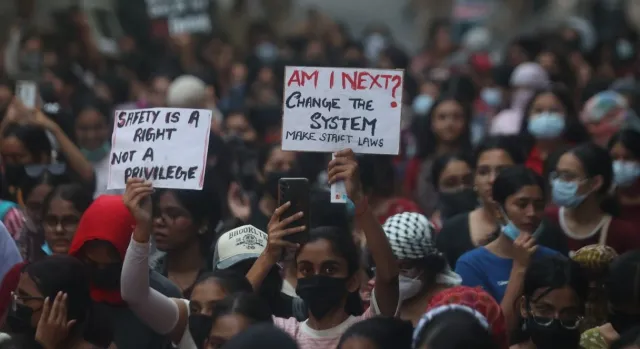
The National Human Rights Commission (NHRC) has called for greater sensitisation of police personnel to prevent victim-shaming and moral judgement of survivors of gender-based violence, urging authorities to strengthen women’s safety measures in public spaces and workplaces across India.

RELATED POSTS

India Calls for Stronger Global Cooperation on Disaster Risk Reduction, Resilient Infrastructure

ECI orders transfer of election-related officers in Goa, UP, 3 other states ahead of 2027 assembly polls The order covers EROs, ADMs, SDMs, tehsildars, block development officers, and divisional and municipal commissioners. Updated on: Oct 27, 2026, 18:20:24 IST By Himanshi Dahiya Prefer HTPrefer HT Prefer HT on Google Share The Election Commission of India (ECI) on Tuesday directed Goa, Manipur, Punjab, Uttar Pradesh and Uttarakhand to transfer officers associated with election work who are posted in their home districts or have served in the same district for three years or more, ahead of the 2027 Assembly elections. The ECI stated that no officer covered by the directive would be allowed to continue in their present district if they meet the transfer criteria. (HT_PRINT) The ECI stated that no officer covered by the directive would be allowed to continue in their present district if they meet the transfer criteria. (HT_PRINT) In a letter to the chief secretaries and chief electoral officers of the five states, the Commission stated that no officer covered by the directive would be allowed to continue in their present district if they meet the transfer criteria. The cut-off date for calculating the three-year tenure has been set as March 31, 2027, for Goa, Manipur, Punjab and Uttarakhand, and May 31, 2027, for Uttar Pradesh. The Commission clarified that promotions to posts within the same district would be counted while calculating the three-year period. However, services rendered at the state headquarters during the past four years would not be included in the calculation, even if the headquarters falls within the same revenue district. The state governments have also been instructed to ensure that transferred officers are not posted to their home districts. District election officers (DEOs), returning officers (ROs), assistant returning officers (AROs) and other designated officials cannot be posted back to the constituency or district where they served during the previous Assembly election or any by-election held since then. The directive covers a wide range of administrative and election-related officials, including electoral registration officers (EROs), additional district magistrates (ADMs), sub-divisional magistrates (SDMs), tehsildars, block development officers, divisional commissioners and municipal commissioners. In the police department, the order applies to officers from the rank of sub-inspector up to range inspector generals and police commissioners. Excise and transport department officials holding the rank of sub-inspector or above are also covered. The Commission has made a separate provision for personnel involved in the ongoing Special Summary Revision of electoral rolls. Their transfer will take place only after the final publication of the electoral rolls and in consultation with the chief electoral officer. Chief secretaries and directors general of police (DGPs) of the five states have been directed to submit compliance reports to the Commission by November 30. Officers associated with election work will be required to submit a declaration within two days of the last date for filing nominations. The declaration must state that they are not close relatives of any contesting candidate and have no criminal cases pending against them. The terms of the five state Assemblies are due to end between March 13, 2027, in Manipur and May 22, 2027, in Uttar Pradesh. The Election Commission has yet to announce the final schedule for the Assembly elections.

New rules on animal testing must take India forward, not backwards: Maneka Gandhi Officials maintain the changes seek to simplify approvals for research institutions, pharmaceutical and biomedical industries. Updated on: Oct 26, 2026, 14:54:47 IST By Jasjeev Gandhiok Prefer HTPrefer HT Prefer HT on Google Share The Centre’s draft rules governing animal experimentation have triggered concerns among animal rights groups, which say the changes could weaken independent oversight and make it easier for laboratories to conduct experiments on animals. However, officials maintain the changes seek to simplify approvals for research institutions, pharmaceutical and biomedical industries. Former Union minister Maneka Gandhi. Former Union minister Maneka Gandhi. HT speaks to animal rights activist and former Union minister Maneka Gandhi, a long-time campaigner against animal experimentation. Edited excerpts: A major change to animal experimentation, proposed in the draft, is that mild and moderate experiments could be approved by an institution’s own ethics committee rather than going to the central regulator. In practical terms, what does this change mean for an animal inside a laboratory? Does it make it easier for more animals to be experimented on? It means the animal loses the one independent pair of eyes that was looking at its fate. Today, experiments on animals larger than a rat go to the central regulator, and there is at least someone outside the building asking whether this experiment is necessary at all. Under the draft, the people who want to do the experiment, their colleagues and their department heads will be the ones approving it. And it is the institution itself, through its own veterinarian, that decides whether the experiment is mild or moderate in the first place. No institution has ever turned down its own funding. So yes, it will make it easier, and it will make it faster, and that means more animals. Mild and moderate are also the bulk of experiments, so we are effectively handing over most of animal experimentation in India to self regulation. The draft classifies experiments as mild, moderate, severe and non-recovery. Is there a concern that the institution conducting the research will effectively decide how severe the experiment is. Does this leave a grey area? It isn’t grey, it is completely black. Under this draft, the institution that wants to do the experiment is also the one that decides which category it falls into. That decision matters enormously, because if the experiment is classified as mild or moderate, the institution’s own committee approves it and it never goes to the central regulator. Only severe and non-recovery experiments on larger animals go outside. So the same people who want the experiment approved are deciding whether anyone independent will ever examine it. That is a clear conflict of interest, and it will push experiments towards the lower categories. Starving a rat for a day is called mild. Keeping a social animal alone in a cage is mild. Starving it for two days, or putting it through distress it cannot escape, is moderate. So is testing herbal products, testing established drugs, and anything described as having “known and reversible effects,” which could mean almost anything. This is not a scientific list. It is the most common commercial work. The draft also creates exceptions and allows laboratories to use animals from open markets, unregistered sources, and in certain circumstances, stray, feral, wild and protected animals. What is the biggest risk that this may create for animals in practice? Could community dogs, lost pets or animals taken from the wild find their way into laboratories? The biggest risk is that nobody will know where an animal came from. The whole point of registered breeders was traceability. Once you allow open markets and unregistered sources for cattle, goats, birds and fish, you create a demand, and in this country demand is met very quickly by people who will pick up anything. Strays and wild animals can be used if a “competent authority” permits it, and the draft never says who that is. Community dogs, someone’s lost pet, birds from illegal markets, all of it can find its way into a laboratory. These exceptions should be removed completely. If a lab cannot get an animal from a registered source, it should not be doing that experiment. The draft formally incorporates the principles of replacement, reduction and refinement, but critics say these safeguards become weaker if institutions themselves are approving experiments. Do you believe India should now be moving towards replacing animal experiments altogether, particularly when the health ministry has already allowed certain drug testing through non-animal methods? What should the rules do differently? Yes, and we are not starting from zero. The health ministry has already amended the drug rules to accept non-animal methods. The world is moving this way because these methods are often more predictive for humans than a mouse ever was. Writing replacement, reduction and refinement into the rules means nothing if the person checking compliance is the institution itself. The rules should make it mandatory to show that no validated alternative exists before an animal is used, set up a national body to validate and promote alternatives, put money into them, and set timelines to phase out animal use in areas where alternatives are already available. A rule that only mentions replacement as a principle is decoration. You have worked on animal experimentation regulation for decades. What specific changes would you want the government to make to this draft? I don’t think this draft can be fixed. There is hardly a provision in it that doesn’t need changing, and when everything needs to change, it is better to start again. So the draft should be put aside and written afresh, this time with independent scientists, animal welfare organisations and legal experts at the table. The new rules must take India forward, not backwards. Animals already have certain protections under the law which cannot be taken away. New should be building on them.

In an advisory titled Women’s Safety at Work and Public Spaces, dated October 23, the rights panel recommended that police officers be trained to handle complaints with sensitivity and ensure that survivors are not subjected to further harassment when approaching police stations to report violence or abuse.

The recommendations, shared through a statement issued on Tuesday, October 27, also call for regular police patrolling in crime hotspots, particularly in deserted areas at night, and the establishment of functional women’s help desks at every police station in the country.

NHRC Flags Victim-Blaming at Police Stations

Highlighting the challenges faced by survivors while seeking justice, the NHRC observed that women reporting gender-based violence often encounter resistance and moral policing at police stations.

The Commission stressed that police personnel must be adequately sensitised to avoid passing moral judgements or blaming survivors for the violence they have experienced.

To address the issue, the NHRC recommended that the relevant ministry consider developing a standard operating procedure (SOP) outlining clear protocols for dealing with victims of gender-based violence. It also suggested that these guidelines be widely circulated, including through social media, to improve awareness and ensure consistent handling of complaints.

The rights panel further recommended the introduction of time-bound response standards for helplines and police personnel responding to incidents of violence in public spaces. Regular patrolling should be prioritised in isolated locations and areas identified as crime hotspots, particularly during night hours.

Buy JNews
ADVERTISEMENT

According to the advisory, as of December 2025, 14,658 of the country’s 16,109 police stations had women’s help desks. The NHRC recommended that authorities take steps to ensure that the remaining police stations also establish functional help desks to provide assistance to women in distress.

NHRC Warns of Rising Technology-Facilitated Gender-Based Violence

The Commission also highlighted the changing nature of violence against women, warning that it is no longer restricted to physical harm.

With the growing use of digital technology and artificial intelligence, technology-facilitated gender-based violence has increased sharply in recent years, the NHRC cautioned.

The advisory calls for women across different age groups to be made aware of digital threats, including revenge porn, doxxing, the circulation of explicit images and videos without consent, and AI-generated deepfakes.

The rights panel recommended awareness programmes in schools, colleges, universities and workplaces to educate people about cybercrime and the mechanisms available to report such offences.

These programmes should familiarise women with grievance redressal platforms, including the National Cyber Crime Reporting Portal and the Sahyog portal, which can help address technology-related offences.

The NHRC emphasised that despite stringent laws intended to protect women’s rights, harassment remains widespread. It said a comprehensive approach to women’s safety must combine preventive and remedial measures while taking into account the different social circumstances and identities that can affect women’s experiences of violence.

Awareness Campaigns and Legal Information for Women

The Commission identified a lack of awareness about what constitutes sexual harassment and how to respond to such incidents as a major concern.

To address this gap, it recommended displaying targeted posters, flyers and other informational material in public spaces and workplaces. These materials should explain the forms of conduct that amount to sexual harassment, outline women’s legal rights and provide emergency contact numbers and information about available complaint mechanisms.

The advisory specifically mentions the Sexual Harassment Electronic Box portal as one of the mechanisms that should be publicised to facilitate reporting.

The NHRC also stressed the importance of changing societal attitudes and mindsets that influence how individuals respond to women’s safety concerns. It said efforts to prevent violence must extend beyond law enforcement and include awareness and behavioural change.

Government Authorities Given Two-Month Deadline

The NHRC has circulated the advisory to the secretaries of 10 Union ministries, including the ministries of Women and Child Development, Education, Health and Home Affairs.

It has also sent the recommendations to the chairperson and chief executive officer of the Railway Board, as well as the chief secretaries of all states and the administrators of Union Territories.

The Commission has urged the concerned authorities to implement its recommendations and submit an action taken report within two months, keeping the NHRC informed about the progress made.

The advisory seeks to strengthen institutional accountability, improve police responses to complaints and expand awareness of women’s legal protections. Its recommendations place emphasis on ensuring that women can report violence without fear of humiliation, receive timely assistance and access effective mechanisms for seeking justice.

By addressing police conduct, public safety, digital abuse and gaps in awareness, the NHRC has called for a broader and more coordinated response to women’s safety across the country.
 

Tags: AI deepfakescrime hotspots Indiacybercrime against womendeepfake abusedoxxinggender violence preventionGender-based ViolenceIndia Newslatest india newsNational Cyber Crime Reporting PortalNational Human Rights CommissionNHRCpolice patrollingpolice response standardspolice sensitisationpublic safety for womenrevenge pornSahyog portalSexual HarassmentSexual Harassment Electronic Boxtechnology facilitated gender based violencevictim shamingwomen help deskwomen safety newswomen's protection lawswomen's rights Indiawomen's safety advisorywomen's safety IndiaWorkplace Harassment
Share196Tweet123
News Desk

News Desk

A passionate news person, trying to reflect her views on the recent happenings around the globe, bringing you a nuanced perspective and keeping the ethics of journalism alive in the process. My journey started in an international newsroom, where I have covered major events and been to the roots of them.  The  South-Asian region has also caught my interest, where I have covered more of the features and cultural side of the South-Asian countries. As a journalist dedicated to ethical reporting and with a personal interest in exposing hidden narratives, I aim to offer complex perspectives that enhance comprehension of the modern, globalized world.

Related Posts

India Calls for Stronger Global Cooperation on Disaster Risk Reduction, Resilient Infrastructure

India Calls for Stronger Global Cooperation on Disaster Risk Reduction, Resilient Infrastructure

October 27, 2026
ECI orders transfer of election-related officers in Goa, UP, 3 other states ahead of 2027 assembly polls The order covers EROs, ADMs, SDMs, tehsildars, block development officers, and divisional and municipal commissioners. Updated on: Oct 27, 2026, 18:20:24 IST By Himanshi Dahiya Prefer HTPrefer HT Prefer HT on Google Share The Election Commission of India (ECI) on Tuesday directed Goa, Manipur, Punjab, Uttar Pradesh and Uttarakhand to transfer officers associated with election work who are posted in their home districts or have served in the same district for three years or more, ahead of the 2027 Assembly elections.  The ECI stated that no officer covered by the directive would be allowed to continue in their present district if they meet the transfer criteria. (HT_PRINT) The ECI stated that no officer covered by the directive would be allowed to continue in their present district if they meet the transfer criteria. (HT_PRINT) In a letter to the chief secretaries and chief electoral officers of the five states, the Commission stated that no officer covered by the directive would be allowed to continue in their present district if they meet the transfer criteria.   The cut-off date for calculating the three-year tenure has been set as March 31, 2027, for Goa, Manipur, Punjab and Uttarakhand, and May 31, 2027, for Uttar Pradesh.  The Commission clarified that promotions to posts within the same district would be counted while calculating the three-year period. However, services rendered at the state headquarters during the past four years would not be included in the calculation, even if the headquarters falls within the same revenue district.  The state governments have also been instructed to ensure that transferred officers are not posted to their home districts. District election officers (DEOs), returning officers (ROs), assistant returning officers (AROs) and other designated officials cannot be posted back to the constituency or district where they served during the previous Assembly election or any by-election held since then.  The directive covers a wide range of administrative and election-related officials, including electoral registration officers (EROs), additional district magistrates (ADMs), sub-divisional magistrates (SDMs), tehsildars, block development officers, divisional commissioners and municipal commissioners.  In the police department, the order applies to officers from the rank of sub-inspector up to range inspector generals and police commissioners. Excise and transport department officials holding the rank of sub-inspector or above are also covered.  The Commission has made a separate provision for personnel involved in the ongoing Special Summary Revision of electoral rolls. Their transfer will take place only after the final publication of the electoral rolls and in consultation with the chief electoral officer.  Chief secretaries and directors general of police (DGPs) of the five states have been directed to submit compliance reports to the Commission by November 30.  Officers associated with election work will be required to submit a declaration within two days of the last date for filing nominations. The declaration must state that they are not close relatives of any contesting candidate and have no criminal cases pending against them.  The terms of the five state Assemblies are due to end between March 13, 2027, in Manipur and May 22, 2027, in Uttar Pradesh. The Election Commission has yet to announce the final schedule for the Assembly elections.

ECI orders transfer of election-related officers in Goa, UP, 3 other states ahead of 2027 assembly polls The order covers EROs, ADMs, SDMs, tehsildars, block development officers, and divisional and municipal commissioners. Updated on: Oct 27, 2026, 18:20:24 IST By Himanshi Dahiya Prefer HTPrefer HT Prefer HT on Google Share The Election Commission of India (ECI) on Tuesday directed Goa, Manipur, Punjab, Uttar Pradesh and Uttarakhand to transfer officers associated with election work who are posted in their home districts or have served in the same district for three years or more, ahead of the 2027 Assembly elections. The ECI stated that no officer covered by the directive would be allowed to continue in their present district if they meet the transfer criteria. (HT_PRINT) The ECI stated that no officer covered by the directive would be allowed to continue in their present district if they meet the transfer criteria. (HT_PRINT) In a letter to the chief secretaries and chief electoral officers of the five states, the Commission stated that no officer covered by the directive would be allowed to continue in their present district if they meet the transfer criteria. The cut-off date for calculating the three-year tenure has been set as March 31, 2027, for Goa, Manipur, Punjab and Uttarakhand, and May 31, 2027, for Uttar Pradesh. The Commission clarified that promotions to posts within the same district would be counted while calculating the three-year period. However, services rendered at the state headquarters during the past four years would not be included in the calculation, even if the headquarters falls within the same revenue district. The state governments have also been instructed to ensure that transferred officers are not posted to their home districts. District election officers (DEOs), returning officers (ROs), assistant returning officers (AROs) and other designated officials cannot be posted back to the constituency or district where they served during the previous Assembly election or any by-election held since then. The directive covers a wide range of administrative and election-related officials, including electoral registration officers (EROs), additional district magistrates (ADMs), sub-divisional magistrates (SDMs), tehsildars, block development officers, divisional commissioners and municipal commissioners. In the police department, the order applies to officers from the rank of sub-inspector up to range inspector generals and police commissioners. Excise and transport department officials holding the rank of sub-inspector or above are also covered. The Commission has made a separate provision for personnel involved in the ongoing Special Summary Revision of electoral rolls. Their transfer will take place only after the final publication of the electoral rolls and in consultation with the chief electoral officer. Chief secretaries and directors general of police (DGPs) of the five states have been directed to submit compliance reports to the Commission by November 30. Officers associated with election work will be required to submit a declaration within two days of the last date for filing nominations. The declaration must state that they are not close relatives of any contesting candidate and have no criminal cases pending against them. The terms of the five state Assemblies are due to end between March 13, 2027, in Manipur and May 22, 2027, in Uttar Pradesh. The Election Commission has yet to announce the final schedule for the Assembly elections.

October 27, 2026
New rules on animal testing must take India forward, not backwards: Maneka Gandhi Officials maintain the changes seek to simplify approvals for research institutions, pharmaceutical and biomedical industries. Updated on: Oct 26, 2026, 14:54:47 IST By Jasjeev Gandhiok Prefer HTPrefer HT Prefer HT on Google Share The Centre’s draft rules governing animal experimentation have triggered concerns among animal rights groups, which say the changes could weaken independent oversight and make it easier for laboratories to conduct experiments on animals. However, officials maintain the changes seek to simplify approvals for research institutions, pharmaceutical and biomedical industries. Former Union minister Maneka Gandhi. Former Union minister Maneka Gandhi. HT speaks to animal rights activist and former Union minister Maneka Gandhi, a long-time campaigner against animal experimentation. Edited excerpts: A major change to animal experimentation, proposed in the draft, is that mild and moderate experiments could be approved by an institution’s own ethics committee rather than going to the central regulator. In practical terms, what does this change mean for an animal inside a laboratory? Does it make it easier for more animals to be experimented on? It means the animal loses the one independent pair of eyes that was looking at its fate. Today, experiments on animals larger than a rat go to the central regulator, and there is at least someone outside the building asking whether this experiment is necessary at all. Under the draft, the people who want to do the experiment, their colleagues and their department heads will be the ones approving it. And it is the institution itself, through its own veterinarian, that decides whether the experiment is mild or moderate in the first place. No institution has ever turned down its own funding. So yes, it will make it easier, and it will make it faster, and that means more animals. Mild and moderate are also the bulk of experiments, so we are effectively handing over most of animal experimentation in India to self regulation. The draft classifies experiments as mild, moderate, severe and non-recovery. Is there a concern that the institution conducting the research will effectively decide how severe the experiment is. Does this leave a grey area? It isn’t grey, it is completely black. Under this draft, the institution that wants to do the experiment is also the one that decides which category it falls into. That decision matters enormously, because if the experiment is classified as mild or moderate, the institution’s own committee approves it and it never goes to the central regulator. Only severe and non-recovery experiments on larger animals go outside. So the same people who want the experiment approved are deciding whether anyone independent will ever examine it. That is a clear conflict of interest, and it will push experiments towards the lower categories. Starving a rat for a day is called mild. Keeping a social animal alone in a cage is mild. Starving it for two days, or putting it through distress it cannot escape, is moderate. So is testing herbal products, testing established drugs, and anything described as having “known and reversible effects,” which could mean almost anything. This is not a scientific list. It is the most common commercial work. The draft also creates exceptions and allows laboratories to use animals from open markets, unregistered sources, and in certain circumstances, stray, feral, wild and protected animals. What is the biggest risk that this may create for animals in practice? Could community dogs, lost pets or animals taken from the wild find their way into laboratories? The biggest risk is that nobody will know where an animal came from. The whole point of registered breeders was traceability. Once you allow open markets and unregistered sources for cattle, goats, birds and fish, you create a demand, and in this country demand is met very quickly by people who will pick up anything. Strays and wild animals can be used if a “competent authority” permits it, and the draft never says who that is. Community dogs, someone’s lost pet, birds from illegal markets, all of it can find its way into a laboratory. These exceptions should be removed completely. If a lab cannot get an animal from a registered source, it should not be doing that experiment. The draft formally incorporates the principles of replacement, reduction and refinement, but critics say these safeguards become weaker if institutions themselves are approving experiments. Do you believe India should now be moving towards replacing animal experiments altogether, particularly when the health ministry has already allowed certain drug testing through non-animal methods? What should the rules do differently? Yes, and we are not starting from zero. The health ministry has already amended the drug rules to accept non-animal methods. The world is moving this way because these methods are often more predictive for humans than a mouse ever was. Writing replacement, reduction and refinement into the rules means nothing if the person checking compliance is the institution itself. The rules should make it mandatory to show that no validated alternative exists before an animal is used, set up a national body to validate and promote alternatives, put money into them, and set timelines to phase out animal use in areas where alternatives are already available. A rule that only mentions replacement as a principle is decoration. You have worked on animal experimentation regulation for decades. What specific changes would you want the government to make to this draft? I don’t think this draft can be fixed. There is hardly a provision in it that doesn’t need changing, and when everything needs to change, it is better to start again. So the draft should be put aside and written afresh, this time with independent scientists, animal welfare organisations and legal experts at the table. The new rules must take India forward, not backwards. Animals already have certain protections under the law which cannot be taken away. New should be building on them.
India

New rules on animal testing must take India forward, not backwards: Maneka Gandhi Officials maintain the changes seek to simplify approvals for research institutions, pharmaceutical and biomedical industries. Updated on: Oct 26, 2026, 14:54:47 IST By Jasjeev Gandhiok Prefer HTPrefer HT Prefer HT on Google Share The Centre’s draft rules governing animal experimentation have triggered concerns among animal rights groups, which say the changes could weaken independent oversight and make it easier for laboratories to conduct experiments on animals. However, officials maintain the changes seek to simplify approvals for research institutions, pharmaceutical and biomedical industries. Former Union minister Maneka Gandhi. Former Union minister Maneka Gandhi. HT speaks to animal rights activist and former Union minister Maneka Gandhi, a long-time campaigner against animal experimentation. Edited excerpts: A major change to animal experimentation, proposed in the draft, is that mild and moderate experiments could be approved by an institution’s own ethics committee rather than going to the central regulator. In practical terms, what does this change mean for an animal inside a laboratory? Does it make it easier for more animals to be experimented on? It means the animal loses the one independent pair of eyes that was looking at its fate. Today, experiments on animals larger than a rat go to the central regulator, and there is at least someone outside the building asking whether this experiment is necessary at all. Under the draft, the people who want to do the experiment, their colleagues and their department heads will be the ones approving it. And it is the institution itself, through its own veterinarian, that decides whether the experiment is mild or moderate in the first place. No institution has ever turned down its own funding. So yes, it will make it easier, and it will make it faster, and that means more animals. Mild and moderate are also the bulk of experiments, so we are effectively handing over most of animal experimentation in India to self regulation. The draft classifies experiments as mild, moderate, severe and non-recovery. Is there a concern that the institution conducting the research will effectively decide how severe the experiment is. Does this leave a grey area? It isn’t grey, it is completely black. Under this draft, the institution that wants to do the experiment is also the one that decides which category it falls into. That decision matters enormously, because if the experiment is classified as mild or moderate, the institution’s own committee approves it and it never goes to the central regulator. Only severe and non-recovery experiments on larger animals go outside. So the same people who want the experiment approved are deciding whether anyone independent will ever examine it. That is a clear conflict of interest, and it will push experiments towards the lower categories. Starving a rat for a day is called mild. Keeping a social animal alone in a cage is mild. Starving it for two days, or putting it through distress it cannot escape, is moderate. So is testing herbal products, testing established drugs, and anything described as having “known and reversible effects,” which could mean almost anything. This is not a scientific list. It is the most common commercial work. The draft also creates exceptions and allows laboratories to use animals from open markets, unregistered sources, and in certain circumstances, stray, feral, wild and protected animals. What is the biggest risk that this may create for animals in practice? Could community dogs, lost pets or animals taken from the wild find their way into laboratories? The biggest risk is that nobody will know where an animal came from. The whole point of registered breeders was traceability. Once you allow open markets and unregistered sources for cattle, goats, birds and fish, you create a demand, and in this country demand is met very quickly by people who will pick up anything. Strays and wild animals can be used if a “competent authority” permits it, and the draft never says who that is. Community dogs, someone’s lost pet, birds from illegal markets, all of it can find its way into a laboratory. These exceptions should be removed completely. If a lab cannot get an animal from a registered source, it should not be doing that experiment. The draft formally incorporates the principles of replacement, reduction and refinement, but critics say these safeguards become weaker if institutions themselves are approving experiments. Do you believe India should now be moving towards replacing animal experiments altogether, particularly when the health ministry has already allowed certain drug testing through non-animal methods? What should the rules do differently? Yes, and we are not starting from zero. The health ministry has already amended the drug rules to accept non-animal methods. The world is moving this way because these methods are often more predictive for humans than a mouse ever was. Writing replacement, reduction and refinement into the rules means nothing if the person checking compliance is the institution itself. The rules should make it mandatory to show that no validated alternative exists before an animal is used, set up a national body to validate and promote alternatives, put money into them, and set timelines to phase out animal use in areas where alternatives are already available. A rule that only mentions replacement as a principle is decoration. You have worked on animal experimentation regulation for decades. What specific changes would you want the government to make to this draft? I don’t think this draft can be fixed. There is hardly a provision in it that doesn’t need changing, and when everything needs to change, it is better to start again. So the draft should be put aside and written afresh, this time with independent scientists, animal welfare organisations and legal experts at the table. The new rules must take India forward, not backwards. Animals already have certain protections under the law which cannot be taken away. New should be building on them.

October 27, 2026
Orissa High Court Rules SC/ST Status Cannot Be Carried Across State Borders

Orissa High Court Rules SC/ST Status Cannot Be Carried Across State Borders

October 27, 2026
Supreme Court Seeks Centre’s Response to Challenge Against Chhattisgarh Anti-Conversion Law

Supreme Court Seeks Centre’s Response to Challenge Against Chhattisgarh Anti-Conversion Law

October 27, 2026
Lula’s Brazil Re-Election: What It Means for India’s Trade, Rare Earths and Global South Push

Lula’s Brazil Re-Election: What It Means for India’s Trade, Rare Earths and Global South Push

October 27, 2026
Live Cricket Scores
en English
en Englishgu Gujaratihi Hindikn Kannadaml Malayalammr Marathipa Punjabita Tamilte Telugu

Recommended Stories

Prime Minister Narendra Modi with Olympic medallists.

Prime Minister Modi Meets Indian Olympics Contingent: Manu Bhaker Showcases Pistol Skills, Hockey Team Gifts Signed Stick

August 15, 2024
Trump claims he stopped India-Pakistan war, alleges ‘11 expensive jets shot down’

Trump claims he stopped India-Pakistan war, alleges ‘11 expensive jets shot down’

February 19, 2026
Assam’s Cachar District Imposes Night Curfew, Tightens Security Near Indo-Bangla Border

Assam’s Cachar District Imposes Night Curfew, Tightens Security Near Indo-Bangla Border

February 18, 2025

Popular Stories

  • Incredible Health Benefits of Walking 5,000 Steps a Day

    Incredible Health Benefits of Walking 5,000 Steps a Day

    823 shares
    Share 329 Tweet 206
  • Jeet Adani Asks Anupam Mittal To Remove His Shaadi.com Profile Days Before Wedding To Diva Shah

    597 shares
    Share 239 Tweet 149
  • UK Welcomes PM Modi – Wembley Stadium

    557 shares
    Share 223 Tweet 139
  • Mangalyaan: India’s Mars Orbiter craft quietly bids goodbye

    532 shares
    Share 213 Tweet 133
  • “Vikram Vedha”; 15 cities receive live broadcasts of the song

    530 shares
    Share 212 Tweet 133
India Reflects

India Reflects

India's first truly global news portal brings you unbiased news based on facts from India and around the World.

Recent Posts

  • NHRC Urges Police Sensitisation to Stop Victim-Shaming of Women, Calls for Patrolling at Crime Hotspots
  • India Calls for Stronger Global Cooperation on Disaster Risk Reduction, Resilient Infrastructure
  • ECI orders transfer of election-related officers in Goa, UP, 3 other states ahead of 2027 assembly polls The order covers EROs, ADMs, SDMs, tehsildars, block development officers, and divisional and municipal commissioners. Updated on: Oct 27, 2026, 18:20:24 IST By Himanshi Dahiya Prefer HTPrefer HT Prefer HT on Google Share The Election Commission of India (ECI) on Tuesday directed Goa, Manipur, Punjab, Uttar Pradesh and Uttarakhand to transfer officers associated with election work who are posted in their home districts or have served in the same district for three years or more, ahead of the 2027 Assembly elections. The ECI stated that no officer covered by the directive would be allowed to continue in their present district if they meet the transfer criteria. (HT_PRINT) The ECI stated that no officer covered by the directive would be allowed to continue in their present district if they meet the transfer criteria. (HT_PRINT) In a letter to the chief secretaries and chief electoral officers of the five states, the Commission stated that no officer covered by the directive would be allowed to continue in their present district if they meet the transfer criteria. The cut-off date for calculating the three-year tenure has been set as March 31, 2027, for Goa, Manipur, Punjab and Uttarakhand, and May 31, 2027, for Uttar Pradesh. The Commission clarified that promotions to posts within the same district would be counted while calculating the three-year period. However, services rendered at the state headquarters during the past four years would not be included in the calculation, even if the headquarters falls within the same revenue district. The state governments have also been instructed to ensure that transferred officers are not posted to their home districts. District election officers (DEOs), returning officers (ROs), assistant returning officers (AROs) and other designated officials cannot be posted back to the constituency or district where they served during the previous Assembly election or any by-election held since then. The directive covers a wide range of administrative and election-related officials, including electoral registration officers (EROs), additional district magistrates (ADMs), sub-divisional magistrates (SDMs), tehsildars, block development officers, divisional commissioners and municipal commissioners. In the police department, the order applies to officers from the rank of sub-inspector up to range inspector generals and police commissioners. Excise and transport department officials holding the rank of sub-inspector or above are also covered. The Commission has made a separate provision for personnel involved in the ongoing Special Summary Revision of electoral rolls. Their transfer will take place only after the final publication of the electoral rolls and in consultation with the chief electoral officer. Chief secretaries and directors general of police (DGPs) of the five states have been directed to submit compliance reports to the Commission by November 30. Officers associated with election work will be required to submit a declaration within two days of the last date for filing nominations. The declaration must state that they are not close relatives of any contesting candidate and have no criminal cases pending against them. The terms of the five state Assemblies are due to end between March 13, 2027, in Manipur and May 22, 2027, in Uttar Pradesh. The Election Commission has yet to announce the final schedule for the Assembly elections.
  • New rules on animal testing must take India forward, not backwards: Maneka Gandhi Officials maintain the changes seek to simplify approvals for research institutions, pharmaceutical and biomedical industries. Updated on: Oct 26, 2026, 14:54:47 IST By Jasjeev Gandhiok Prefer HTPrefer HT Prefer HT on Google Share The Centre’s draft rules governing animal experimentation have triggered concerns among animal rights groups, which say the changes could weaken independent oversight and make it easier for laboratories to conduct experiments on animals. However, officials maintain the changes seek to simplify approvals for research institutions, pharmaceutical and biomedical industries. Former Union minister Maneka Gandhi. Former Union minister Maneka Gandhi. HT speaks to animal rights activist and former Union minister Maneka Gandhi, a long-time campaigner against animal experimentation. Edited excerpts: A major change to animal experimentation, proposed in the draft, is that mild and moderate experiments could be approved by an institution’s own ethics committee rather than going to the central regulator. In practical terms, what does this change mean for an animal inside a laboratory? Does it make it easier for more animals to be experimented on? It means the animal loses the one independent pair of eyes that was looking at its fate. Today, experiments on animals larger than a rat go to the central regulator, and there is at least someone outside the building asking whether this experiment is necessary at all. Under the draft, the people who want to do the experiment, their colleagues and their department heads will be the ones approving it. And it is the institution itself, through its own veterinarian, that decides whether the experiment is mild or moderate in the first place. No institution has ever turned down its own funding. So yes, it will make it easier, and it will make it faster, and that means more animals. Mild and moderate are also the bulk of experiments, so we are effectively handing over most of animal experimentation in India to self regulation. The draft classifies experiments as mild, moderate, severe and non-recovery. Is there a concern that the institution conducting the research will effectively decide how severe the experiment is. Does this leave a grey area? It isn’t grey, it is completely black. Under this draft, the institution that wants to do the experiment is also the one that decides which category it falls into. That decision matters enormously, because if the experiment is classified as mild or moderate, the institution’s own committee approves it and it never goes to the central regulator. Only severe and non-recovery experiments on larger animals go outside. So the same people who want the experiment approved are deciding whether anyone independent will ever examine it. That is a clear conflict of interest, and it will push experiments towards the lower categories. Starving a rat for a day is called mild. Keeping a social animal alone in a cage is mild. Starving it for two days, or putting it through distress it cannot escape, is moderate. So is testing herbal products, testing established drugs, and anything described as having “known and reversible effects,” which could mean almost anything. This is not a scientific list. It is the most common commercial work. The draft also creates exceptions and allows laboratories to use animals from open markets, unregistered sources, and in certain circumstances, stray, feral, wild and protected animals. What is the biggest risk that this may create for animals in practice? Could community dogs, lost pets or animals taken from the wild find their way into laboratories? The biggest risk is that nobody will know where an animal came from. The whole point of registered breeders was traceability. Once you allow open markets and unregistered sources for cattle, goats, birds and fish, you create a demand, and in this country demand is met very quickly by people who will pick up anything. Strays and wild animals can be used if a “competent authority” permits it, and the draft never says who that is. Community dogs, someone’s lost pet, birds from illegal markets, all of it can find its way into a laboratory. These exceptions should be removed completely. If a lab cannot get an animal from a registered source, it should not be doing that experiment. The draft formally incorporates the principles of replacement, reduction and refinement, but critics say these safeguards become weaker if institutions themselves are approving experiments. Do you believe India should now be moving towards replacing animal experiments altogether, particularly when the health ministry has already allowed certain drug testing through non-animal methods? What should the rules do differently? Yes, and we are not starting from zero. The health ministry has already amended the drug rules to accept non-animal methods. The world is moving this way because these methods are often more predictive for humans than a mouse ever was. Writing replacement, reduction and refinement into the rules means nothing if the person checking compliance is the institution itself. The rules should make it mandatory to show that no validated alternative exists before an animal is used, set up a national body to validate and promote alternatives, put money into them, and set timelines to phase out animal use in areas where alternatives are already available. A rule that only mentions replacement as a principle is decoration. You have worked on animal experimentation regulation for decades. What specific changes would you want the government to make to this draft? I don’t think this draft can be fixed. There is hardly a provision in it that doesn’t need changing, and when everything needs to change, it is better to start again. So the draft should be put aside and written afresh, this time with independent scientists, animal welfare organisations and legal experts at the table. The new rules must take India forward, not backwards. Animals already have certain protections under the law which cannot be taken away. New should be building on them.
  • Orissa High Court Rules SC/ST Status Cannot Be Carried Across State Borders

Categories

  • Art
  • Bollywood
  • Business
  • Cricket
  • Crypto
  • Culture
  • Daily Horoscope
  • Economy
  • Elections
  • Entertainment
  • Fashion
  • Gaming
  • Health
  • History
  • India
  • Lifestyle
  • Movie Reviews
  • Photos
  • Politics
  • Sci-Tech
  • Science
  • Sports
  • Tech
  • Trending
  • TV
  • Uncategorized
  • Web Series
  • World News

Policy Pages

Privacy Policy

Copyright Policy

Terms Of Use

Disclaimer

Code of Ethics

Copyright © 2022 India Reflects - India Reflects Ltd. All Rights Reserved.

  • Login
  • Sign Up
  • Home
  • Trending
  • India
    • Politics
    • States
    • Elections
    • Results
  • World News
  • Business
    • Economy
    • Markets
    • Real Estate
    • Crypto
  • Entertainment
    • Bollywood
    • TV
    • Movie Reviews
    • Web Series
  • Sports
    • Cricket
    • Football
    • Games
  • Sci-Tech
    • Science
    • Tech
    • Gadgets
    • Gaming
  • Culture
    • History
    • Festivals
    • Art
    • Temples
    • Scriptures
  • Lifestyle
    • Fashion
    • Food
    • Health
    • Travel
  • Student’s Corner
    • Exam
    • Exam Results
    • Schools
    • Universities
  • Astrology
    • Daily Horoscope
    • Monthly Horoscope
    • Days
  • Opinion

Copyright © 2022 India Reflects - India Reflects Ltd. All Rights Reserved.

Welcome Back!

Login to your account below

Forgotten Password? Sign Up

Create New Account!

Fill the forms below to register

All fields are required. Log In

Retrieve your password

Please enter your username or email address to reset your password.

Log In

Add New Playlist