 India
India

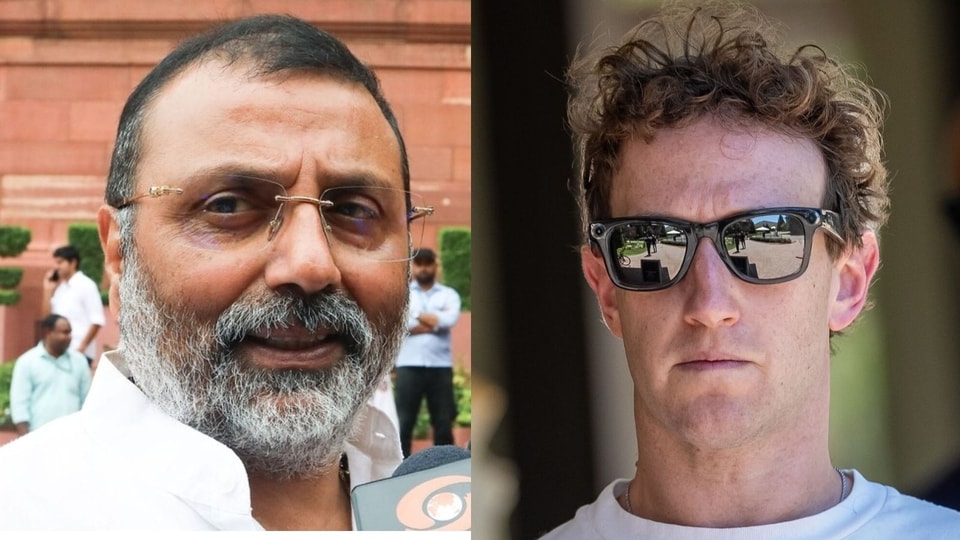
A fresh controversy has erupted between the Indian government and social media giant Meta after BJP MP and Parliamentary Standing Committee on Communications and IT Chairman Nishikant Dubey demanded a personal apology from Meta CEO Mark Zuckerberg over the temporary removal of a video featuring Prime Minister Narendra Modi from Facebook.
The issue surfaced after a video of PM Modi was reportedly unavailable on Facebook for more than five hours. Dubey described the incident as a serious matter and questioned the intentions of Meta’s leadership, alleging that the company had a history of actions that raised concerns in India.
Speaking after a meeting of the Parliamentary Standing Committee on Communications and IT, Dubey said representatives from major technology platforms, including Meta, Google, X, YouTube and Snapchat, were questioned about the matter. According to him, Meta expressed its willingness to apologise during the discussions. However, Dubey insisted that any apology must come directly from Mark Zuckerberg.
The BJP MP further alleged that this was not the first instance where Meta’s actions had created controversy in India. He referred to remarks made by Zuckerberg in January 2025 regarding the 2024 elections, when the Meta chief suggested that incumbent governments in several countries, including India, faced electoral setbacks because public trust in governments had declined after the Covid-19 pandemic. Those comments triggered criticism from Indian political circles, leading Meta to later issue a clarification and apology.
Dubey claimed that the repeated controversies reflected what he described as an attempt to influence or destabilise democratic processes. He warned that if Zuckerberg failed to issue a direct apology, authorities should consider withdrawing the company’s safe harbour protection under Section 79 of the Information Technology Act. Safe harbour provisions protect online platforms from being held legally liable for user-generated content, provided they comply with legal obligations.
Beyond the PM Modi video controversy, Dubey also raised concerns about the functioning of social media algorithms. He alleged that the visibility and reach of recognised political parties, including the BJP, Congress, Samajwadi Party and Aam Aadmi Party, were lower than those of newer organisations and groups that are not registered political entities or NGOs.
According to Dubey, established political parties collectively receive viewership figures of around 23 million, while non-registered groups achieve even higher visibility. He cited the example of a recently formed anti-reservation forum that reportedly gained millions of views within days of its creation. Dubey argued that platform policies favour newer accounts and organisations, potentially affecting political discourse and public engagement.

The parliamentary panel chief also highlighted concerns related to online safety, particularly the presence of child sexual abuse material (CSAM) on digital platforms. He alleged that platforms such as Meta and YouTube have not done enough to remove such content and raised broader concerns about the handling of content involving women and vulnerable groups.
Dubey further pointed to ongoing compliance issues involving both the Ministry of Home Affairs and the Ministry of Electronics and Information Technology. He also referred to legal action taken against Meta in Telangana, where state authorities have previously examined complaints involving content moderation and platform accountability.
The controversy is likely to intensify the ongoing debate over the role of global technology companies in India, particularly regarding content moderation, algorithmic transparency, platform accountability and the responsibilities that come with safe harbour protections. As scrutiny of social media platforms grows, the parliamentary committee’s demands could add further pressure on Meta to explain its actions and strengthen its engagement with Indian regulators.
site-verification-ok


Ray ID: 8f3a2c1b9d4e5f6a · Performance & security by Cloudflare
site-verification-ok
Ray ID: 8f3a2c1b9d4e5f6a · Performance & security by Cloudflare
site-verification-ok
 English
 Gujarati
 Hindi
Hindi Kannada
 Malayalam
 Marathi
 Punjabi
 Tamil
Tamil Telugu