

 India


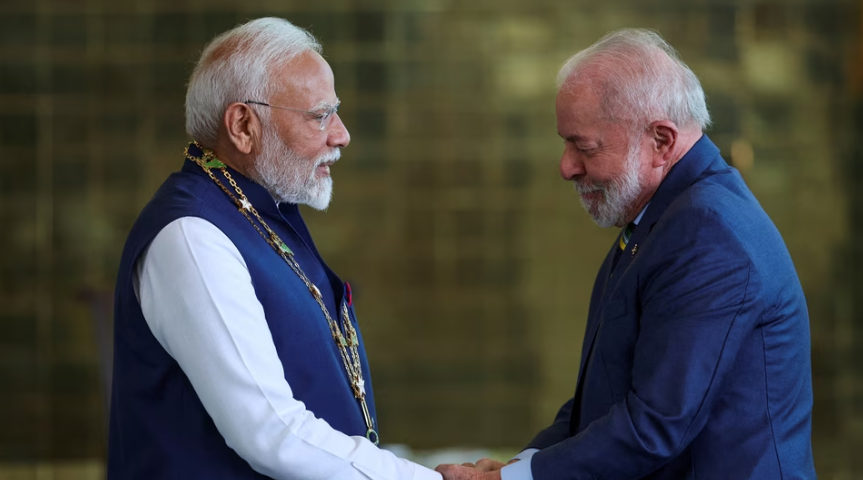
Brazilian President Luiz Inácio Lula da Silva’s re-election is expected to provide continuity to India-Brazil relations, with both countries seeking to expand economic cooperation, strengthen their voice in the Global South and push for reforms in international institutions.
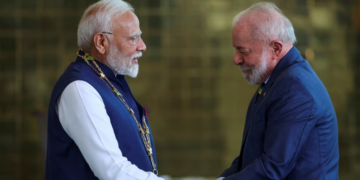
Prime Minister Narendra Modi congratulated Lula on his victory in Brazil’s presidential run-off election on Monday, describing the result as remarkable and expressing his desire to work closely with the Brazilian leader to deepen the bilateral strategic partnership.
In his congratulatory message on social media, Modi said India and Brazil would continue to strengthen cooperation across several sectors, advance the shared priorities of the Global South and work towards a more inclusive, equitable and sustainable world.
Lula’s victory secures him a fourth, non-consecutive presidential term, with the Brazilian leader approaching his 81st birthday. His return is significant for New Delhi as Brazil remains an important partner in India’s efforts to promote a more representative international order and reform global governance institutions, including the United Nations.
India and Brazil seek stronger economic ties
India-Brazil relations have gained momentum amid changing global trade dynamics and growing efforts by emerging economies to diversify their commercial partnerships.
In 2025, US President Donald Trump imposed 50% tariffs on both India and Brazil, among the steepest duties introduced by his administration. The tariffs brought the two countries closer as they explored ways to manage the economic fallout and reduce their vulnerability to external trade pressures.
Lula reached out to Modi following the US tariff measures, with both leaders pledging to deepen cooperation in areas including trade, energy, defence and technology. Lula had also stressed the two countries’ commitment to defending multilateralism.

The Brazilian president subsequently visited India with a large business delegation, underscoring his administration’s interest in strengthening economic integration with New Delhi.
During their engagement, the two countries set an ambitious target of increasing bilateral trade to $30 billion by 2030. The goal reflects the growing importance of their economic relationship, with bilateral trade reportedly increasing by 25% in 2025 compared with the previous year.
For India, stronger ties with Brazil also support its efforts to expand its presence in Latin America, a region that has received comparatively less attention from New Delhi in recent decades. Closer engagement could open new opportunities for Indian businesses while helping both countries diversify export markets and supply chains.
Rare earths emerge as a strategic priority
Beyond conventional trade, critical minerals and rare earth elements have emerged as important areas of cooperation between India and Brazil.
The two countries have concluded agreements related to rare earths and mining, reflecting their shared interest in strengthening access to strategically important resources. These materials are essential to several advanced technologies, clean-energy applications and industrial supply chains.
India’s push to expand renewable energy, develop infrastructure and strengthen domestic manufacturing has increased the importance of securing reliable supplies of critical minerals.
China’s dominant position in the global processing and supply of several critical minerals has also encouraged countries to explore alternative sources and partnerships. Brazil, which is estimated to possess the world’s third-largest rare earth reserves, could become an important supplier as India seeks to diversify its sourcing options.
Cooperation in mining and mineral development could therefore extend beyond immediate commercial benefits, creating opportunities for technology sharing, investment and more resilient supply chains.
Defence, space and digitalisation offer further opportunities
India and Brazil also have complementary strengths in several sectors that could support the next phase of their strategic partnership.
Brazil could benefit from India’s experience in defence manufacturing, space technology and digitalisation, while Indian companies could explore opportunities in the Brazilian market through stronger industrial and technological cooperation.
Defence cooperation is particularly relevant as both countries seek to strengthen domestic capabilities and expand their strategic autonomy. Collaboration in manufacturing, technology and related industrial sectors could create opportunities for businesses in both economies.
Space and digital technologies also offer scope for partnerships, particularly as emerging economies look to improve connectivity, technological capacity and public-service delivery.
BRICS and G20 cooperation strengthens the Global South
India and Brazil have also worked together through multilateral platforms such as BRICS and the G20 to advocate a more equitable international order.
Both countries have called for reforms to global institutions to better reflect the interests and growing economic weight of developing nations. Their cooperation is especially relevant as emerging economies seek a greater role in decisions concerning international finance, trade, security and development.
Brazil also played an important role in helping India secure a unanimous joint declaration at the recent BRICS Summit, despite differences between Iran and the United Arab Emirates.
Lula’s re-election is expected to preserve continuity in Brazil’s engagement with these multilateral groupings and provide New Delhi with an established partner on several shared priorities.
The Brazilian president had skipped the BRICS Summit hosted by India last month to concentrate on his election campaign. His victory now offers both governments an opportunity to build on their existing diplomatic engagement.
What Lula’s victory means for New Delhi
Lula’s return to office comes as political divisions deepen across South America, with right-wing forces making gains in several countries. His victory over right-wing senator Flavio Bolsonaro, the son of former president Jair Bolsonaro, is also being interpreted as a rejection of aspects of the political direction associated with the Trump administration in the region.
For India, however, the central significance lies in the continuity of a partnership that spans trade, critical minerals, defence, technology and multilateral diplomacy.
With both countries facing shifting trade relationships and an increasingly competitive global economic environment, closer coordination could help them pursue common interests while expanding their strategic options.
The $30 billion trade target for 2030, agreements on rare earths and mining, and cooperation through BRICS and the G20 provide a foundation for deeper engagement.
Ultimately, Lula’s re-election presents India with an opportunity to consolidate its relationship with one of Latin America’s largest economies and strengthen its broader outreach to the Global South. Whether this translates into lasting gains will depend on how effectively both governments turn diplomatic commitments into commercial partnerships, investment and concrete cooperation across strategic sectors.

 English
 Gujarati
 Hindi
 Kannada
 Malayalam
 Marathi
 Punjabi
 Tamil
 Telugu