





 India
India

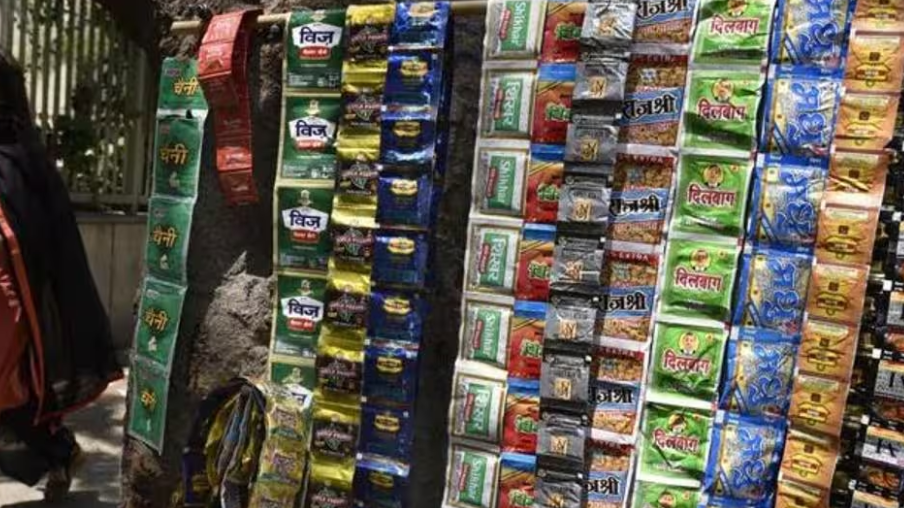
The Karnataka government has decided to withdraw its yearlong ban on gutka and tobacco-containing pan masala, just two days after the prohibition came into effect, following strong objections from legislators who warned that the move could adversely affect arecanut growers and trigger significant agricultural losses.
Chief Minister D.K. Shivakumar has directed officials to withdraw the order following a meeting with BJP and Congress legislators, including BJP MLA Araga Jnanendra and Congress MLA D.G. Shanthana Gowda. The legislators reportedly highlighted concerns over the potential impact of the ban on the market for arecanut, a crop on which thousands of farmers across Karnataka depend.
The decision to reverse the prohibition also comes amid questions within the government over the manner in which the ban was notified. According to an official familiar with the developments, the issue was discussed during Thursday’s Cabinet meeting. Shivakumar was reportedly unhappy that the Food Safety Commissioner’s order had been issued without his prior knowledge and questioned health department officials about why the matter had not been brought to his attention before the notification.
The prohibition was issued on August 10 under Section 30(2)(a) of the Food Safety and Standards Act, 2006, along with Regulation 2.3.4 of the Food Safety and Standards (Prohibition and Restrictions on Sales) Regulations, 2011. It covered the manufacture, storage, transportation, distribution and sale of gutka, pan masala and other products containing tobacco or nicotine.
The order applied to both packaged and unpackaged products. It also covered products sold separately in a manner that allowed consumers to mix tobacco-containing ingredients with other substances.
Arecanut growers at centre of controversy
The biggest opposition to the ban has come from regions where arecanut cultivation is a major source of agricultural income. Legislators argued that a sudden prohibition could weaken demand for arecanut and put farmers who have already invested heavily in cultivation under financial pressure.
Former Karnataka chief minister and BJP MP Basavaraj Bommai said the government must balance public health objectives with the economic interests of farmers. He stressed that arecanut cultivation had expanded beyond the traditional Malnad region into several districts, increasing the number of farmers dependent on the crop.

“Farmers wait for five years for the arecanut crop. They invest throughout this period. Already, arecanut growers are facing problems. The government should provide compensation to farmers if such a decision is taken,” Bommai said.
JD(S) MLA A. Manju also demanded that the government reverse the prohibition, warning that any decision affecting arecanut farmers could face strong resistance in the Malnad region.
Manju said a large section of the population in the region depends on arecanut farming and warned that legislators would support farmers if protests were launched against the government.
BJP alleges cigarette industry lobbying
BJP MP B.Y. Raghavendra went further, alleging that cigarette companies had lobbied for the ban and demanding that the government withdraw the order immediately.
Speaking at a press conference in Shivamogga on Friday, Raghavendra claimed that the prohibition had already affected arecanut prices in the market.
“The ban would impact arecanut growers. The price of areca had already come down in the market within a day of the order,” he said.
Raghavendra also questioned the government’s broader public-health approach, arguing that restrictions should be applied consistently to tobacco and other harmful products.
He pointed to the availability of cigarettes and liquor and criticised the Congress government for increasing the number of liquor licences and shops while targeting gutka and pan masala.
The Karnataka government’s decision to withdraw the ban therefore reflects a sharp reversal just days after the Food Safety Commissioner issued the notification. While the original prohibition was framed as a public-health measure, the political backlash has centred largely on the economic consequences for arecanut farmers.
The controversy also highlights the difficult balance between restricting tobacco and nicotine products on health grounds and protecting agricultural communities whose livelihoods are linked to crops used in such products. With legislators from the BJP, Congress and JD(S) raising concerns, the government has now opted to withdraw the order rather than allow the dispute to escalate into a wider confrontation with arecanut-growing communities.




 English
 Gujarati
 Hindi
Hindi Kannada
 Malayalam
 Marathi
 Punjabi
 Tamil
Tamil Telugu