

 India
India

RELATED POSTS
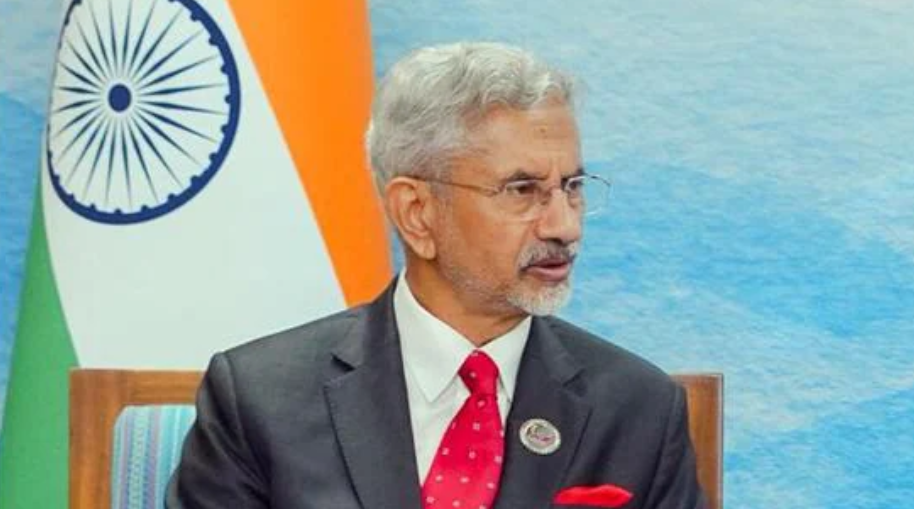
External Affairs Minister S. Jaishankar on Thursday underscored India’s firm commitment to combating terrorism and safeguarding maritime security while addressing key regional security challenges at the ASEAN Regional Forum (ARF) and East Asia Summit (EAS) meetings in Manila, Philippines.
Speaking at the 27-member ASEAN Regional Forum, Jaishankar stressed that the international community must adopt a policy of “zero tolerance” towards terrorism. He warned that terrorist acts must carry consequences and called for stronger global efforts to choke the financial networks that sustain extremist organizations.
Highlighting India’s contribution to regional counterterrorism initiatives, Jaishankar noted that India is co-chairing the Experts Working Group on Counter-Terrorism under the ASEAN Defence Ministers’ Meeting-Plus (ADMM+), alongside Malaysia. The initiative is focused on developing a compendium of best practices to strengthen collective responses against terrorism.
The minister emphasized that the ARF remains an important platform for discussing political and security issues across the Indo-Pacific at a time of increasing geopolitical uncertainty. The forum includes ASEAN member states as well as major global powers such as the United States, China, Russia, the European Union, Japan, India and others.
On maritime security, Jaishankar highlighted India’s growing role in ensuring the safety of international sea lanes. He pointed to the Indian Navy’s Information Fusion Centre–Indian Ocean Region in Gurugram, the Indo-Pacific Maritime Domain Awareness initiative, and the deployment of Indian naval assets from the North Arabian Sea to the Western Pacific as important contributions to countering piracy, trafficking, narcotics smuggling and other maritime threats.
Referring to recent attacks on commercial shipping linked to the Russia-Ukraine conflict and tensions in West Asia, Jaishankar said that assaults on merchant vessels, civilian infrastructure and maritime commerce are unacceptable. He stressed that international waterways must remain secure and open for global trade.
The external affairs minister also reiterated India’s support for a substantive, effective and legally binding Code of Conduct in the South China Sea that fully complies with the United Nations Convention on the Law of the Sea (UNCLOS) 1982 and respects the legitimate rights of all users.
Addressing emerging security concerns, Jaishankar called for vigilance against attempts to undermine global non-proliferation and disarmament efforts. He advocated a responsible and human-centric approach to artificial intelligence while urging deeper cooperation on cybersecurity and cybercrime challenges.
At the East Asia Summit, Jaishankar described the current global order as increasingly uncertain and volatile, where strategic rivalries are often overshadowing economic priorities. He warned that multiple ongoing conflicts have heightened concerns surrounding energy, food and health security.
The minister also called for dialogue and diplomacy to resolve the conflict in West Asia. Reaffirming India’s long-standing position, he supported a two-state solution to achieve lasting peace and highlighted India’s growing humanitarian assistance to Palestinians through contributions to the UN Relief and Works Agency for Palestine Refugees (UNRWA).
Jaishankar announced that India will host two major East Asia Summit events later this year — the EAS Conference on Maritime Security Cooperation in Kochi and the EAS Maritime Heritage Festival in Lothal — further underlining New Delhi’s commitment to regional cooperation and a stable Indo-Pacific.




 English
 Gujarati
 Hindi
Hindi Kannada
 Malayalam
 Marathi
 Punjabi
 Tamil
Tamil Telugu