



 India


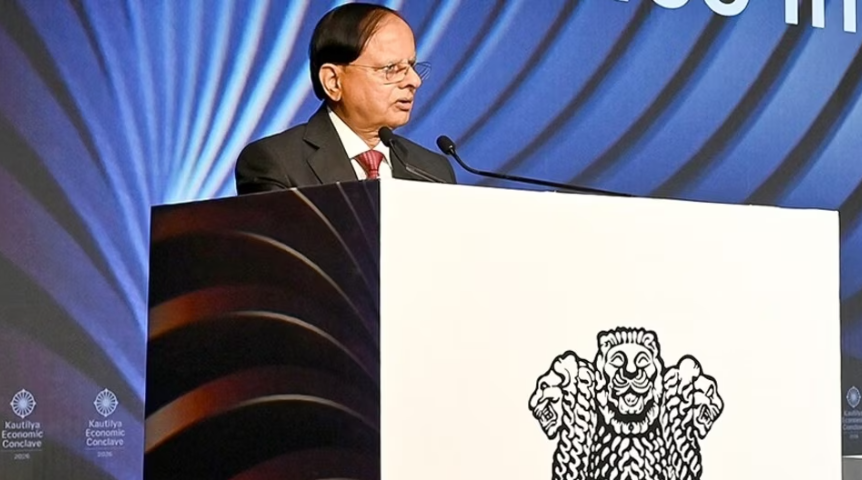
India has called for stronger international cooperation, resilient infrastructure and more effective disaster financing to address growing risks posed by climate change, rapid urbanisation and environmental degradation. Principal Secretary to the Prime Minister P K Mishra stressed that countries must prioritise disaster prevention, preparedness and recovery to protect not only human lives but also infrastructure, economic assets and development gains.
Addressing the Meeting of Senior Officials on Disaster Risk Reduction, convened by the United Nations Office for Disaster Risk Reduction (UNDRR) and co-chaired by India and the United Kingdom, Mishra highlighted the increasingly interconnected nature of disaster risks. He noted that climate change, expanding urban centres, infrastructure development and environmental degradation were creating complex challenges that required coordinated responses across sectors and institutions.
While improvements in early warning systems, disaster preparedness and emergency response have helped save lives, economic losses caused by disasters remain significant. Mishra called for a comprehensive approach that moves beyond departmental silos and accounts for the cascading effects of interconnected risks.
He emphasised the need to accelerate implementation of the Sendai Framework for Disaster Risk Reduction through 2030, with greater attention to prevention, mitigation and institutional capacity. The framework provides an international roadmap for reducing disaster risks and limiting their impact on communities, economies and infrastructure.
Highlighting India’s initiatives under Prime Minister Narendra Modi, Mishra referred to the Ten-Point Agenda on Disaster Risk Reduction introduced in 2016 and amendments to the Disaster Management Act in 2025. These efforts reflect India’s focus on strengthening disaster management systems and integrating risk reduction into development planning.
AI and early warning systems in focus
Mishra underscored the growing role of artificial intelligence (AI), machine learning and multi-hazard early warning systems in improving disaster preparedness. He stressed that technological advancements must translate into timely action on the ground to minimise casualties and economic damage.
According to his remarks, early warnings must be supported by effective response mechanisms and adequate financing. Without timely action and resources, even advanced warning systems may not deliver their full potential in protecting vulnerable communities.

He also called for resilient infrastructure, stronger urban institutions and the integration of nature-based solutions into development strategies. Such measures, he emphasised, are essential to reduce exposure to disasters and ensure that development does not create additional vulnerabilities.
On disaster financing, Mishra advocated an outcome-based approach in which investments deliver measurable improvements in resilience. He stressed that governments and institutions must ensure public resources are used effectively to strengthen preparedness, reduce risks and limit long-term economic losses.
Mishra further highlighted the importance of planning recovery and reconstruction mechanisms in advance. He said rebuilding efforts after disasters should address existing vulnerabilities rather than reproduce the conditions that made communities susceptible to damage in the first place.
India pushes international collaboration
Reaffirming India’s commitment to global cooperation, Mishra highlighted the establishment of the G20 Working Group on Disaster Risk Reduction during India’s G20 Presidency in 2023. He also pointed to continued efforts to strengthen international collaboration during India’s BRICS chairship.
He outlined three key priorities for the global community: improving the understanding of emerging and interconnected disaster risks; making more effective investments in resilience across public finance, infrastructure, cities and natural systems; and strengthening institutions through practical international cooperation.
Mishra called for countries to consolidate the progress achieved under the Sendai Framework and accelerate its implementation before 2030. He emphasised that disaster risk reduction must become an integral part of development planning rather than remain limited to emergency response.
Looking ahead, Mishra said the coming decade would be critical in demonstrating whether countries could safeguard the lives, assets, infrastructure and development achievements of their communities. India’s call for stronger international partnerships underscores the need for coordinated action, sustainable investment and effective institutions to address the growing challenges of disaster risk.




 English
 Gujarati
 Hindi
 Kannada
 Malayalam
 Marathi
 Punjabi
 Tamil
 Telugu