


 India
India

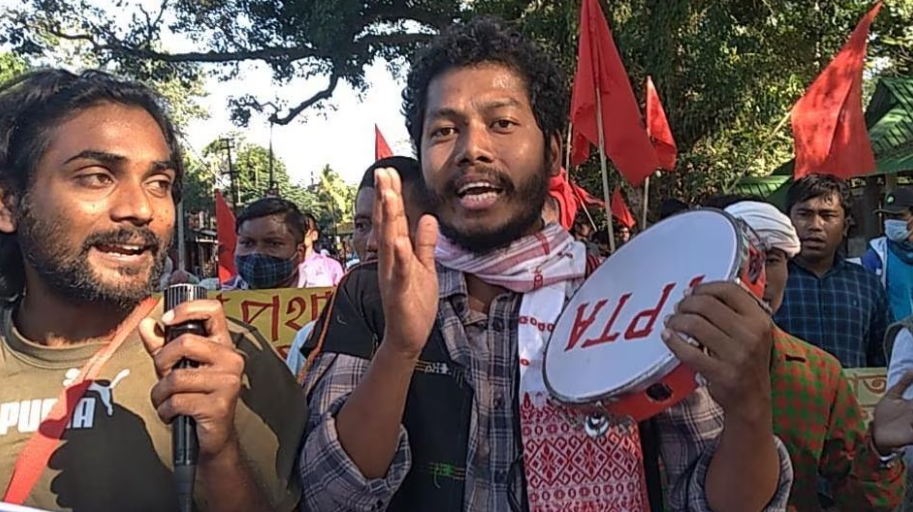
The Assam government has invoked the National Security Act (NSA) against environmental activist Pranab Doley, ensuring his continued detention despite a local court granting him bail earlier this week in connection with protests against a proposed luxury hotel project near Kaziranga National Park and Tiger Reserve (KNPTR).
Doley was arrested on July 12 after leading demonstrations in Ingle Pathar village, located close to the UNESCO World Heritage Site. The protests were aimed at opposing the construction of a luxury hotel that forms part of the Assam government’s tourism development plans for the Kaziranga region. The state government had announced the project in 2023, arguing that it would boost tourism and economic activity in the area.
According to police, Doley and other protesters unlawfully entered the site where a tea tribes museum and the hotel project are being developed jointly by a private company and the state-run Assam Tourism Development Corporation. Authorities alleged that protesters damaged property and assaulted police personnel during the agitation.
However, on July 29, Additional Sessions Judge Nur Muhammad Abdullah Ahmed of Golaghat granted bail to Doley. In his order, the judge observed that the investigation had progressed substantially, with witness statements already recorded by the investigating officer. The court also noted that there was little risk of the accused tampering with evidence or fleeing, particularly as his passport remained in police custody.
The court order highlighted the broader context behind the protests, describing the dispute as stemming from concerns about environmental degradation and its impact on the socio-cultural identity of local tea tribe communities. The judge remarked that issues involving ecological preservation and indigenous communities should not be addressed solely through criminal prosecution. He emphasized that genuine public order is maintained by engaging with affected communities rather than suppressing their concerns. The court directed Doley’s release upon furnishing a surety bond of ₹20,000.
The development took a dramatic turn shortly after the bail order. The Assam government issued a detention order under the National Security Act, citing police records and intelligence reports. According to the communication, authorities believe Doley’s activities pose a threat to public order and state security.
The government alleged that Doley has been named in 13 criminal cases and has repeatedly participated in activities ranging from road blockades to damage of public property. Officials claimed these actions were intended to create unrest and disrupt law and order.

The detention order also referred to alleged violations of the Foreign Contribution (Regulation) Act (FCRA). Authorities cited approximately ₹4.5 lakh in foreign currency transactions between 2018 and 2025 and noted that Doley had travelled to 14 foreign countries between 2017 and 2026. The government described these transactions and visits as suspicious and said they warranted closer scrutiny.
Invoking Section 3(2) of the National Security Act, the Assam government concluded that Doley’s detention was necessary to prevent actions deemed prejudicial to the security of the state and the maintenance of public order.
The move has intensified debate over the balance between environmental activism, indigenous rights, development projects and the use of preventive detention laws. While supporters view Doley as a campaigner defending Kaziranga’s fragile ecosystem and local communities, authorities maintain that his activities have crossed legal boundaries and threaten public order.
The case is likely to draw wider attention as questions emerge over the use of the NSA against a prominent environmental activist involved in protests linked to one of India’s most ecologically sensitive regions.
site-verification-ok


Ray ID: 8f3a2c1b9d4e5f6a · Performance & security by Cloudflare
site-verification-ok
Ray ID: 8f3a2c1b9d4e5f6a · Performance & security by Cloudflare
site-verification-ok



 English
 Gujarati
 Hindi
Hindi Kannada
 Malayalam
 Marathi
 Punjabi
 Tamil
Tamil Telugu