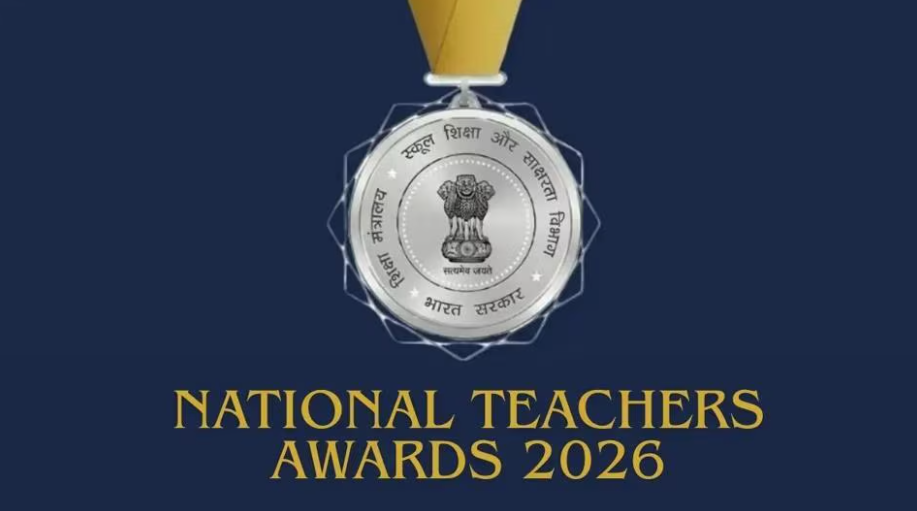
Twenty-one teachers from higher education institutions and polytechnics will be honoured with the National Teachers Awards 2026 for their contributions to research, innovation and community-focused education.
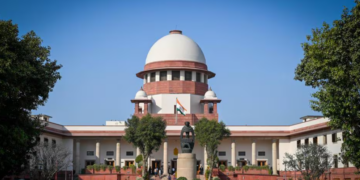
President Droupadi Murmu will confer the awards on September 5 at Vigyan Bhawan in New Delhi. The higher education awardees are part of a group of 69 teachers being recognised this year, including 48 school teachers. Prime Minister Narendra Modi is also scheduled to interact with the awardees ahead of Teachers’ Day.
The awards highlight a changing role for university educators, with research increasingly extending beyond classrooms into laboratories, communities and technology-driven projects.
At BITS Pilani, Prof Vinay Chamola has been recognised for his work spanning artificial intelligence, the Internet of Things, drones, cybersecurity and healthcare. His team is developing autonomous drones designed to operate in difficult or dangerous environments, including disaster zones. The research also focuses on energy-efficient navigation and autonomous charging. Chamola is additionally promoting low-cost, programmable drones to help school students learn robotics and programming.
At IIT Roorkee, Prof Avlokita Agrawal has focused on sustainable architecture and community participation. One school project in Uttarakhand involved students, parents and teachers in the design process. The building used locally available bricks and nearly 3,700-3,800 filler-clay pots in its roof, reducing concrete use and helping keep the structure cooler.
Prof Jayrajsinh Sarvaiya of the National Forensic Sciences University has developed postgraduate programmes in forensic pharmacy, food forensics and medical devices. His centre has handled thousands of cases involving pharmaceutical, food and agricultural evidence, giving students exposure to live investigations.
Other awardees include IIT Hyderabad’s Prof Kirti Chandra Sahu, whose research on raindrops at different altitudes aims to improve weather forecasting and climate modelling.
At Karnataka Samskrit University, Prof Shivani V is combining Paninian grammar with AI, computational linguistics and digital humanities to expand Sanskrit scholarship through digital platforms.
Meanwhile, IIT Bombay’s Prof Vikram Vishal has contributed to research on carbon capture, utilisation and storage (CCUS) and established a field laboratory focused on the technology.


 India
India





 English
 Gujarati
 Hindi
Hindi Kannada
 Malayalam
 Marathi
 Punjabi
 Tamil
Tamil Telugu