
 India
India

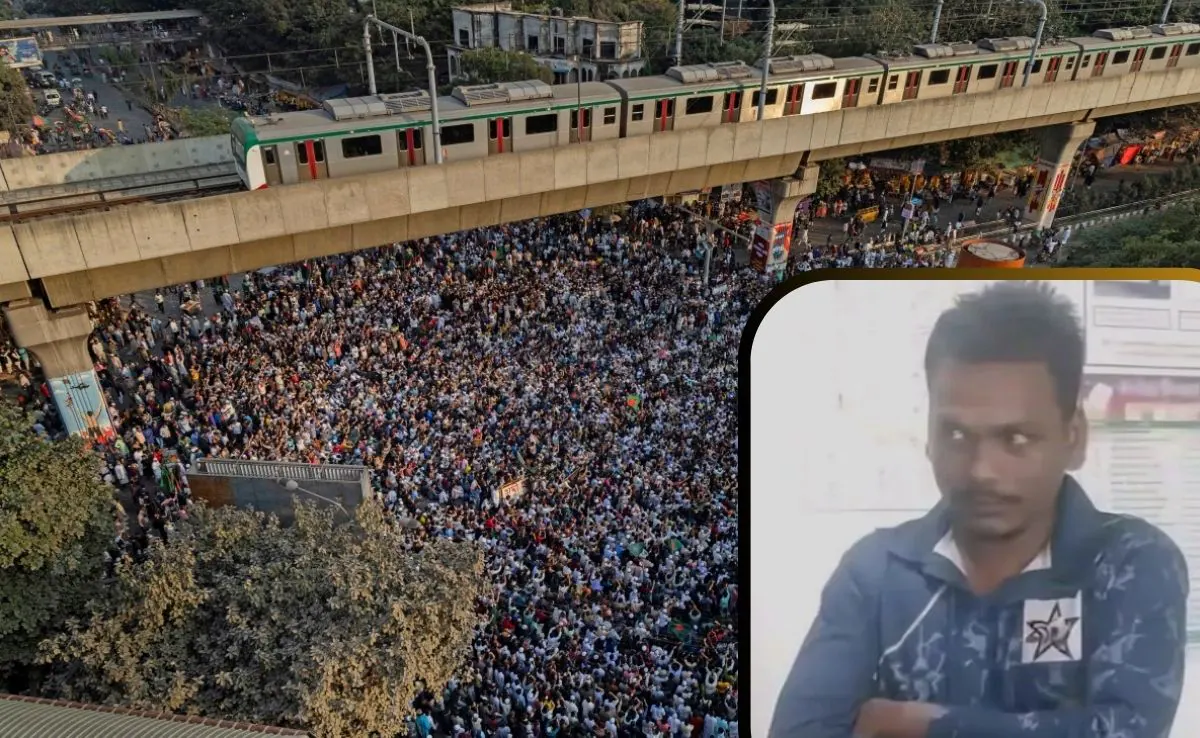
The father of a Hindu man lynched by a mob in Bangladesh’s Mymensingh district has spoken publicly about the horrifying final moments of his son, describing how the young man was tied to a tree, doused in kerosene, and set on fire amid a wave of unrest sweeping the country.
The victim, identified as 27-year-old Dipu Chandra Das, was killed on Friday as violence flared in several parts of Bangladesh following the death of youth leader Sharif Osman Hadi. The unrest, which initially erupted as protests, soon spiralled into targeted attacks and mob violence in multiple districts.
Speaking to NDTV, Dipu’s father, Ravilal Das, said the family first learned about the incident through social media before word began spreading locally. “We found out about it when someone told me he was beaten badly. Half an hour later, my uncle came and told me they took my son and tied him to a tree,” he said.
Describing the incident as “horrible,” Ravilal alleged that the attackers poured kerosene on his son and set him ablaze. “Then they poured kerosene on him and set him on fire. His burned body was left outside,” he told NDTV, adding that the family was left devastated and helpless in the aftermath.
The grieving father also expressed deep disappointment with the response of the authorities, claiming that no assurance had been provided by the Bangladesh government. “No one from the government has given any assurance. No one said anything,” he said.
In response to the killing, Bangladesh’s interim chief adviser Muhammad Yunus said that seven people had been arrested in connection with the lynching. The administration confirmed that the Rapid Action Battalion (RAB-14) conducted raids at multiple locations and detained the suspects.
Those arrested have been identified as Md. Limon Sarkar (19), Md. Tarek Hossain (19), Md. Manik Mia (20), Ershad Ali (39), Nijum Uddin (20), Alomgir Hossain (38), and Md. Miraj Hossain Akon (46). The government described Dipu as a “Sanatan Hindu youth” and said the arrests were part of an ongoing investigation.
In an official statement, the Yunus administration strongly condemned the lynching, asserting that “there is no place for such violence in the new Bangladesh” and promising that those responsible would not be spared.
The killing has occurred against the backdrop of widespread unrest following Hadi’s death, with protests taking on sharp anti-India overtones. Demonstrations were reported near the Indian High Commission in Dhaka and at assistant high commissions in Chittagong, Khulna, and Rajshahi. Several media offices, including that of The Daily Star, were also attacked during the violence.
Earlier this week, Bangladesh’s High Commissioner to India, Riaz Hamidullah, was summoned by India’s external affairs ministry, which formally conveyed its concern over the deteriorating security situation and threats to Indian diplomatic missions from extremist elements.
The lynching of Dipu Chandra Das has further intensified scrutiny over minority safety in Bangladesh at a time when political instability and street violence continue to grip the country.


 English
 Gujarati
 Hindi
Hindi Kannada
 Malayalam
 Marathi
 Punjabi
 Tamil
Tamil Telugu