


 India
India

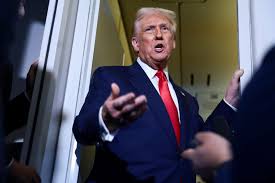
The United States has significantly expanded its travel restrictions, with the Donald Trump administration adding 20 more countries to its existing list, taking the total number of affected nations to 40. Of these, 19 countries now face a complete travel ban, barring their nationals from entering the US, while several others have been placed under partial restrictions.
The White House said President Trump signed a new proclamation aimed at “expanding and strengthening entry restrictions on nationals from countries with demonstrated, persistent, and severe deficiencies in screening, vetting, and information-sharing.” According to the administration, the move is intended to protect the US from national security and public safety threats. The expanded restrictions are scheduled to come into force on January 1.
Countries facing a complete US travel ban
Under the updated proclamation, nationals from the following 19 countries are now subject to a total ban on entry into the United States:
Syria
Burkina Faso
Mali
Niger
South Sudan
Laos
Sierra Leone
Myanmar
Chad
Republic of Congo
Equatorial Guinea
Haiti
Eritrea
Iran
Libya
Somalia
Sudan
Yemen
Afghanistan
In addition, Palestinian Authority passport holders have also been barred from entering the US under the revised rules.
More countries under partial restrictions
Apart from the complete bans, Washington has imposed partial travel restrictions on several other countries, largely from Africa and the Caribbean. These measures may include limits on certain visa categories or heightened screening requirements rather than an outright ban.
Countries facing partial restrictions include Nigeria, Ivory Coast, and Senegal, along with Angola, Antigua and Barbuda, Benin, Dominica, Gabon, The Gambia, Malawi, Mauritania, Tanzania, Zambia, Zimbabwe, and the Polynesian nation of Tonga, according to AFP.
The inclusion of Nigeria, Africa’s most populous country, and Senegal and Ivory Coast—both set to feature in the upcoming FIFA World Cup hosted by the US, Canada, and Mexico—has drawn particular attention.
Why has the US imposed these restrictions?
The Trump administration says the expanded travel ban is part of a broader effort to tighten immigration and entry standards. Officials have pointed to inadequate vetting systems, weak information-sharing mechanisms, and security concerns in the affected countries.
The move follows the recent arrest of an Afghan national suspected of involvement in the shooting of two US National Guard troops over Thanksgiving weekend, an incident that administration officials cited as reinforcing the need for stricter controls.
Critics, however, have described the decision as discriminatory and unfair, arguing that it disproportionately affects developing nations and prevents ordinary citizens from traveling for education, work, or family reasons.
Earlier this year, Trump had announced bans on citizens from 12 countries, with restrictions on seven others. The latest proclamation also reiterates the administration’s position that it seeks to prevent entry by foreigners who could “undermine or destabilise” US culture, institutions, or founding principles.
Syria remains a focal point
Syria’s inclusion has drawn renewed scrutiny, coming days after the deaths of two US troops and a civilian in the conflict-hit country. Although Washington has recently taken steps to rehabilitate Syria diplomatically following the fall of Bashar al-Assad, US officials maintain that security risks remain high.
Syrian authorities have claimed the perpetrator involved in the recent violence was a security force member due to be dismissed over alleged extremist Islamist views.





 English
 Gujarati
 Hindi
Hindi Kannada
 Malayalam
 Marathi
 Punjabi
 Tamil
Tamil Telugu