





 India
India

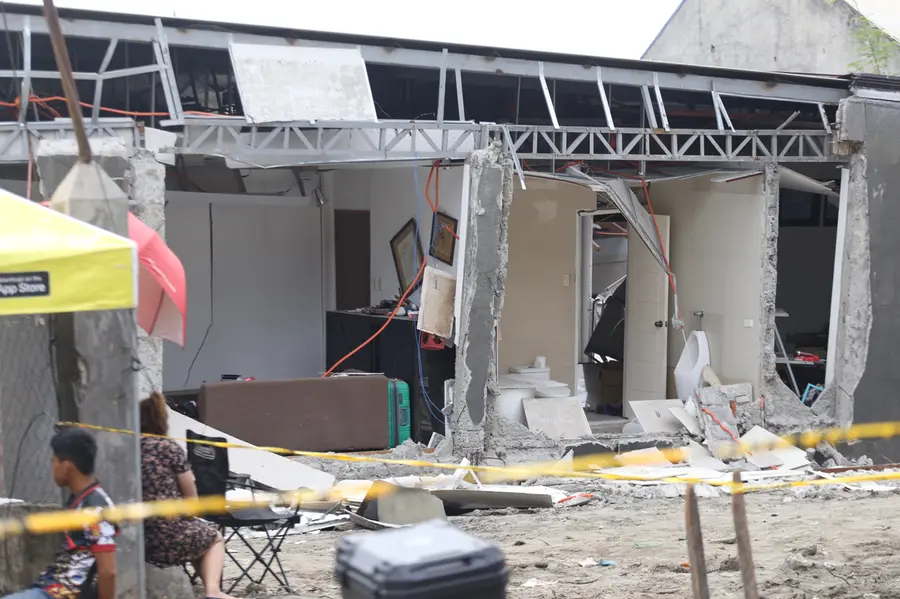
Two powerful offshore earthquakes struck the southern Philippines hours apart on Friday, killing at least seven people, setting off landslides, and prompting tsunami warnings that forced thousands to flee coastal areas. The first quake, a magnitude 7.4 tremor, struck off the coast of Davao Oriental province, while a second 6.8-magnitude quake followed later the same night in the same region.
According to the Philippine Institute of Seismology and Volcanology (Phivolcs), both quakes occurred along the Philippine Trench but had different epicenters and depths. Phivolcs chief Teresito Bacolcol described the event as a “doublet quake” — two strong earthquakes occurring close together but separately. “Both happened in the same area but have different strengths and epicenters,” he told The Associated Press, warning that the second quake could further weaken already damaged structures.
President Ferdinand Marcos Jr. said damage assessments were ongoing, and rescue and relief operations were being prepared. “Our priority is to ensure the safety of affected communities,” he said in a statement.
The first quake was centered 43 kilometers east of Manay town at a depth of 23 kilometers. It caused severe shaking across Davao Oriental, Davao de Oro, and nearby provinces. At least seven people were confirmed dead — two from heart attacks during the quake, one from falling debris in Mati city, and several others in landslides that buried homes in Pantukan town, a remote gold-mining area. Another victim was reported in Davao city, where hundreds were also injured.
Cracks appeared in several structures, including Davao International Airport, though flights continued as scheduled. “I was driving when everything started to shake. Power lines swayed, and people ran out into the streets,” said local disaster officer Jun Saavedra from Governor Generoso town. Schools were evacuated across Davao region, with dozens of students treated for fainting, dizziness, or minor injuries.
A tsunami warning was issued for six coastal provinces, later lifted after no major waves were detected. Small sea fluctuations were recorded in parts of the Philippines and Indonesia’s North Sulawesi province.
The Philippines, located along the Pacific “Ring of Fire,” frequently experiences earthquakes and volcanic eruptions. The country is still recovering from a 6.9-magnitude quake in late September that killed at least 74 people in Cebu. Adding to the strain, about 20 typhoons and storms batter the archipelago every year, underscoring the country’s constant battle with natural disasters.

Meanwhile, a separate 6.0-magnitude earthquake struck off Papua New Guinea’s coast the same day, though no damage or injuries were reported.






 English
 Gujarati
 Hindi
Hindi Kannada
 Malayalam
 Marathi
 Punjabi
 Tamil
Tamil Telugu