
 India
India

Moscow has summoned a senior Italian diplomat to express its displeasure over what it calls an “anti-Russian campaign” in Italian media outlets, escalating tensions between the two nations as they continue to clash over Ukraine and political rhetoric.
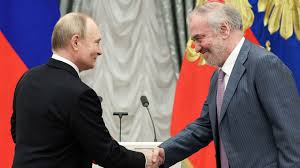
The Russian foreign ministry said Tuesday that the Italian charge d’affaires in Moscow was called in over what it described as a wave of biased and hostile reporting by Italian news organizations. Although no specific examples were cited, the ministry linked the media environment to Italy’s recent cancellation of a concert featuring pro-Kremlin conductor Valery Gergiev.
Gergiev, known for his vocal support of Russian President Vladimir Putin, was set to perform on July 27 at a historic palace near Naples. The event, however, was cancelled amid public outcry, protests by Italian politicians, and strong opposition from members of Russia’s exiled dissident community. The decision sparked considerable debate across Italy, reflecting the nation’s growing discomfort with high-profile cultural links to Moscow.
The diplomatic row deepened further when Russia lashed out at Italian President Sergio Mattarella, placing him on a public list of Western leaders accused of using “the language of hatred” against the Kremlin. In response, Rome summoned Russia’s ambassador to protest the inclusion, describing it as an unjustified personal attack on a head of state.
The list also includes German Chancellor Friedrich Merz and other prominent European figures who have criticized Moscow’s invasion of Ukraine. Italy, a staunch ally of Ukraine since the war began in 2022, has not only imposed sanctions on Russia but has also welcomed thousands of Ukrainian refugees fleeing the conflict.
Relations between the two countries have been under sustained pressure for years, but recent events have intensified the friction. Cultural boycotts, media narratives, and diplomatic tit-for-tats now reflect the broader geopolitical rupture that has emerged between Russia and much of Europe.
As both sides continue to exchange barbs, the Gergiev controversy and criticism of Mattarella are fast becoming symbols of the broader disintegration of once-functional ties between Rome and Moscow.


 English
 Gujarati
 Hindi
Hindi Kannada
 Malayalam
 Marathi
 Punjabi
 Tamil
Tamil Telugu