


 India
India

In a sweeping overhaul of the United States’ diplomatic machinery, the US State Department is set to lay off more than 1,300 employees as part of President Donald Trump’s previously notified reorganisation plan. The decision, which stems from efforts to streamline operations and reduce redundancies, will affect hundreds of civil servants and foreign service officers, according to internal communications accessed by the Associated Press (AP).
Layoff notices will be issued to 1,107 civil servants and 246 foreign service officers with domestic assignments. Civil servants will receive a 60-day separation notice, while foreign service officers will be placed on administrative leave for 120 days, following which their termination will be formalised.
An internal staff notice stated, “In connection with the departmental reorganisation … the department is streamlining domestic operations to focus on diplomatic priorities.” It further emphasised that “headcount reductions” would target non-core functions, duplicative or redundant offices, and areas where efficiency could be achieved through consolidation.
The reorganisation blueprint, first sent to Congress in May, calls for an 18% staff reduction and elimination of several programs. These include offices tied to immigration, human rights, democracy promotion, and oversight of America’s role in Afghanistan. In total, more than 300 bureaus and offices could be impacted due to overlap or unclear mandates.
Despite criticism and ongoing lawsuits challenging the legality of these layoffs, the Supreme Court recently lifted lower court-imposed injunctions, clearing the way for the implementation of the plan. However, legal challenges are still under review.
Deputy Secretary for Management and Resources, Michael Rigas, issued a note to staff thanking them for their “dedication and service,” acknowledging the difficult transition ahead.
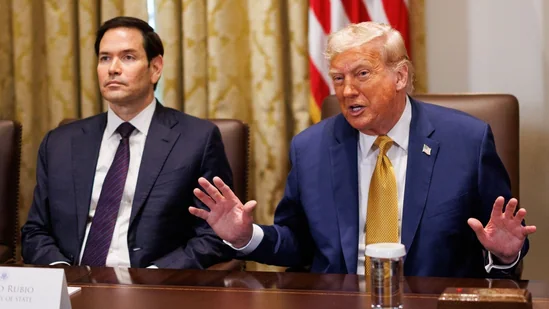
US Secretary of State Marco Rubio, speaking from Kuala Lumpur, defended the decision as a “deliberate step” aimed at boosting efficiency and strategic focus. He clarified that “some of these are positions being eliminated, not people,” and pointed out that several affected roles were either unfilled or set to become vacant due to early retirements.

While the move signals a significant transformation in the State Department’s structure and scope, it also marks a deeper shift in the Trump administration’s foreign policy priorities—favouring leaner bureaucracy and a reduction in soft power initiatives.



 English
 Gujarati
 Hindi
Hindi Kannada
 Malayalam
 Marathi
 Punjabi
 Tamil
Tamil Telugu