

• Home
    • All
    • Art
    • Bollywood
    • Business
    • Cricket
    • Crypto
    • Culture
    • Daily Horoscope
    • Economy
    • Elections
    • Entertainment
    • Fashion
    • Gaming
    • Health
    • History
    • India
    • Lifestyle
    • Movie Reviews
    • Photos
    • Politics
    • Sci-Tech
    • Science
    • Sports
    • Tech
    • Trending
    • TV
    • Uncategorized
    • Web Series
    • World News
    New rules on animal testing must take India forward, not backwards: Maneka Gandhi Officials maintain the changes seek to simplify approvals for research institutions, pharmaceutical and biomedical industries. Updated on: Oct 26, 2026, 14:54:47 IST By Jasjeev Gandhiok Prefer HTPrefer HT Prefer HT on Google Share The Centre’s draft rules governing animal experimentation have triggered concerns among animal rights groups, which say the changes could weaken independent oversight and make it easier for laboratories to conduct experiments on animals. However, officials maintain the changes seek to simplify approvals for research institutions, pharmaceutical and biomedical industries.  Former Union minister Maneka Gandhi. Former Union minister Maneka Gandhi. HT speaks to animal rights activist and former Union minister Maneka Gandhi, a long-time campaigner against animal experimentation. Edited excerpts:   A major change to animal experimentation, proposed in the draft, is that mild and moderate experiments could be approved by an institution’s own ethics committee rather than going to the central regulator. In practical terms, what does this change mean for an animal inside a laboratory? Does it make it easier for more animals to be experimented on? It means the animal loses the one independent pair of eyes that was looking at its fate. Today, experiments on animals larger than a rat go to the central regulator, and there is at least someone outside the building asking whether this experiment is necessary at all. Under the draft, the people who want to do the experiment, their colleagues and their department heads will be the ones approving it. And it is the institution itself, through its own veterinarian, that decides whether the experiment is mild or moderate in the first place. No institution has ever turned down its own funding. So yes, it will make it easier, and it will make it faster, and that means more animals. Mild and moderate are also the bulk of experiments, so we are effectively handing over most of animal experimentation in India to self regulation.  The draft classifies experiments as mild, moderate, severe and non-recovery. Is there a concern that the institution conducting the research will effectively decide how severe the experiment is. Does this leave a grey area? It isn’t grey, it is completely black. Under this draft, the institution that wants to do the experiment is also the one that decides which category it falls into. That decision matters enormously, because if the experiment is classified as mild or moderate, the institution’s own committee approves it and it never goes to the central regulator. Only severe and non-recovery experiments on larger animals go outside. So the same people who want the experiment approved are deciding whether anyone independent will ever examine it. That is a clear conflict of interest, and it will push experiments towards the lower categories. Starving a rat for a day is called mild. Keeping a social animal alone in a cage is mild. Starving it for two days, or putting it through distress it cannot escape, is moderate. So is testing herbal products, testing established drugs, and anything described as having “known and reversible effects,” which could mean almost anything. This is not a scientific list. It is the most common commercial work.  The draft also creates exceptions and allows laboratories to use animals from open markets, unregistered sources, and in certain circumstances, stray, feral, wild and protected animals. What is the biggest risk that this may create for animals in practice? Could community dogs, lost pets or animals taken from the wild find their way into laboratories? The biggest risk is that nobody will know where an animal came from. The whole point of registered breeders was traceability. Once you allow open markets and unregistered sources for cattle, goats, birds and fish, you create a demand, and in this country demand is met very quickly by people who will pick up anything. Strays and wild animals can be used if a “competent authority” permits it, and the draft never says who that is. Community dogs, someone’s lost pet, birds from illegal markets, all of it can find its way into a laboratory. These exceptions should be removed completely. If a lab cannot get an animal from a registered source, it should not be doing that experiment.  The draft formally incorporates the principles of replacement, reduction and refinement, but critics say these safeguards become weaker if institutions themselves are approving experiments. Do you believe India should now be moving towards replacing animal experiments altogether, particularly when the health ministry has already allowed certain drug testing through non-animal methods? What should the rules do differently? Yes, and we are not starting from zero. The health ministry has already amended the drug rules to accept non-animal methods. The world is moving this way because these methods are often more predictive for humans than a mouse ever was. Writing replacement, reduction and refinement into the rules means nothing if the person checking compliance is the institution itself. The rules should make it mandatory to show that no validated alternative exists before an animal is used, set up a national body to validate and promote alternatives, put money into them, and set timelines to phase out animal use in areas where alternatives are already available. A rule that only mentions replacement as a principle is decoration.  You have worked on animal experimentation regulation for decades. What specific changes would you want the government to make to this draft? I don’t think this draft can be fixed. There is hardly a provision in it that doesn’t need changing, and when everything needs to change, it is better to start again. So the draft should be put aside and written afresh, this time with independent scientists, animal welfare organisations and legal experts at the table. The new rules must take India forward, not backwards. Animals already have certain protections under the law which cannot be taken away. New should be building on them.

    New rules on animal testing must take India forward, not backwards: Maneka Gandhi Officials maintain the changes seek to simplify approvals for research institutions, pharmaceutical and biomedical industries. Updated on: Oct 26, 2026, 14:54:47 IST By Jasjeev Gandhiok Prefer HTPrefer HT Prefer HT on Google Share The Centre’s draft rules governing animal experimentation have triggered concerns among animal rights groups, which say the changes could weaken independent oversight and make it easier for laboratories to conduct experiments on animals. However, officials maintain the changes seek to simplify approvals for research institutions, pharmaceutical and biomedical industries. Former Union minister Maneka Gandhi. Former Union minister Maneka Gandhi. HT speaks to animal rights activist and former Union minister Maneka Gandhi, a long-time campaigner against animal experimentation. Edited excerpts: A major change to animal experimentation, proposed in the draft, is that mild and moderate experiments could be approved by an institution’s own ethics committee rather than going to the central regulator. In practical terms, what does this change mean for an animal inside a laboratory? Does it make it easier for more animals to be experimented on? It means the animal loses the one independent pair of eyes that was looking at its fate. Today, experiments on animals larger than a rat go to the central regulator, and there is at least someone outside the building asking whether this experiment is necessary at all. Under the draft, the people who want to do the experiment, their colleagues and their department heads will be the ones approving it. And it is the institution itself, through its own veterinarian, that decides whether the experiment is mild or moderate in the first place. No institution has ever turned down its own funding. So yes, it will make it easier, and it will make it faster, and that means more animals. Mild and moderate are also the bulk of experiments, so we are effectively handing over most of animal experimentation in India to self regulation. The draft classifies experiments as mild, moderate, severe and non-recovery. Is there a concern that the institution conducting the research will effectively decide how severe the experiment is. Does this leave a grey area? It isn’t grey, it is completely black. Under this draft, the institution that wants to do the experiment is also the one that decides which category it falls into. That decision matters enormously, because if the experiment is classified as mild or moderate, the institution’s own committee approves it and it never goes to the central regulator. Only severe and non-recovery experiments on larger animals go outside. So the same people who want the experiment approved are deciding whether anyone independent will ever examine it. That is a clear conflict of interest, and it will push experiments towards the lower categories. Starving a rat for a day is called mild. Keeping a social animal alone in a cage is mild. Starving it for two days, or putting it through distress it cannot escape, is moderate. So is testing herbal products, testing established drugs, and anything described as having “known and reversible effects,” which could mean almost anything. This is not a scientific list. It is the most common commercial work. The draft also creates exceptions and allows laboratories to use animals from open markets, unregistered sources, and in certain circumstances, stray, feral, wild and protected animals. What is the biggest risk that this may create for animals in practice? Could community dogs, lost pets or animals taken from the wild find their way into laboratories? The biggest risk is that nobody will know where an animal came from. The whole point of registered breeders was traceability. Once you allow open markets and unregistered sources for cattle, goats, birds and fish, you create a demand, and in this country demand is met very quickly by people who will pick up anything. Strays and wild animals can be used if a “competent authority” permits it, and the draft never says who that is. Community dogs, someone’s lost pet, birds from illegal markets, all of it can find its way into a laboratory. These exceptions should be removed completely. If a lab cannot get an animal from a registered source, it should not be doing that experiment. The draft formally incorporates the principles of replacement, reduction and refinement, but critics say these safeguards become weaker if institutions themselves are approving experiments. Do you believe India should now be moving towards replacing animal experiments altogether, particularly when the health ministry has already allowed certain drug testing through non-animal methods? What should the rules do differently? Yes, and we are not starting from zero. The health ministry has already amended the drug rules to accept non-animal methods. The world is moving this way because these methods are often more predictive for humans than a mouse ever was. Writing replacement, reduction and refinement into the rules means nothing if the person checking compliance is the institution itself. The rules should make it mandatory to show that no validated alternative exists before an animal is used, set up a national body to validate and promote alternatives, put money into them, and set timelines to phase out animal use in areas where alternatives are already available. A rule that only mentions replacement as a principle is decoration. You have worked on animal experimentation regulation for decades. What specific changes would you want the government to make to this draft? I don’t think this draft can be fixed. There is hardly a provision in it that doesn’t need changing, and when everything needs to change, it is better to start again. So the draft should be put aside and written afresh, this time with independent scientists, animal welfare organisations and legal experts at the table. The new rules must take India forward, not backwards. Animals already have certain protections under the law which cannot be taken away. New should be building on them.

    Orissa High Court Rules SC/ST Status Cannot Be Carried Across State Borders

    Orissa High Court Rules SC/ST Status Cannot Be Carried Across State Borders

    Supreme Court Seeks Centre’s Response to Challenge Against Chhattisgarh Anti-Conversion Law

    Supreme Court Seeks Centre’s Response to Challenge Against Chhattisgarh Anti-Conversion Law

    Lula’s Brazil Re-Election: What It Means for India’s Trade, Rare Earths and Global South Push

    Lula’s Brazil Re-Election: What It Means for India’s Trade, Rare Earths and Global South Push

    IAF Chief AP Singh Flies Final Sortie in Kiran Aircraft, Reunites With First Flying Instructor

    IAF Chief AP Singh Flies Final Sortie in Kiran Aircraft, Reunites With First Flying Instructor

    Rubio Backs India’s Energy Diversification, Offers US Support Amid Russian Oil Debate

    Rubio Backs India’s Energy Diversification, Offers US Support Amid Russian Oil Debate

    Trending Tags

    • Movie
    • Music
  • Trending
  • India
    • Politics
    • States
    • Elections
    • Results
  • World News
  • Business
    • Economy
    • Markets
    • Real Estate
    • Crypto
  • More
    • Entertainment
      • Bollywood
      • TV
      • Movie Reviews
      • Web Series
    • Sports
      • Cricket
      • Football
      • Games
    • Sci-Tech
      • Science
      • Tech
      • Gadgets
      • Gaming
    • Culture
      • History
      • Festivals
      • Art
      • Temples
      • Scriptures
    • Lifestyle
      • Fashion
      • Food
      • Health
      • Travel
    • Student’s Corner
      • Exam
      • Exam Results
      • Schools
      • Universities
    • Astrology
      • Daily Horoscope
      • Monthly Horoscope
      • Days
  • Opinion
  • Login
  • Register
  • Home
    • All
    • Art
    • Bollywood
    • Business
    • Cricket
    • Crypto
    • Culture
    • Daily Horoscope
    • Economy
    • Elections
    • Entertainment
    • Fashion
    • Gaming
    • Health
    • History
    • India
    • Lifestyle
    • Movie Reviews
    • Photos
    • Politics
    • Sci-Tech
    • Science
    • Sports
    • Tech
    • Trending
    • TV
    • Uncategorized
    • Web Series
    • World News
    New rules on animal testing must take India forward, not backwards: Maneka Gandhi Officials maintain the changes seek to simplify approvals for research institutions, pharmaceutical and biomedical industries. Updated on: Oct 26, 2026, 14:54:47 IST By Jasjeev Gandhiok Prefer HTPrefer HT Prefer HT on Google Share The Centre’s draft rules governing animal experimentation have triggered concerns among animal rights groups, which say the changes could weaken independent oversight and make it easier for laboratories to conduct experiments on animals. However, officials maintain the changes seek to simplify approvals for research institutions, pharmaceutical and biomedical industries.  Former Union minister Maneka Gandhi. Former Union minister Maneka Gandhi. HT speaks to animal rights activist and former Union minister Maneka Gandhi, a long-time campaigner against animal experimentation. Edited excerpts:   A major change to animal experimentation, proposed in the draft, is that mild and moderate experiments could be approved by an institution’s own ethics committee rather than going to the central regulator. In practical terms, what does this change mean for an animal inside a laboratory? Does it make it easier for more animals to be experimented on? It means the animal loses the one independent pair of eyes that was looking at its fate. Today, experiments on animals larger than a rat go to the central regulator, and there is at least someone outside the building asking whether this experiment is necessary at all. Under the draft, the people who want to do the experiment, their colleagues and their department heads will be the ones approving it. And it is the institution itself, through its own veterinarian, that decides whether the experiment is mild or moderate in the first place. No institution has ever turned down its own funding. So yes, it will make it easier, and it will make it faster, and that means more animals. Mild and moderate are also the bulk of experiments, so we are effectively handing over most of animal experimentation in India to self regulation.  The draft classifies experiments as mild, moderate, severe and non-recovery. Is there a concern that the institution conducting the research will effectively decide how severe the experiment is. Does this leave a grey area? It isn’t grey, it is completely black. Under this draft, the institution that wants to do the experiment is also the one that decides which category it falls into. That decision matters enormously, because if the experiment is classified as mild or moderate, the institution’s own committee approves it and it never goes to the central regulator. Only severe and non-recovery experiments on larger animals go outside. So the same people who want the experiment approved are deciding whether anyone independent will ever examine it. That is a clear conflict of interest, and it will push experiments towards the lower categories. Starving a rat for a day is called mild. Keeping a social animal alone in a cage is mild. Starving it for two days, or putting it through distress it cannot escape, is moderate. So is testing herbal products, testing established drugs, and anything described as having “known and reversible effects,” which could mean almost anything. This is not a scientific list. It is the most common commercial work.  The draft also creates exceptions and allows laboratories to use animals from open markets, unregistered sources, and in certain circumstances, stray, feral, wild and protected animals. What is the biggest risk that this may create for animals in practice? Could community dogs, lost pets or animals taken from the wild find their way into laboratories? The biggest risk is that nobody will know where an animal came from. The whole point of registered breeders was traceability. Once you allow open markets and unregistered sources for cattle, goats, birds and fish, you create a demand, and in this country demand is met very quickly by people who will pick up anything. Strays and wild animals can be used if a “competent authority” permits it, and the draft never says who that is. Community dogs, someone’s lost pet, birds from illegal markets, all of it can find its way into a laboratory. These exceptions should be removed completely. If a lab cannot get an animal from a registered source, it should not be doing that experiment.  The draft formally incorporates the principles of replacement, reduction and refinement, but critics say these safeguards become weaker if institutions themselves are approving experiments. Do you believe India should now be moving towards replacing animal experiments altogether, particularly when the health ministry has already allowed certain drug testing through non-animal methods? What should the rules do differently? Yes, and we are not starting from zero. The health ministry has already amended the drug rules to accept non-animal methods. The world is moving this way because these methods are often more predictive for humans than a mouse ever was. Writing replacement, reduction and refinement into the rules means nothing if the person checking compliance is the institution itself. The rules should make it mandatory to show that no validated alternative exists before an animal is used, set up a national body to validate and promote alternatives, put money into them, and set timelines to phase out animal use in areas where alternatives are already available. A rule that only mentions replacement as a principle is decoration.  You have worked on animal experimentation regulation for decades. What specific changes would you want the government to make to this draft? I don’t think this draft can be fixed. There is hardly a provision in it that doesn’t need changing, and when everything needs to change, it is better to start again. So the draft should be put aside and written afresh, this time with independent scientists, animal welfare organisations and legal experts at the table. The new rules must take India forward, not backwards. Animals already have certain protections under the law which cannot be taken away. New should be building on them.

    New rules on animal testing must take India forward, not backwards: Maneka Gandhi Officials maintain the changes seek to simplify approvals for research institutions, pharmaceutical and biomedical industries. Updated on: Oct 26, 2026, 14:54:47 IST By Jasjeev Gandhiok Prefer HTPrefer HT Prefer HT on Google Share The Centre’s draft rules governing animal experimentation have triggered concerns among animal rights groups, which say the changes could weaken independent oversight and make it easier for laboratories to conduct experiments on animals. However, officials maintain the changes seek to simplify approvals for research institutions, pharmaceutical and biomedical industries. Former Union minister Maneka Gandhi. Former Union minister Maneka Gandhi. HT speaks to animal rights activist and former Union minister Maneka Gandhi, a long-time campaigner against animal experimentation. Edited excerpts: A major change to animal experimentation, proposed in the draft, is that mild and moderate experiments could be approved by an institution’s own ethics committee rather than going to the central regulator. In practical terms, what does this change mean for an animal inside a laboratory? Does it make it easier for more animals to be experimented on? It means the animal loses the one independent pair of eyes that was looking at its fate. Today, experiments on animals larger than a rat go to the central regulator, and there is at least someone outside the building asking whether this experiment is necessary at all. Under the draft, the people who want to do the experiment, their colleagues and their department heads will be the ones approving it. And it is the institution itself, through its own veterinarian, that decides whether the experiment is mild or moderate in the first place. No institution has ever turned down its own funding. So yes, it will make it easier, and it will make it faster, and that means more animals. Mild and moderate are also the bulk of experiments, so we are effectively handing over most of animal experimentation in India to self regulation. The draft classifies experiments as mild, moderate, severe and non-recovery. Is there a concern that the institution conducting the research will effectively decide how severe the experiment is. Does this leave a grey area? It isn’t grey, it is completely black. Under this draft, the institution that wants to do the experiment is also the one that decides which category it falls into. That decision matters enormously, because if the experiment is classified as mild or moderate, the institution’s own committee approves it and it never goes to the central regulator. Only severe and non-recovery experiments on larger animals go outside. So the same people who want the experiment approved are deciding whether anyone independent will ever examine it. That is a clear conflict of interest, and it will push experiments towards the lower categories. Starving a rat for a day is called mild. Keeping a social animal alone in a cage is mild. Starving it for two days, or putting it through distress it cannot escape, is moderate. So is testing herbal products, testing established drugs, and anything described as having “known and reversible effects,” which could mean almost anything. This is not a scientific list. It is the most common commercial work. The draft also creates exceptions and allows laboratories to use animals from open markets, unregistered sources, and in certain circumstances, stray, feral, wild and protected animals. What is the biggest risk that this may create for animals in practice? Could community dogs, lost pets or animals taken from the wild find their way into laboratories? The biggest risk is that nobody will know where an animal came from. The whole point of registered breeders was traceability. Once you allow open markets and unregistered sources for cattle, goats, birds and fish, you create a demand, and in this country demand is met very quickly by people who will pick up anything. Strays and wild animals can be used if a “competent authority” permits it, and the draft never says who that is. Community dogs, someone’s lost pet, birds from illegal markets, all of it can find its way into a laboratory. These exceptions should be removed completely. If a lab cannot get an animal from a registered source, it should not be doing that experiment. The draft formally incorporates the principles of replacement, reduction and refinement, but critics say these safeguards become weaker if institutions themselves are approving experiments. Do you believe India should now be moving towards replacing animal experiments altogether, particularly when the health ministry has already allowed certain drug testing through non-animal methods? What should the rules do differently? Yes, and we are not starting from zero. The health ministry has already amended the drug rules to accept non-animal methods. The world is moving this way because these methods are often more predictive for humans than a mouse ever was. Writing replacement, reduction and refinement into the rules means nothing if the person checking compliance is the institution itself. The rules should make it mandatory to show that no validated alternative exists before an animal is used, set up a national body to validate and promote alternatives, put money into them, and set timelines to phase out animal use in areas where alternatives are already available. A rule that only mentions replacement as a principle is decoration. You have worked on animal experimentation regulation for decades. What specific changes would you want the government to make to this draft? I don’t think this draft can be fixed. There is hardly a provision in it that doesn’t need changing, and when everything needs to change, it is better to start again. So the draft should be put aside and written afresh, this time with independent scientists, animal welfare organisations and legal experts at the table. The new rules must take India forward, not backwards. Animals already have certain protections under the law which cannot be taken away. New should be building on them.

    Orissa High Court Rules SC/ST Status Cannot Be Carried Across State Borders

    Orissa High Court Rules SC/ST Status Cannot Be Carried Across State Borders

    Supreme Court Seeks Centre’s Response to Challenge Against Chhattisgarh Anti-Conversion Law

    Supreme Court Seeks Centre’s Response to Challenge Against Chhattisgarh Anti-Conversion Law

    Lula’s Brazil Re-Election: What It Means for India’s Trade, Rare Earths and Global South Push

    Lula’s Brazil Re-Election: What It Means for India’s Trade, Rare Earths and Global South Push

    IAF Chief AP Singh Flies Final Sortie in Kiran Aircraft, Reunites With First Flying Instructor

    IAF Chief AP Singh Flies Final Sortie in Kiran Aircraft, Reunites With First Flying Instructor

    Rubio Backs India’s Energy Diversification, Offers US Support Amid Russian Oil Debate

    Rubio Backs India’s Energy Diversification, Offers US Support Amid Russian Oil Debate

    Trending Tags

    • Movie
    • Music
  • Trending
  • India
    • Politics
    • States
    • Elections
    • Results
  • World News
  • Business
    • Economy
    • Markets
    • Real Estate
    • Crypto
  • More
    • Entertainment
      • Bollywood
      • TV
      • Movie Reviews
      • Web Series
    • Sports
      • Cricket
      • Football
      • Games
    • Sci-Tech
      • Science
      • Tech
      • Gadgets
      • Gaming
    • Culture
      • History
      • Festivals
      • Art
      • Temples
      • Scriptures
    • Lifestyle
      • Fashion
      • Food
      • Health
      • Travel
    • Student’s Corner
      • Exam
      • Exam Results
      • Schools
      • Universities
    • Astrology
      • Daily Horoscope
      • Monthly Horoscope
      • Days
  • Opinion
No Result
View All Result
India Reflects
No Result
View All Result
Home World News

Trump Implements Sweeping Policy Changes on Day One: Immigration, Energy, and Federal Reforms Take Center Stage

In a bold start to his presidency, Donald Trump signs executive orders reversing Biden-era policies on immigration, energy, and federal workforce management.

News Desk by News Desk
January 22, 2025
Reading Time: 2 mins read
0
Trump Implements Sweeping Policy Changes on Day One: Immigration, Energy, and Federal Reforms Take Center Stage

RELATED POSTS

Jaishankar Heads to Poland, Ukraine Next as India Pushes for Peace Dialogue

UK Power Plant Shut Down for Four Days After Suspected Iran-Linked Cyberattack

India Examining Bangladesh’s Request to Extradite Former PM Sheikh Hasina

On his first day back in office, President Donald Trump wasted no time implementing many of his campaign promises, introducing significant policy changes on immigration, energy, federal workforce, and more. These measures, aimed at reversing several Biden-era policies, signal a dramatic shift in governance and priorities.

“We will immediately restore the integrity, competency, and loyalty of America’s government,” Trump declared during his inaugural address. “With these actions, we begin the complete restoration of America and the revolution of common sense.”

Sweeping Immigration Overhaul

Trump initiated a national emergency at the southern border, deploying armed forces, including the National Guard, to bolster border security. He also signed orders to expedite deportations, ending the policy of “catch and release” and suspending refugee resettlements for six months.

One of the most controversial moves was his attempt to end birthright citizenship for children born to undocumented or temporarily present individuals. “We’re the only country that does this, and it’s absolutely ridiculous,” Trump remarked.

Additionally, the administration reinstated the “Remain in Mexico” policy for asylum seekers and introduced harsher penalties, including the death penalty, for undocumented immigrants involved in violent crimes.

Economic Reforms and Trade Policy

Trump paused the ban on TikTok for 75 days, providing ByteDance time to address security concerns. On trade, he signaled potential tariffs on Mexico and Canada, calling for a complete review of tariff policies to “protect American workers.” Trump also proposed the establishment of an “External Revenue Service” to collect funds from foreign sources via tariffs.

Energy and Climate Policies Reversed

Reversing Biden’s climate initiatives, Trump invoked emergency powers to boost domestic energy production. He announced plans to expand offshore drilling, eliminate efficiency regulations for appliances, and withdraw from the Paris Agreement. He also pledged to refill the Strategic Petroleum Reserve and terminate subsidies for electric vehicles.

Cultural and Gender Policies

In a controversial move, Trump declared that the U.S. would recognize only two biological sexes, male and female, for federal documentation. He also ended diversity, equity, and inclusion (DEI) initiatives in the federal government and military.

Federal Workforce Changes

Trump ordered an end to remote work for federal employees, instituting a return-to-office policy. He imposed a hiring freeze on most federal positions except for roles related to national security and immigration enforcement.

Foreign Policy Adjustments

Trump signed an order withdrawing the U.S. from the World Health Organization (WHO), citing concerns about funding priorities and effectiveness. He also pledged to reinstate military personnel discharged for refusing the COVID-19 vaccine, with full back pay.

Looking Ahead

President Trump’s first-day actions reflect his commitment to reshaping federal policies to align with his administration’s vision. While these sweeping changes have been welcomed by his supporters, legal challenges and public debates are expected to follow, setting the stage for a tumultuous ter

Buy JNews
ADVERTISEMENT
Tags: Donald TrumpExecutive orders
Share197Tweet123
News Desk

News Desk

A passionate news person, trying to reflect her views on the recent happenings around the globe, bringing you a nuanced perspective and keeping the ethics of journalism alive in the process. My journey started in an international newsroom, where I have covered major events and been to the roots of them.  The  South-Asian region has also caught my interest, where I have covered more of the features and cultural side of the South-Asian countries. As a journalist dedicated to ethical reporting and with a personal interest in exposing hidden narratives, I aim to offer complex perspectives that enhance comprehension of the modern, globalized world.

Related Posts

Jaishankar Heads to Poland, Ukraine Next as India Pushes for Peace Dialogue

Jaishankar Heads to Poland, Ukraine Next as India Pushes for Peace Dialogue

October 25, 2026
UK Power Plant Shut Down for Four Days After Suspected Iran-Linked Cyberattack

UK Power Plant Shut Down for Four Days After Suspected Iran-Linked Cyberattack

October 25, 2026
India Examining Bangladesh’s Request to Extradite Former PM Sheikh Hasina
World News

India Examining Bangladesh’s Request to Extradite Former PM Sheikh Hasina

July 17, 2026
India Can Help End Ukraine War, Says Polish Deputy FM; Calls PM Modi One of the Few Leaders Who Can Influence Putin
World News

India Can Help End Ukraine War, Says Polish Deputy FM; Calls PM Modi One of the Few Leaders Who Can Influence Putin

July 15, 2026
Shehbaz Sharif Recalls Difficult Iran-US Mediation, Credits Asim Munir for Helping Secure Truce
World News

Shehbaz Sharif Recalls Difficult Iran-US Mediation, Credits Asim Munir for Helping Secure Truce

July 4, 2026
India Watches Closely as Bangladesh Moves Ahead with China-Backed Teesta Project
World News

India Watches Closely as Bangladesh Moves Ahead with China-Backed Teesta Project

July 3, 2026
Live Cricket Scores
en English
en Englishgu Gujaratihi Hindikn Kannadaml Malayalammr Marathipa Punjabita Tamilte Telugu

Recommended Stories

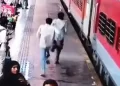
On camera, Tiger Shroff shooting suspects seen rushing to catch train in Surat before arrest in Kota The three suspects were nabbed on Monday from Rajasthan’s Kota from where they were planning to flee to Nepal via Delhi. Updated on: Oct 19, 2026, 21:00:07 IST By Shashank Rao | Edited by Sana Fazili Prefer HTPrefer HT Prefer HT on Google Share Fresh details have emerged in the shooting case involving Bollywood actor Tiger Shroff, with CCTV footage from Surat railway station helping police track down the three alleged assailants, who were arrested in Rajasthan’s Kota on Monday. Two of the three assailants seen rushing to catch the train at Surat station. (Sourced video) Two of the three assailants seen rushing to catch the train at Surat station. (Sourced video) Shroff escaped unhurt after three motorcycle-borne assailants opened fire at him in Mumbai on Sunday evening as he was leaving a club in his car after playing football. The suspects subsequently travelled by road from Mumbai to Surat, where they boarded the Pune-Jaipur Express (train 12939). They were arrested in Kota on Monday morning while allegedly attempting to flee to Nepal via Delhi. Also read: Shooters planned to kill Tiger Shroff in Mumbai, motive unclear, say police According to railway officials, a team of RPF and GRP was formed based on inputs received from the police. “The surveillance footage was checked at various stations after which they were tracked from Surat railway station. The team of rail police along with local police apprehended them at Kota the next day, at around 10.15 am,” said a Western Railway official. Fresh clip shows men rushing to catch train Deep Dive How did police track the suspects after the Tiger Shroff shooting? Where were the suspects arrested, and which train were they on? Where were the Tiger Shroff shooting suspects allegedly planning to flee? Powered By FAQ Ask HT The CCTV footages from various spots of Surat railway station show the trio rushing their way to catch the train. Two of the three men are dressed in white shirts, while the third one is seen wearing a blue T-shirt, carrying a bag. They can be seen walking hurriedly outside the station. On the platform, the trio is seen rushing past the crowd to catch the train – two running ahead and the third one closely following behind. The CCTV footages became a crucial piece of evidence for the cops who were trying to nab the assailants in the high-profile case. How investigators tracked the assailants The three suspects were detained from the general coach of the Pune-Jaipur Express when the train arrived at Kota railway station. According to the RPF, Kota division received information from the Mumbai Police crime branch about the suspects travelling on the train in connection with the firing incident in Juhu. “The joint team checked the train upon its arrival and detained the three men before they could proceed further. Preliminary information indicated that the suspects had travelled by road from Mumbai to Surat before boarding the train,” said the railway official. Who are the assailants? The suspects have been identified as Rehan alias Sukka (18), a resident of Sonipat in Haryana; Ritwik Kurmi alias Roshan Fighter (22), reportedly from Bihar and currently residing in Andheri West and a juvenile whose identity has been withheld in accordance with legal requirements. However, the police later said that none of the three assailants is a minor. The third one was identified as Phool Singh, aged 18 years. One of the accused is said to be a driver working for app based aggregator Rapido. A spokesperson for the company said in a statement: “We are deeply concerned by the incident involving Mr. Tiger Shroff and his team, and we are relieved that he is safe. We wish him a swift recovery. We are aware of media reports mentioning an individual registered as a captain on the Rapido platform. He has not been active as a captain on our platform since 14th October. As is common in India’s larger gig economy, individuals may be registered with several platforms at the same time. On the day of the incident, the individual had used Rapido’s services as a customer”. The statement further read, “We are in constant touch with the authorities and are supporting them in their investigation. We responded promptly and have shared all the information requested from us. Rapido has zero tolerance for violence or criminal activity, and we will continue to extend our full cooperation.” The suspects are being investigated for their alleged involvement in the firing incident, and their culpability will be established through the ongoing probe.

On camera, Tiger Shroff shooting suspects seen rushing to catch train in Surat before arrest in Kota The three suspects were nabbed on Monday from Rajasthan’s Kota from where they were planning to flee to Nepal via Delhi. Updated on: Oct 19, 2026, 21:00:07 IST By Shashank Rao | Edited by Sana Fazili Prefer HTPrefer HT Prefer HT on Google Share Fresh details have emerged in the shooting case involving Bollywood actor Tiger Shroff, with CCTV footage from Surat railway station helping police track down the three alleged assailants, who were arrested in Rajasthan’s Kota on Monday. Two of the three assailants seen rushing to catch the train at Surat station. (Sourced video) Two of the three assailants seen rushing to catch the train at Surat station. (Sourced video) Shroff escaped unhurt after three motorcycle-borne assailants opened fire at him in Mumbai on Sunday evening as he was leaving a club in his car after playing football. The suspects subsequently travelled by road from Mumbai to Surat, where they boarded the Pune-Jaipur Express (train 12939). They were arrested in Kota on Monday morning while allegedly attempting to flee to Nepal via Delhi. Also read: Shooters planned to kill Tiger Shroff in Mumbai, motive unclear, say police According to railway officials, a team of RPF and GRP was formed based on inputs received from the police. “The surveillance footage was checked at various stations after which they were tracked from Surat railway station. The team of rail police along with local police apprehended them at Kota the next day, at around 10.15 am,” said a Western Railway official. Fresh clip shows men rushing to catch train Deep Dive How did police track the suspects after the Tiger Shroff shooting? Where were the suspects arrested, and which train were they on? Where were the Tiger Shroff shooting suspects allegedly planning to flee? Powered By FAQ Ask HT The CCTV footages from various spots of Surat railway station show the trio rushing their way to catch the train. Two of the three men are dressed in white shirts, while the third one is seen wearing a blue T-shirt, carrying a bag. They can be seen walking hurriedly outside the station. On the platform, the trio is seen rushing past the crowd to catch the train – two running ahead and the third one closely following behind. The CCTV footages became a crucial piece of evidence for the cops who were trying to nab the assailants in the high-profile case. How investigators tracked the assailants The three suspects were detained from the general coach of the Pune-Jaipur Express when the train arrived at Kota railway station. According to the RPF, Kota division received information from the Mumbai Police crime branch about the suspects travelling on the train in connection with the firing incident in Juhu. “The joint team checked the train upon its arrival and detained the three men before they could proceed further. Preliminary information indicated that the suspects had travelled by road from Mumbai to Surat before boarding the train,” said the railway official. Who are the assailants? The suspects have been identified as Rehan alias Sukka (18), a resident of Sonipat in Haryana; Ritwik Kurmi alias Roshan Fighter (22), reportedly from Bihar and currently residing in Andheri West and a juvenile whose identity has been withheld in accordance with legal requirements. However, the police later said that none of the three assailants is a minor. The third one was identified as Phool Singh, aged 18 years. One of the accused is said to be a driver working for app based aggregator Rapido. A spokesperson for the company said in a statement: “We are deeply concerned by the incident involving Mr. Tiger Shroff and his team, and we are relieved that he is safe. We wish him a swift recovery. We are aware of media reports mentioning an individual registered as a captain on the Rapido platform. He has not been active as a captain on our platform since 14th October. As is common in India’s larger gig economy, individuals may be registered with several platforms at the same time. On the day of the incident, the individual had used Rapido’s services as a customer”. The statement further read, “We are in constant touch with the authorities and are supporting them in their investigation. We responded promptly and have shared all the information requested from us. Rapido has zero tolerance for violence or criminal activity, and we will continue to extend our full cooperation.” The suspects are being investigated for their alleged involvement in the firing incident, and their culpability will be established through the ongoing probe.

October 25, 2026
Pakistan PM Shehbaz Sharif faces backlash at home over Davos signing of Trump’s Gaza ‘Board of Peace’

Pakistan PM Shehbaz Sharif faces backlash at home over Davos signing of Trump’s Gaza ‘Board of Peace’

January 22, 2026
Many felt that KS Chithra took political sides by delivering such a message.

Singer KS Chithra Faces Backlash For Social Media Post On Ayodhya Event

January 17, 2024

Popular Stories

  • Incredible Health Benefits of Walking 5,000 Steps a Day

    Incredible Health Benefits of Walking 5,000 Steps a Day

    823 shares
    Share 329 Tweet 206
  • Jeet Adani Asks Anupam Mittal To Remove His Shaadi.com Profile Days Before Wedding To Diva Shah

    596 shares
    Share 238 Tweet 149
  • UK Welcomes PM Modi – Wembley Stadium

    557 shares
    Share 223 Tweet 139
  • Mangalyaan: India’s Mars Orbiter craft quietly bids goodbye

    532 shares
    Share 213 Tweet 133
  • “Vikram Vedha”; 15 cities receive live broadcasts of the song

    530 shares
    Share 212 Tweet 133
India Reflects

India Reflects

India's first truly global news portal brings you unbiased news based on facts from India and around the World.

Recent Posts

  • New rules on animal testing must take India forward, not backwards: Maneka Gandhi Officials maintain the changes seek to simplify approvals for research institutions, pharmaceutical and biomedical industries. Updated on: Oct 26, 2026, 14:54:47 IST By Jasjeev Gandhiok Prefer HTPrefer HT Prefer HT on Google Share The Centre’s draft rules governing animal experimentation have triggered concerns among animal rights groups, which say the changes could weaken independent oversight and make it easier for laboratories to conduct experiments on animals. However, officials maintain the changes seek to simplify approvals for research institutions, pharmaceutical and biomedical industries. Former Union minister Maneka Gandhi. Former Union minister Maneka Gandhi. HT speaks to animal rights activist and former Union minister Maneka Gandhi, a long-time campaigner against animal experimentation. Edited excerpts: A major change to animal experimentation, proposed in the draft, is that mild and moderate experiments could be approved by an institution’s own ethics committee rather than going to the central regulator. In practical terms, what does this change mean for an animal inside a laboratory? Does it make it easier for more animals to be experimented on? It means the animal loses the one independent pair of eyes that was looking at its fate. Today, experiments on animals larger than a rat go to the central regulator, and there is at least someone outside the building asking whether this experiment is necessary at all. Under the draft, the people who want to do the experiment, their colleagues and their department heads will be the ones approving it. And it is the institution itself, through its own veterinarian, that decides whether the experiment is mild or moderate in the first place. No institution has ever turned down its own funding. So yes, it will make it easier, and it will make it faster, and that means more animals. Mild and moderate are also the bulk of experiments, so we are effectively handing over most of animal experimentation in India to self regulation. The draft classifies experiments as mild, moderate, severe and non-recovery. Is there a concern that the institution conducting the research will effectively decide how severe the experiment is. Does this leave a grey area? It isn’t grey, it is completely black. Under this draft, the institution that wants to do the experiment is also the one that decides which category it falls into. That decision matters enormously, because if the experiment is classified as mild or moderate, the institution’s own committee approves it and it never goes to the central regulator. Only severe and non-recovery experiments on larger animals go outside. So the same people who want the experiment approved are deciding whether anyone independent will ever examine it. That is a clear conflict of interest, and it will push experiments towards the lower categories. Starving a rat for a day is called mild. Keeping a social animal alone in a cage is mild. Starving it for two days, or putting it through distress it cannot escape, is moderate. So is testing herbal products, testing established drugs, and anything described as having “known and reversible effects,” which could mean almost anything. This is not a scientific list. It is the most common commercial work. The draft also creates exceptions and allows laboratories to use animals from open markets, unregistered sources, and in certain circumstances, stray, feral, wild and protected animals. What is the biggest risk that this may create for animals in practice? Could community dogs, lost pets or animals taken from the wild find their way into laboratories? The biggest risk is that nobody will know where an animal came from. The whole point of registered breeders was traceability. Once you allow open markets and unregistered sources for cattle, goats, birds and fish, you create a demand, and in this country demand is met very quickly by people who will pick up anything. Strays and wild animals can be used if a “competent authority” permits it, and the draft never says who that is. Community dogs, someone’s lost pet, birds from illegal markets, all of it can find its way into a laboratory. These exceptions should be removed completely. If a lab cannot get an animal from a registered source, it should not be doing that experiment. The draft formally incorporates the principles of replacement, reduction and refinement, but critics say these safeguards become weaker if institutions themselves are approving experiments. Do you believe India should now be moving towards replacing animal experiments altogether, particularly when the health ministry has already allowed certain drug testing through non-animal methods? What should the rules do differently? Yes, and we are not starting from zero. The health ministry has already amended the drug rules to accept non-animal methods. The world is moving this way because these methods are often more predictive for humans than a mouse ever was. Writing replacement, reduction and refinement into the rules means nothing if the person checking compliance is the institution itself. The rules should make it mandatory to show that no validated alternative exists before an animal is used, set up a national body to validate and promote alternatives, put money into them, and set timelines to phase out animal use in areas where alternatives are already available. A rule that only mentions replacement as a principle is decoration. You have worked on animal experimentation regulation for decades. What specific changes would you want the government to make to this draft? I don’t think this draft can be fixed. There is hardly a provision in it that doesn’t need changing, and when everything needs to change, it is better to start again. So the draft should be put aside and written afresh, this time with independent scientists, animal welfare organisations and legal experts at the table. The new rules must take India forward, not backwards. Animals already have certain protections under the law which cannot be taken away. New should be building on them.
  • Orissa High Court Rules SC/ST Status Cannot Be Carried Across State Borders
  • Supreme Court Seeks Centre’s Response to Challenge Against Chhattisgarh Anti-Conversion Law
  • Lula’s Brazil Re-Election: What It Means for India’s Trade, Rare Earths and Global South Push
  • IAF Chief AP Singh Flies Final Sortie in Kiran Aircraft, Reunites With First Flying Instructor

Categories

  • Art
  • Bollywood
  • Business
  • Cricket
  • Crypto
  • Culture
  • Daily Horoscope
  • Economy
  • Elections
  • Entertainment
  • Fashion
  • Gaming
  • Health
  • History
  • India
  • Lifestyle
  • Movie Reviews
  • Photos
  • Politics
  • Sci-Tech
  • Science
  • Sports
  • Tech
  • Trending
  • TV
  • Uncategorized
  • Web Series
  • World News

Policy Pages

Privacy Policy

Copyright Policy

Terms Of Use

Disclaimer

Code of Ethics

Copyright © 2022 India Reflects - India Reflects Ltd. All Rights Reserved.

  • Login
  • Sign Up
  • Home
  • Trending
  • India
    • Politics
    • States
    • Elections
    • Results
  • World News
  • Business
    • Economy
    • Markets
    • Real Estate
    • Crypto
  • Entertainment
    • Bollywood
    • TV
    • Movie Reviews
    • Web Series
  • Sports
    • Cricket
    • Football
    • Games
  • Sci-Tech
    • Science
    • Tech
    • Gadgets
    • Gaming
  • Culture
    • History
    • Festivals
    • Art
    • Temples
    • Scriptures
  • Lifestyle
    • Fashion
    • Food
    • Health
    • Travel
  • Student’s Corner
    • Exam
    • Exam Results
    • Schools
    • Universities
  • Astrology
    • Daily Horoscope
    • Monthly Horoscope
    • Days
  • Opinion

Copyright © 2022 India Reflects - India Reflects Ltd. All Rights Reserved.

Welcome Back!

Login to your account below

Forgotten Password? Sign Up

Create New Account!

Fill the forms below to register

All fields are required. Log In

Retrieve your password

Please enter your username or email address to reset your password.

Log In

Add New Playlist