




 India


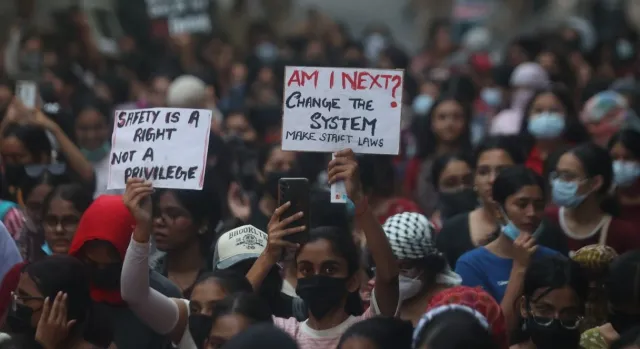
The National Human Rights Commission (NHRC) has called for greater sensitisation of police personnel to prevent victim-shaming and moral judgement of survivors of gender-based violence, urging authorities to strengthen women’s safety measures in public spaces and workplaces across India.
In an advisory titled Women’s Safety at Work and Public Spaces, dated October 23, the rights panel recommended that police officers be trained to handle complaints with sensitivity and ensure that survivors are not subjected to further harassment when approaching police stations to report violence or abuse.
The recommendations, shared through a statement issued on Tuesday, October 27, also call for regular police patrolling in crime hotspots, particularly in deserted areas at night, and the establishment of functional women’s help desks at every police station in the country.
NHRC Flags Victim-Blaming at Police Stations
Highlighting the challenges faced by survivors while seeking justice, the NHRC observed that women reporting gender-based violence often encounter resistance and moral policing at police stations.
The Commission stressed that police personnel must be adequately sensitised to avoid passing moral judgements or blaming survivors for the violence they have experienced.
To address the issue, the NHRC recommended that the relevant ministry consider developing a standard operating procedure (SOP) outlining clear protocols for dealing with victims of gender-based violence. It also suggested that these guidelines be widely circulated, including through social media, to improve awareness and ensure consistent handling of complaints.
The rights panel further recommended the introduction of time-bound response standards for helplines and police personnel responding to incidents of violence in public spaces. Regular patrolling should be prioritised in isolated locations and areas identified as crime hotspots, particularly during night hours.

According to the advisory, as of December 2025, 14,658 of the country’s 16,109 police stations had women’s help desks. The NHRC recommended that authorities take steps to ensure that the remaining police stations also establish functional help desks to provide assistance to women in distress.
NHRC Warns of Rising Technology-Facilitated Gender-Based Violence
The Commission also highlighted the changing nature of violence against women, warning that it is no longer restricted to physical harm.
With the growing use of digital technology and artificial intelligence, technology-facilitated gender-based violence has increased sharply in recent years, the NHRC cautioned.
The advisory calls for women across different age groups to be made aware of digital threats, including revenge porn, doxxing, the circulation of explicit images and videos without consent, and AI-generated deepfakes.
The rights panel recommended awareness programmes in schools, colleges, universities and workplaces to educate people about cybercrime and the mechanisms available to report such offences.
These programmes should familiarise women with grievance redressal platforms, including the National Cyber Crime Reporting Portal and the Sahyog portal, which can help address technology-related offences.
The NHRC emphasised that despite stringent laws intended to protect women’s rights, harassment remains widespread. It said a comprehensive approach to women’s safety must combine preventive and remedial measures while taking into account the different social circumstances and identities that can affect women’s experiences of violence.
Awareness Campaigns and Legal Information for Women
The Commission identified a lack of awareness about what constitutes sexual harassment and how to respond to such incidents as a major concern.
To address this gap, it recommended displaying targeted posters, flyers and other informational material in public spaces and workplaces. These materials should explain the forms of conduct that amount to sexual harassment, outline women’s legal rights and provide emergency contact numbers and information about available complaint mechanisms.
The advisory specifically mentions the Sexual Harassment Electronic Box portal as one of the mechanisms that should be publicised to facilitate reporting.
The NHRC also stressed the importance of changing societal attitudes and mindsets that influence how individuals respond to women’s safety concerns. It said efforts to prevent violence must extend beyond law enforcement and include awareness and behavioural change.
Government Authorities Given Two-Month Deadline
The NHRC has circulated the advisory to the secretaries of 10 Union ministries, including the ministries of Women and Child Development, Education, Health and Home Affairs.
It has also sent the recommendations to the chairperson and chief executive officer of the Railway Board, as well as the chief secretaries of all states and the administrators of Union Territories.
The Commission has urged the concerned authorities to implement its recommendations and submit an action taken report within two months, keeping the NHRC informed about the progress made.
The advisory seeks to strengthen institutional accountability, improve police responses to complaints and expand awareness of women’s legal protections. Its recommendations place emphasis on ensuring that women can report violence without fear of humiliation, receive timely assistance and access effective mechanisms for seeking justice.
By addressing police conduct, public safety, digital abuse and gaps in awareness, the NHRC has called for a broader and more coordinated response to women’s safety across the country.





 English
 Gujarati
 Hindi
 Kannada
 Malayalam
 Marathi
 Punjabi
 Tamil
 Telugu