

 India
India

A video circulating widely on social media, claiming to show Iran bombing Tel Aviv, is false. The clip, which gained traction amid heightened tensions in the Middle East, is entirely AI-generated and does not depict any real missile strike on Israel’s capital, according to verification by Ht.com.
The misinformation emerged after a US-Israeli airstrike reportedly killed Iran’s Supreme Leader, Ayatollah Ali Khamenei, prompting fears of retaliation. Social media users shared the video as evidence of an attack on Tel Aviv, despite the city remaining unscathed by Iranian missiles.
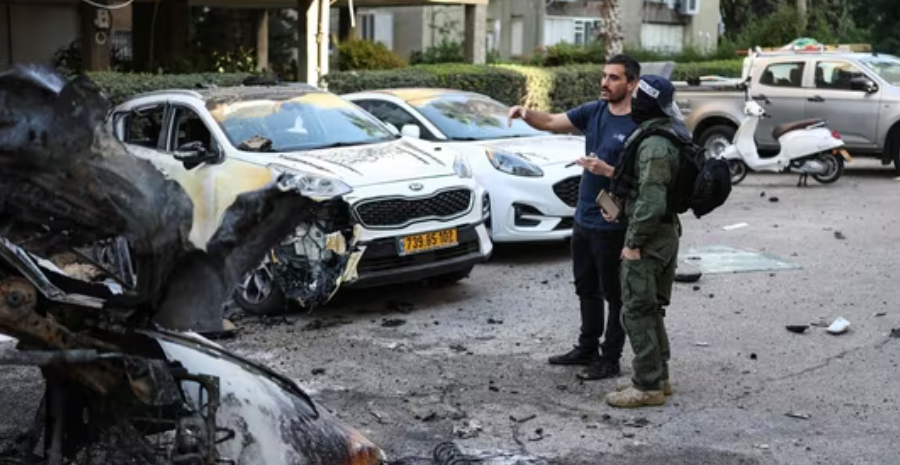
The confusion partly stems from a real incident in Ramat Gan, a city adjacent to Tel Aviv, where shrapnel from an intercepted missile caused limited damage. Israeli security forces inspected the wreckage of cars and minor building damage in the residential area. According to CNN, seven residents sustained minor injuries, and several parked vehicles were affected. Associated Press photographs confirmed the damage but showed no large-scale destruction as suggested by the viral clip.
The misleading video was originally posted on X by a user named Abdulruhman Ismail. The platform added a readers’ context under the post, clarifying the video’s artificial nature. Experts noted visible inconsistencies typical of AI-generated content, including distorted water surfaces and misaligned solar panels. Despite these warnings, the clip circulated widely, racking up millions of views across multiple X accounts.
In response to ongoing regional tensions, Israel’s Defense Minister Israel Katz and Prime Minister Benjamin Netanyahu instructed the military to advance and secure strategic positions in Lebanon following a wave of attacks. Meanwhile, Iran’s Islamic Revolutionary Guard Corps (IRGC) claimed to have targeted groups they described as counter-revolutionary in Iraq’s semi-autonomous Kurdistan Region, according to Tasnim news agency.
While the Middle East remains on edge after recent hostilities, authorities emphasize that Tel Aviv has not been struck by Iranian forces. Experts warn that viral AI-generated content can amplify panic and misinformation during periods of heightened geopolitical conflict.



 English
 Gujarati
 Hindi
Hindi Kannada
 Malayalam
 Marathi
 Punjabi
 Tamil
Tamil Telugu