
 India
India

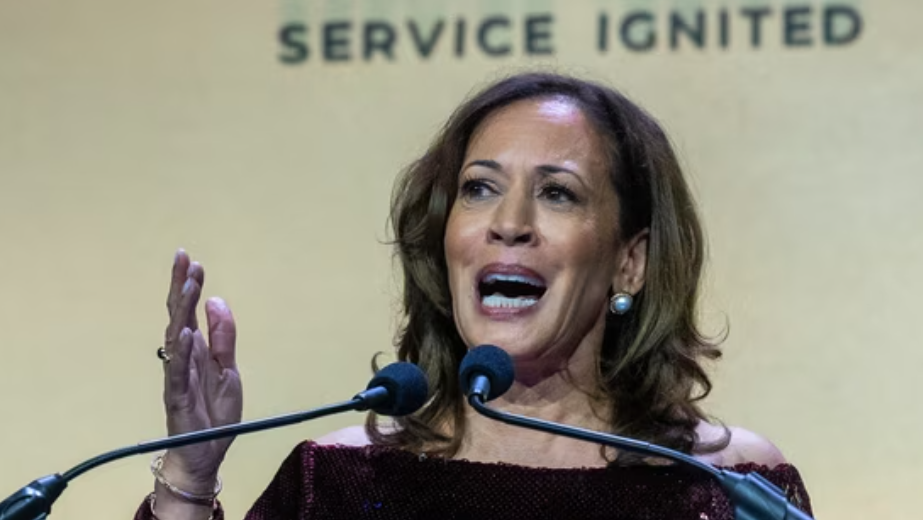
Former Vice President Kamala Harris has openly condemned President Donald Trump for authorizing the recent US-Israel strikes on Iran, calling the operation a perilous “war of choice” that lacked congressional approval. Speaking at a book tour event in Madison, Wisconsin, for her latest publication 107 Days on March 1, Harris accused Trump of dragging the United States into a conflict that could have been avoided.
The strikes, carried out on February 28, targeted Iranian military bases and government-linked facilities, reportedly resulting in the deaths of Iran’s Supreme Leader Ayatollah Ali Khamenei along with other senior officials. While the attacks marked a major escalation in US-Iran tensions, Harris insisted that the operation was reckless and posed unnecessary risks to American personnel.
“In the last 48 hours, Donald Trump has dragged America into a war that we don’t want,” Harris said. “I am opposed to a regime-change war in Iran. This was a dangerous and unnecessary gamble.” She further emphasized that the American public deserves a commander-in-chief who approaches decisions about war with discipline and careful deliberation, rather than impulsive escalation.
Despite her criticism of the strikes, Harris acknowledged the ongoing threat posed by Iran, stating unequivocally that the country “must never be allowed to have a nuclear weapon.” She cautioned that Trump’s approach—favoring direct military escalation—was not an effective way to neutralize the nuclear threat, and could instead destabilize the broader Middle East.
Harris also challenged Trump’s previous statements regarding US military operations against Iran. During his 2024 campaign, Trump claimed Operation Midnight Hammer had “completely and totally obliterated” Iran’s nuclear enrichment capabilities. However, preliminary reports from the Defense Intelligence Agency suggested the disruption was far less significant, setting back Iran’s program by only three to six months. Pentagon estimates later indicated a one- to two-year delay, while the International Atomic Energy Agency confirmed severe damage to nuclear equipment but noted that Iran’s enriched uranium stockpiles likely remained intact or had been relocated prior to the strikes.
“The chosen path of direct escalation is not the way to dismantle that threat,” Harris warned, stressing that military action alone could trigger widespread chaos throughout the Middle East. Her remarks highlight a growing debate over US foreign policy and the balance between military force and diplomatic strategy in handling Iran’s nuclear ambitions.



 English
 Gujarati
 Hindi
Hindi Kannada
 Malayalam
 Marathi
 Punjabi
 Tamil
Tamil Telugu