

 India
India

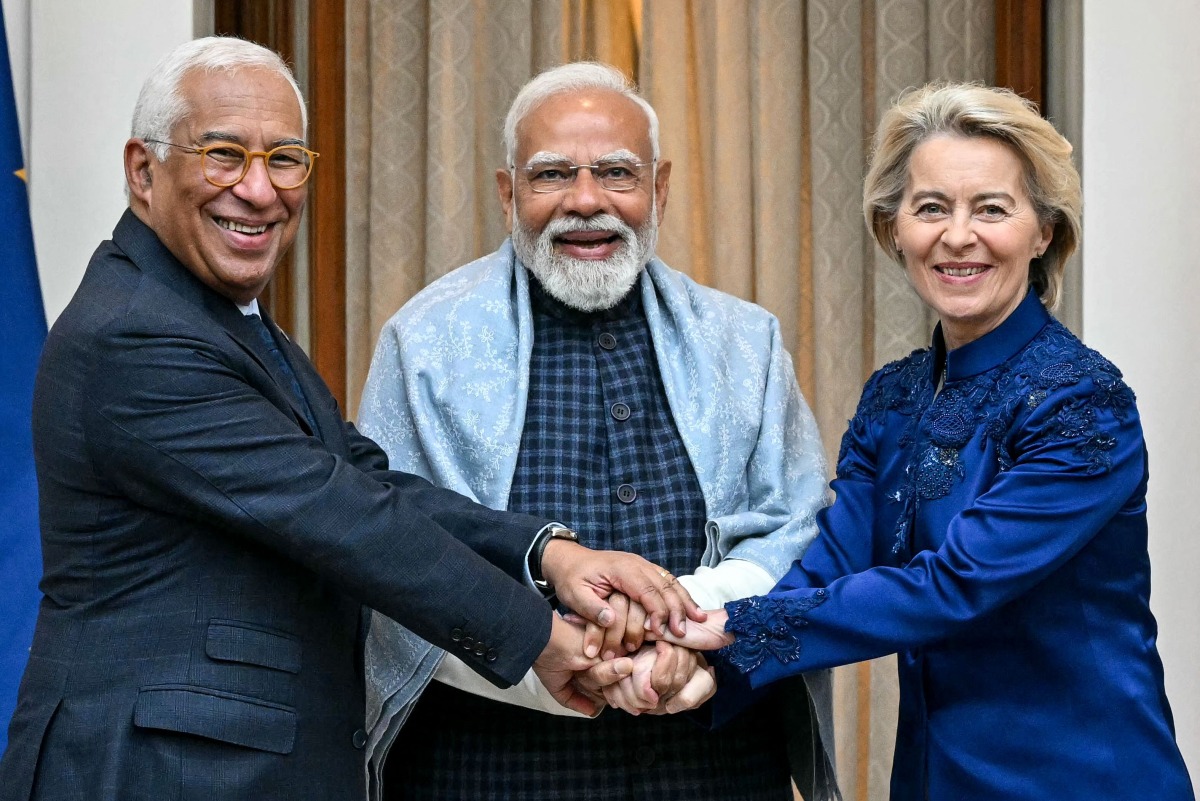

A rapid reshaping of global trade alliances is underway as countries across Europe and North America move to reduce their exposure to an increasingly protectionist United States under President Donald Trump. India has emerged as a central pillar in this recalibration, even as the UK and Canada pursue parallel strategies to diversify economic ties beyond Washington.
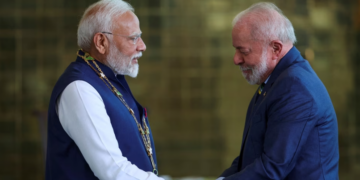
The most consequential signal of this shift came on January 27 with the signing of the long-awaited India–European Union Free Trade Agreement, a deal that brings together markets covering nearly two billion people and close to a quarter of global GDP. European Commission President Ursula von der Leyen described it as the “mother of all deals,” while Prime Minister Narendra Modi hailed it as a “perfect example of a partnership between two major economies of the world.”
The agreement significantly lowers tariff barriers on both sides. The EU will eliminate or reduce duties on over 96 per cent of its exports to India, while India will phase out tariffs on more than 90 per cent of its goods, eventually rising to 93 per cent. For Indian consumers, this is expected to translate into cheaper European cars, wines and processed foods, while Indian exporters gain deeper access to Europe’s vast market.
This breakthrough comes as global unease grows over Trump’s tariff-heavy trade posture. India itself faces a 50 per cent US tariff burden, including penalties linked to its energy trade with Russia, while Canada is staring at duties of up to 35 per cent and repeated political jabs from Washington.
Against this backdrop, UK Prime Minister Keir Starmer is preparing for a high-profile visit to China—his first since taking office and the first by a British leader in eight years. Accompanied by senior ministers and business leaders, Starmer’s trip is aimed at stabilising ties with Beijing and reducing Britain’s economic dependence on an “increasingly unpredictable” United States. China is already the UK’s fourth-largest trading partner, with bilateral trade nearing £100 billion in the year to mid-2025.
Canada, meanwhile, is charting a similar course. Prime Minister Mark Carney is expected to visit India in early March, marking a clear departure from the strained relations of the Trudeau era. Ottawa’s urgency has been sharpened by Trump’s remarks about Canada becoming a “51st state” and threats of sweeping tariffs. Canadian Foreign Minister Anita Anand has openly argued for doubling non-US exports within a decade, with India, China and other Asian partners central to that plan. Talks with New Delhi are expected to focus on uranium, critical minerals, energy cooperation and artificial intelligence.
Even Brazil is stepping into this realignment, with President Luiz Inácio Lula da Silva scheduled to lead a large business delegation to India in February, underscoring New Delhi’s growing pull as a global economic partner.
While Washington has voiced concerns—accusing India of indirectly financing Russia’s war and warning Canada against becoming a conduit for Chinese goods—the broader momentum appears clear. As External Affairs Minister S Jaishankar has put it, India’s approach is rooted in “strategic autonomy,” rejecting any external veto over its global partnerships.
In a world unsettled by trade wars and tariff threats, nations are increasingly choosing diversification over dependence—and India is fast becoming the anchor of that new balance.

 English
 Gujarati
 Hindi
Hindi Kannada
 Malayalam
 Marathi
 Punjabi
 Tamil
Tamil Telugu