

 India
India

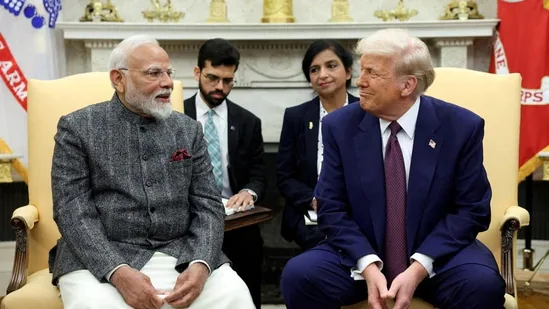
Prime Minister Narendra Modi and US President Donald Trump held a “warm and engaging” phone conversation on Thursday evening, reviewing the steady progress in bilateral ties and signalling renewed momentum towards finalising a long-discussed trade agreement. The call, their first since October, came at a time when Washington’s new deputy trade representative Rick Switzer concluded a two-day visit to New Delhi, engaging with top Indian officials including commerce secretary Rajesh Agrawal.
Modi, in a post on X, said the two leaders exchanged views on regional and global developments and reaffirmed their commitment to collaborate for global peace, stability and prosperity. According to people familiar with the matter, the conversation focused heavily on efforts to sustain progress on bilateral trade, especially as both sides inch towards resolving months of friction caused by Washington’s tariff actions.
The India–US relationship faced severe strain earlier this year after Trump imposed 25% reciprocal tariffs on Indian goods, followed by an additional 25% penalty linked to New Delhi’s purchases of Russian oil. The resulting 50% tariff burden is currently the highest imposed by the US on any country. Despite this, the latest engagement between the leaders underscores efforts on both sides to stabilise ties and work towards a mutually beneficial trade settlement.
Officials said Modi and Trump also explored ways to deepen cooperation in critical technologies, defence, energy, and security — all central pillars of the India-US COMPACT initiative (Catalysing Opportunities for Military Partnership, Accelerated Commerce and Technology), unveiled during their February meeting in Washington. Both leaders reportedly expressed satisfaction at the rising trajectory of bilateral cooperation and agreed to stay closely engaged.
Meanwhile, Commerce Minister Piyush Goyal, responding to US Trade Representative Jamieson Greer’s claim that Washington had received its “best ever” offer from India, said a deal would only be signed when both nations benefit. He emphasised that India would not negotiate under pressure or deadlines, asserting that New Delhi must protect the interests of farmers, traders and the middle class.
Chief Economic Adviser V Anantha Nageswaran added another layer of optimism, saying he expects the trade agreement to be sealed by the end of the fiscal year — a development he believes will lift investor sentiment and bring clarity to markets.
External Affairs Minister S Jaishankar, too, has reiterated India’s willingness to strike a reasonable trade deal, but not at the cost of national interest. He noted that negotiations remain complex because the outcomes directly affect farmers and small businesses, making it essential for both sides to find a balanced “landing point” for their trade expectations.

With renewed high-level engagement, positive signals from negotiators, and a shared strategic vision across technology and defence sectors, the Modi–Trump call reflects a crucial step in resetting momentum in India–US ties as both countries look ahead to concluding a landmark trade agreement.
 English
 Gujarati
 Hindi
Hindi Kannada
 Malayalam
 Marathi
 Punjabi
 Tamil
Tamil Telugu