




 India
India

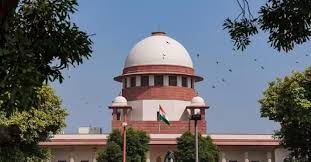
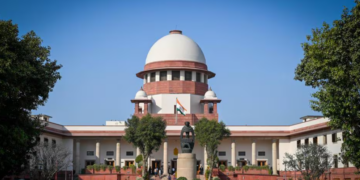
In a significant ruling with far-reaching implications for the interpretation of sexual offence laws, the Supreme Court of India on Tuesday set aside a controversial March 2025 judgment of the Allahabad High Court that had diluted charges in a case involving a minor girl. The apex court held that the high court had committed a “patently erroneous application of the settled principles of criminal jurisprudence” by concluding that the accused had merely “prepared” to commit rape and had not attempted it.
The bench, led by Chief Justice of India Surya Kant and comprising Justices Joymalya Bagchi and NV Anjaria, restored the original charges of attempt to rape under Section 376 read with Section 511 of the IPC, along with Section 18 of the POCSO Act. It clarified that its observations were prima facie and would not prejudice the ongoing trial before the special POCSO court in Kasganj.
The Allahabad High Court had earlier ruled that grabbing a minor’s breasts and dragging her beneath a culvert amounted only to preparation and not an attempt to rape. Rejecting this reasoning, the Supreme Court reiterated the well-established legal principle that an “attempt” begins where “preparation” ends — when the accused begins executing the intent accompanied by mens rea.
Referring to the allegations recorded by the high court itself, the apex court noted that the accused allegedly took the minor girl on a motorcycle under the pretext of dropping her home, stopped near a culvert, dragged her, and committed sexually offensive acts. He fled only after her screams drew the attention of passersby. “A bare perusal of these allegations leaves no modicum of doubt” that the accused had crossed the threshold from preparation to attempt, the bench observed.
The proceedings were initiated suo motu after senior advocate Shobha Gupta, founder of NGO “We the Women of India,” wrote to the then Chief Justice highlighting what she described as legally flawed and insensitive reasoning in the high court’s judgment. The Supreme Court had earlier stayed the impugned observations as “insensitive and inhuman” and, in December 2025, stayed the entire judgment.
Beyond correcting what it termed a legal error, the court addressed a broader systemic concern: the lack of sensitivity and empathy in judicial handling of sexual offences, especially those involving minors and vulnerable victims. It stressed that the justice system must not only apply constitutional principles correctly but also foster compassion in its language and reasoning.
Acknowledging that earlier attempts to sensitise judicial processes had not yielded the desired results, the court refrained from framing guidelines itself. Instead, it requested the National Judicial Academy, Bhopal, through its director and former Supreme Court judge Justice Aniruddha Bose, to constitute a five-member expert committee. The panel, to be chaired by Justice Bose, will draft guidelines titled “Developing Guidelines to Inculcate Sensitivity and Compassion into Judges and Judicial Processes in the Context of Sexual Offences and other Vulnerable Cases.”
The court directed that the guidelines be written in simple, accessible language, contextualised to Indian realities, and easily understandable to victims, many of whom are children or from vulnerable sections. The committee has been asked to submit its report within three months, after consulting experts including linguists, prosecutors, social scientists, and counsellors.
The move follows recent remarks by CJI Kant criticising earlier judicial handbooks on gender sensitivity as overly technical and inaccessible. The latest directive signals a renewed push to make judicial processes both legally sound and humanely responsive in cases involving sexual violence.





 English
 Gujarati
 Hindi
Hindi Kannada
 Malayalam
 Marathi
 Punjabi
 Tamil
Tamil Telugu