


 India
India

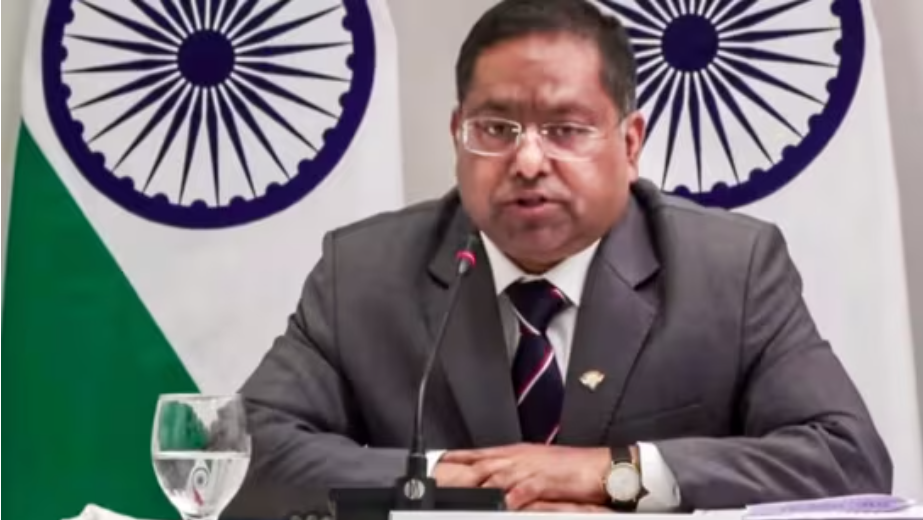
India has reiterated that its position on the Indus Waters Treaty (IWT) remains unchanged, responding firmly to recent warnings issued by Pakistani leaders over the future of the water-sharing agreement between the two countries.
Speaking on Friday, Ministry of External Affairs (MEA) spokesperson Randhir Jaiswal said that the treaty continues to remain in abeyance due to Pakistan’s continued support for cross-border terrorism. He emphasized that India’s stance has been consistent and that any restoration of normal treaty arrangements would require credible and irreversible action from Pakistan against terrorism.
“India’s position on the Indus Waters Treaty is consistent. The IWT stands in abeyance in response to Pakistan’s continued sponsorship of cross-border terrorism. Pakistan must credibly and irrevocably abjure its support for cross-border terrorism,” Jaiswal stated.
The MEA’s remarks come amid a fresh war of words between New Delhi and Islamabad over the landmark water-sharing pact. The treaty, brokered by the World Bank in 1960, governs the distribution and management of the waters of the Indus River system between India and Pakistan.
The latest controversy was triggered by comments from Pakistan’s Climate Change Minister Musadik Malik, who warned India against attempting to control the flow of water into Pakistan. Referring to statements made by Indian leaders regarding the treaty, Malik said Pakistan would “cut off those hands” that sought to stop or restrict the country’s water supply.
According to reports carried by Pakistani media outlets, Malik accused India of trying to use water as a pressure tactic and warned that Islamabad would strongly resist any such move. His remarks quickly gained attention across social media and regional news platforms, further intensifying tensions between the two nuclear-armed neighbors.
Before Malik’s comments, Pakistan’s Deputy Prime Minister and Foreign Minister Ishaq Dar had also raised concerns about the treaty’s suspension. Dar warned that any attempt to deprive Pakistan of its share of water under the agreement would amount to the “weaponisation of water” and could pose a serious threat to regional peace and stability.

Dar argued that shared water resources should serve as a bridge for cooperation rather than a tool of confrontation. He stressed that water is vital for human dignity, food security, economic development, and environmental sustainability, and therefore should not be used as a geopolitical weapon.
The Pakistani foreign minister further maintained that the suspension of the treaty was not legally valid. According to him, the agreement remains binding on both countries because it contains no provision allowing either party to unilaterally suspend or terminate its obligations.
India, however, has linked the future of the treaty to Pakistan’s actions on terrorism, particularly in the aftermath of the April 2025 Pahalgam terror attack. New Delhi has repeatedly asserted that meaningful bilateral cooperation cannot continue while cross-border terrorism persists.
The exchange of sharp statements highlights the growing strain in India-Pakistan relations, with the Indus Waters Treaty emerging as another flashpoint in an already complex relationship marked by security concerns, diplomatic disputes, and competing interpretations of international agreements.



 English
 Gujarati
 Hindi
Hindi Kannada
 Malayalam
 Marathi
 Punjabi
 Tamil
Tamil Telugu