


 India
India

The Tamil Nadu government on Wednesday withdrew a controversial directive that sought to prevent students and youth from government arts and science colleges from participating in protests, prompting the youth-led political movement Cockroach Janta Party (CJP) to welcome the decision.
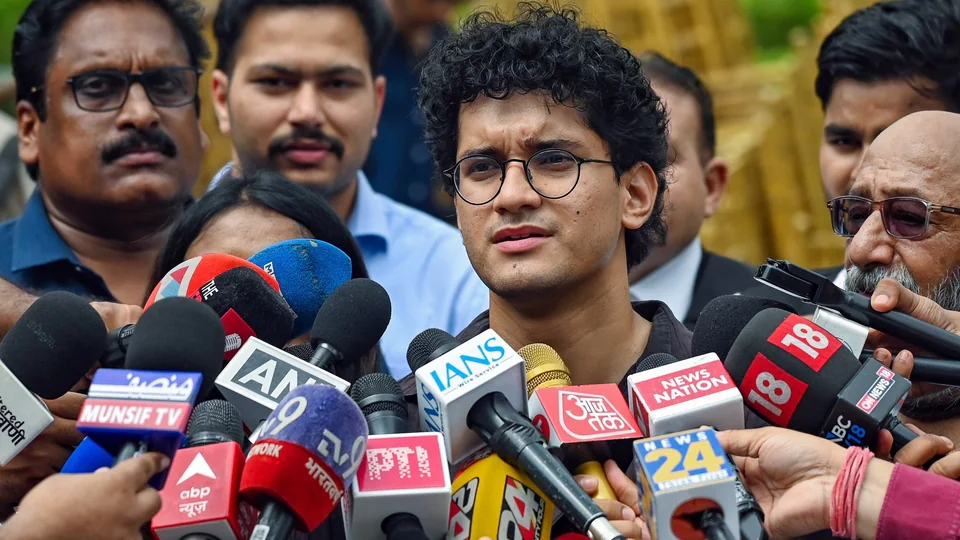
CJP chief spokesperson Saurav Das reacted to the rollback on X, saying, “Good sense prevails.” The statement came shortly after the state’s College Education Department formally withdrew its earlier communication concerning student participation in protests.
The controversy erupted after the College Education Department instructed officials to take “appropriate coordinated action” to prevent students and young people from joining demonstrations organised by Left parties and the Tamil Nadu Cockroach Janata Party (TNCJP).
According to the withdrawn communication, the issue was considered “very urgent”. Officials were asked to coordinate with the School Education, Higher Education and Police departments, along with district administrations, to ensure that students did not participate in such political protests.
The directive referred to a government letter dated August 14 and called for coordinated action across departments and local administrations. However, within minutes of the controversy gaining attention, the department reversed its decision.
Joint Director of Collegiate Education Cynthia Selvi P said the department’s earlier communication had been rolled back.
The development has attracted attention amid a broader wave of student-led protests over examination systems, recruitment irregularities, paper leaks and education-related issues in several parts of India.

The Tamil Nadu-based TNCJP, reportedly led by lawyer C Brahma Balasubramaniam, has approached the Election Commission seeking registration as a regional political party. Its members say the organisation intends to focus on issues including social justice and the rights of workers, students and farmers. The group describes itself as separate from the mainstream CJP movement.
Student protests gain momentum across states
The Tamil Nadu controversy comes against the backdrop of growing student activism in different parts of the country.
In recent weeks, student-led demonstrations have focused on alleged irregularities in competitive examinations, recruitment processes and paper leaks. The CJP-led Gen Z movement has also emerged as a prominent voice in protests surrounding examination reforms and alleged irregularities in exams such as NEET.
Activist Sonam Wangchuk had also backed students during the protests, including an indefinite hunger strike. The movement became a major national talking point as students demanded greater accountability and reforms in the examination system.
Similar protests have been witnessed in Jharkhand, where job aspirants raised concerns over alleged irregularities and paper leaks linked to the 14th JPSC Civil Services Examination.
The protests in Ranchi received further attention after CJP founder Abhijeet Dipke extended his support to the students.
On Tuesday, the JMM-led Jharkhand government announced the cancellation of 22 recruitment examinations and ordered investigations into 23 other examinations conducted by the state public service commission and an outsourced agency since 2014.
Following the government action, protesting students organised an ‘Abhar Yatra’ on Wednesday. Hundreds of students from different parts of Jharkhand participated in the procession, which began at Jaipal Singh Munda Stadium, the site of the agitation, and proceeded towards Albert Ekka Chowk.
Student leader Devendra Nath Mahto said the government’s action was the outcome of sustained agitation. According to PTI, he said the movement involved a 16-day hunger strike and 24 days of ‘satyagraha’.
The developments in Tamil Nadu and Jharkhand underline the growing political significance of student-led movements, particularly on issues involving examinations, recruitment and education governance.
For the Vijay-led Tamil Nadu government, the quick withdrawal of the anti-protest directive has also brought the focus back to the balance between maintaining administrative order and allowing students and young people to participate in democratic protests.
CJP’s Saurav Das, meanwhile, welcomed the rollback, with his “Good sense prevails” remark signalling the organisation’s approval of the government’s decision.


 English
 Gujarati
 Hindi
Hindi Kannada
 Malayalam
 Marathi
 Punjabi
 Tamil
Tamil Telugu