

• Home
    • All
    • Art
    • Bollywood
    • Business
    • Cricket
    • Crypto
    • Culture
    • Daily Horoscope
    • Economy
    • Elections
    • Entertainment
    • Fashion
    • Gaming
    • Health
    • History
    • India
    • Lifestyle
    • Movie Reviews
    • Photos
    • Politics
    • Sci-Tech
    • Science
    • Sports
    • Tech
    • Trending
    • TV
    • Uncategorized
    • Web Series
    • World News
    New rules on animal testing must take India forward, not backwards: Maneka Gandhi Officials maintain the changes seek to simplify approvals for research institutions, pharmaceutical and biomedical industries. Updated on: Oct 26, 2026, 14:54:47 IST By Jasjeev Gandhiok Prefer HTPrefer HT Prefer HT on Google Share The Centre’s draft rules governing animal experimentation have triggered concerns among animal rights groups, which say the changes could weaken independent oversight and make it easier for laboratories to conduct experiments on animals. However, officials maintain the changes seek to simplify approvals for research institutions, pharmaceutical and biomedical industries.  Former Union minister Maneka Gandhi. Former Union minister Maneka Gandhi. HT speaks to animal rights activist and former Union minister Maneka Gandhi, a long-time campaigner against animal experimentation. Edited excerpts:   A major change to animal experimentation, proposed in the draft, is that mild and moderate experiments could be approved by an institution’s own ethics committee rather than going to the central regulator. In practical terms, what does this change mean for an animal inside a laboratory? Does it make it easier for more animals to be experimented on? It means the animal loses the one independent pair of eyes that was looking at its fate. Today, experiments on animals larger than a rat go to the central regulator, and there is at least someone outside the building asking whether this experiment is necessary at all. Under the draft, the people who want to do the experiment, their colleagues and their department heads will be the ones approving it. And it is the institution itself, through its own veterinarian, that decides whether the experiment is mild or moderate in the first place. No institution has ever turned down its own funding. So yes, it will make it easier, and it will make it faster, and that means more animals. Mild and moderate are also the bulk of experiments, so we are effectively handing over most of animal experimentation in India to self regulation.  The draft classifies experiments as mild, moderate, severe and non-recovery. Is there a concern that the institution conducting the research will effectively decide how severe the experiment is. Does this leave a grey area? It isn’t grey, it is completely black. Under this draft, the institution that wants to do the experiment is also the one that decides which category it falls into. That decision matters enormously, because if the experiment is classified as mild or moderate, the institution’s own committee approves it and it never goes to the central regulator. Only severe and non-recovery experiments on larger animals go outside. So the same people who want the experiment approved are deciding whether anyone independent will ever examine it. That is a clear conflict of interest, and it will push experiments towards the lower categories. Starving a rat for a day is called mild. Keeping a social animal alone in a cage is mild. Starving it for two days, or putting it through distress it cannot escape, is moderate. So is testing herbal products, testing established drugs, and anything described as having “known and reversible effects,” which could mean almost anything. This is not a scientific list. It is the most common commercial work.  The draft also creates exceptions and allows laboratories to use animals from open markets, unregistered sources, and in certain circumstances, stray, feral, wild and protected animals. What is the biggest risk that this may create for animals in practice? Could community dogs, lost pets or animals taken from the wild find their way into laboratories? The biggest risk is that nobody will know where an animal came from. The whole point of registered breeders was traceability. Once you allow open markets and unregistered sources for cattle, goats, birds and fish, you create a demand, and in this country demand is met very quickly by people who will pick up anything. Strays and wild animals can be used if a “competent authority” permits it, and the draft never says who that is. Community dogs, someone’s lost pet, birds from illegal markets, all of it can find its way into a laboratory. These exceptions should be removed completely. If a lab cannot get an animal from a registered source, it should not be doing that experiment.  The draft formally incorporates the principles of replacement, reduction and refinement, but critics say these safeguards become weaker if institutions themselves are approving experiments. Do you believe India should now be moving towards replacing animal experiments altogether, particularly when the health ministry has already allowed certain drug testing through non-animal methods? What should the rules do differently? Yes, and we are not starting from zero. The health ministry has already amended the drug rules to accept non-animal methods. The world is moving this way because these methods are often more predictive for humans than a mouse ever was. Writing replacement, reduction and refinement into the rules means nothing if the person checking compliance is the institution itself. The rules should make it mandatory to show that no validated alternative exists before an animal is used, set up a national body to validate and promote alternatives, put money into them, and set timelines to phase out animal use in areas where alternatives are already available. A rule that only mentions replacement as a principle is decoration.  You have worked on animal experimentation regulation for decades. What specific changes would you want the government to make to this draft? I don’t think this draft can be fixed. There is hardly a provision in it that doesn’t need changing, and when everything needs to change, it is better to start again. So the draft should be put aside and written afresh, this time with independent scientists, animal welfare organisations and legal experts at the table. The new rules must take India forward, not backwards. Animals already have certain protections under the law which cannot be taken away. New should be building on them.

    New rules on animal testing must take India forward, not backwards: Maneka Gandhi Officials maintain the changes seek to simplify approvals for research institutions, pharmaceutical and biomedical industries. Updated on: Oct 26, 2026, 14:54:47 IST By Jasjeev Gandhiok Prefer HTPrefer HT Prefer HT on Google Share The Centre’s draft rules governing animal experimentation have triggered concerns among animal rights groups, which say the changes could weaken independent oversight and make it easier for laboratories to conduct experiments on animals. However, officials maintain the changes seek to simplify approvals for research institutions, pharmaceutical and biomedical industries. Former Union minister Maneka Gandhi. Former Union minister Maneka Gandhi. HT speaks to animal rights activist and former Union minister Maneka Gandhi, a long-time campaigner against animal experimentation. Edited excerpts: A major change to animal experimentation, proposed in the draft, is that mild and moderate experiments could be approved by an institution’s own ethics committee rather than going to the central regulator. In practical terms, what does this change mean for an animal inside a laboratory? Does it make it easier for more animals to be experimented on? It means the animal loses the one independent pair of eyes that was looking at its fate. Today, experiments on animals larger than a rat go to the central regulator, and there is at least someone outside the building asking whether this experiment is necessary at all. Under the draft, the people who want to do the experiment, their colleagues and their department heads will be the ones approving it. And it is the institution itself, through its own veterinarian, that decides whether the experiment is mild or moderate in the first place. No institution has ever turned down its own funding. So yes, it will make it easier, and it will make it faster, and that means more animals. Mild and moderate are also the bulk of experiments, so we are effectively handing over most of animal experimentation in India to self regulation. The draft classifies experiments as mild, moderate, severe and non-recovery. Is there a concern that the institution conducting the research will effectively decide how severe the experiment is. Does this leave a grey area? It isn’t grey, it is completely black. Under this draft, the institution that wants to do the experiment is also the one that decides which category it falls into. That decision matters enormously, because if the experiment is classified as mild or moderate, the institution’s own committee approves it and it never goes to the central regulator. Only severe and non-recovery experiments on larger animals go outside. So the same people who want the experiment approved are deciding whether anyone independent will ever examine it. That is a clear conflict of interest, and it will push experiments towards the lower categories. Starving a rat for a day is called mild. Keeping a social animal alone in a cage is mild. Starving it for two days, or putting it through distress it cannot escape, is moderate. So is testing herbal products, testing established drugs, and anything described as having “known and reversible effects,” which could mean almost anything. This is not a scientific list. It is the most common commercial work. The draft also creates exceptions and allows laboratories to use animals from open markets, unregistered sources, and in certain circumstances, stray, feral, wild and protected animals. What is the biggest risk that this may create for animals in practice? Could community dogs, lost pets or animals taken from the wild find their way into laboratories? The biggest risk is that nobody will know where an animal came from. The whole point of registered breeders was traceability. Once you allow open markets and unregistered sources for cattle, goats, birds and fish, you create a demand, and in this country demand is met very quickly by people who will pick up anything. Strays and wild animals can be used if a “competent authority” permits it, and the draft never says who that is. Community dogs, someone’s lost pet, birds from illegal markets, all of it can find its way into a laboratory. These exceptions should be removed completely. If a lab cannot get an animal from a registered source, it should not be doing that experiment. The draft formally incorporates the principles of replacement, reduction and refinement, but critics say these safeguards become weaker if institutions themselves are approving experiments. Do you believe India should now be moving towards replacing animal experiments altogether, particularly when the health ministry has already allowed certain drug testing through non-animal methods? What should the rules do differently? Yes, and we are not starting from zero. The health ministry has already amended the drug rules to accept non-animal methods. The world is moving this way because these methods are often more predictive for humans than a mouse ever was. Writing replacement, reduction and refinement into the rules means nothing if the person checking compliance is the institution itself. The rules should make it mandatory to show that no validated alternative exists before an animal is used, set up a national body to validate and promote alternatives, put money into them, and set timelines to phase out animal use in areas where alternatives are already available. A rule that only mentions replacement as a principle is decoration. You have worked on animal experimentation regulation for decades. What specific changes would you want the government to make to this draft? I don’t think this draft can be fixed. There is hardly a provision in it that doesn’t need changing, and when everything needs to change, it is better to start again. So the draft should be put aside and written afresh, this time with independent scientists, animal welfare organisations and legal experts at the table. The new rules must take India forward, not backwards. Animals already have certain protections under the law which cannot be taken away. New should be building on them.

    Orissa High Court Rules SC/ST Status Cannot Be Carried Across State Borders

    Orissa High Court Rules SC/ST Status Cannot Be Carried Across State Borders

    Supreme Court Seeks Centre’s Response to Challenge Against Chhattisgarh Anti-Conversion Law

    Supreme Court Seeks Centre’s Response to Challenge Against Chhattisgarh Anti-Conversion Law

    Lula’s Brazil Re-Election: What It Means for India’s Trade, Rare Earths and Global South Push

    Lula’s Brazil Re-Election: What It Means for India’s Trade, Rare Earths and Global South Push

    IAF Chief AP Singh Flies Final Sortie in Kiran Aircraft, Reunites With First Flying Instructor

    IAF Chief AP Singh Flies Final Sortie in Kiran Aircraft, Reunites With First Flying Instructor

    Rubio Backs India’s Energy Diversification, Offers US Support Amid Russian Oil Debate

    Rubio Backs India’s Energy Diversification, Offers US Support Amid Russian Oil Debate

    Trending Tags

    • Movie
    • Music
  • Trending
  • India
    • Politics
    • States
    • Elections
    • Results
  • World News
  • Business
    • Economy
    • Markets
    • Real Estate
    • Crypto
  • More
    • Entertainment
      • Bollywood
      • TV
      • Movie Reviews
      • Web Series
    • Sports
      • Cricket
      • Football
      • Games
    • Sci-Tech
      • Science
      • Tech
      • Gadgets
      • Gaming
    • Culture
      • History
      • Festivals
      • Art
      • Temples
      • Scriptures
    • Lifestyle
      • Fashion
      • Food
      • Health
      • Travel
    • Student’s Corner
      • Exam
      • Exam Results
      • Schools
      • Universities
    • Astrology
      • Daily Horoscope
      • Monthly Horoscope
      • Days
  • Opinion
  • Login
  • Register
  • Home
    • All
    • Art
    • Bollywood
    • Business
    • Cricket
    • Crypto
    • Culture
    • Daily Horoscope
    • Economy
    • Elections
    • Entertainment
    • Fashion
    • Gaming
    • Health
    • History
    • India
    • Lifestyle
    • Movie Reviews
    • Photos
    • Politics
    • Sci-Tech
    • Science
    • Sports
    • Tech
    • Trending
    • TV
    • Uncategorized
    • Web Series
    • World News
    New rules on animal testing must take India forward, not backwards: Maneka Gandhi Officials maintain the changes seek to simplify approvals for research institutions, pharmaceutical and biomedical industries. Updated on: Oct 26, 2026, 14:54:47 IST By Jasjeev Gandhiok Prefer HTPrefer HT Prefer HT on Google Share The Centre’s draft rules governing animal experimentation have triggered concerns among animal rights groups, which say the changes could weaken independent oversight and make it easier for laboratories to conduct experiments on animals. However, officials maintain the changes seek to simplify approvals for research institutions, pharmaceutical and biomedical industries.  Former Union minister Maneka Gandhi. Former Union minister Maneka Gandhi. HT speaks to animal rights activist and former Union minister Maneka Gandhi, a long-time campaigner against animal experimentation. Edited excerpts:   A major change to animal experimentation, proposed in the draft, is that mild and moderate experiments could be approved by an institution’s own ethics committee rather than going to the central regulator. In practical terms, what does this change mean for an animal inside a laboratory? Does it make it easier for more animals to be experimented on? It means the animal loses the one independent pair of eyes that was looking at its fate. Today, experiments on animals larger than a rat go to the central regulator, and there is at least someone outside the building asking whether this experiment is necessary at all. Under the draft, the people who want to do the experiment, their colleagues and their department heads will be the ones approving it. And it is the institution itself, through its own veterinarian, that decides whether the experiment is mild or moderate in the first place. No institution has ever turned down its own funding. So yes, it will make it easier, and it will make it faster, and that means more animals. Mild and moderate are also the bulk of experiments, so we are effectively handing over most of animal experimentation in India to self regulation.  The draft classifies experiments as mild, moderate, severe and non-recovery. Is there a concern that the institution conducting the research will effectively decide how severe the experiment is. Does this leave a grey area? It isn’t grey, it is completely black. Under this draft, the institution that wants to do the experiment is also the one that decides which category it falls into. That decision matters enormously, because if the experiment is classified as mild or moderate, the institution’s own committee approves it and it never goes to the central regulator. Only severe and non-recovery experiments on larger animals go outside. So the same people who want the experiment approved are deciding whether anyone independent will ever examine it. That is a clear conflict of interest, and it will push experiments towards the lower categories. Starving a rat for a day is called mild. Keeping a social animal alone in a cage is mild. Starving it for two days, or putting it through distress it cannot escape, is moderate. So is testing herbal products, testing established drugs, and anything described as having “known and reversible effects,” which could mean almost anything. This is not a scientific list. It is the most common commercial work.  The draft also creates exceptions and allows laboratories to use animals from open markets, unregistered sources, and in certain circumstances, stray, feral, wild and protected animals. What is the biggest risk that this may create for animals in practice? Could community dogs, lost pets or animals taken from the wild find their way into laboratories? The biggest risk is that nobody will know where an animal came from. The whole point of registered breeders was traceability. Once you allow open markets and unregistered sources for cattle, goats, birds and fish, you create a demand, and in this country demand is met very quickly by people who will pick up anything. Strays and wild animals can be used if a “competent authority” permits it, and the draft never says who that is. Community dogs, someone’s lost pet, birds from illegal markets, all of it can find its way into a laboratory. These exceptions should be removed completely. If a lab cannot get an animal from a registered source, it should not be doing that experiment.  The draft formally incorporates the principles of replacement, reduction and refinement, but critics say these safeguards become weaker if institutions themselves are approving experiments. Do you believe India should now be moving towards replacing animal experiments altogether, particularly when the health ministry has already allowed certain drug testing through non-animal methods? What should the rules do differently? Yes, and we are not starting from zero. The health ministry has already amended the drug rules to accept non-animal methods. The world is moving this way because these methods are often more predictive for humans than a mouse ever was. Writing replacement, reduction and refinement into the rules means nothing if the person checking compliance is the institution itself. The rules should make it mandatory to show that no validated alternative exists before an animal is used, set up a national body to validate and promote alternatives, put money into them, and set timelines to phase out animal use in areas where alternatives are already available. A rule that only mentions replacement as a principle is decoration.  You have worked on animal experimentation regulation for decades. What specific changes would you want the government to make to this draft? I don’t think this draft can be fixed. There is hardly a provision in it that doesn’t need changing, and when everything needs to change, it is better to start again. So the draft should be put aside and written afresh, this time with independent scientists, animal welfare organisations and legal experts at the table. The new rules must take India forward, not backwards. Animals already have certain protections under the law which cannot be taken away. New should be building on them.

    New rules on animal testing must take India forward, not backwards: Maneka Gandhi Officials maintain the changes seek to simplify approvals for research institutions, pharmaceutical and biomedical industries. Updated on: Oct 26, 2026, 14:54:47 IST By Jasjeev Gandhiok Prefer HTPrefer HT Prefer HT on Google Share The Centre’s draft rules governing animal experimentation have triggered concerns among animal rights groups, which say the changes could weaken independent oversight and make it easier for laboratories to conduct experiments on animals. However, officials maintain the changes seek to simplify approvals for research institutions, pharmaceutical and biomedical industries. Former Union minister Maneka Gandhi. Former Union minister Maneka Gandhi. HT speaks to animal rights activist and former Union minister Maneka Gandhi, a long-time campaigner against animal experimentation. Edited excerpts: A major change to animal experimentation, proposed in the draft, is that mild and moderate experiments could be approved by an institution’s own ethics committee rather than going to the central regulator. In practical terms, what does this change mean for an animal inside a laboratory? Does it make it easier for more animals to be experimented on? It means the animal loses the one independent pair of eyes that was looking at its fate. Today, experiments on animals larger than a rat go to the central regulator, and there is at least someone outside the building asking whether this experiment is necessary at all. Under the draft, the people who want to do the experiment, their colleagues and their department heads will be the ones approving it. And it is the institution itself, through its own veterinarian, that decides whether the experiment is mild or moderate in the first place. No institution has ever turned down its own funding. So yes, it will make it easier, and it will make it faster, and that means more animals. Mild and moderate are also the bulk of experiments, so we are effectively handing over most of animal experimentation in India to self regulation. The draft classifies experiments as mild, moderate, severe and non-recovery. Is there a concern that the institution conducting the research will effectively decide how severe the experiment is. Does this leave a grey area? It isn’t grey, it is completely black. Under this draft, the institution that wants to do the experiment is also the one that decides which category it falls into. That decision matters enormously, because if the experiment is classified as mild or moderate, the institution’s own committee approves it and it never goes to the central regulator. Only severe and non-recovery experiments on larger animals go outside. So the same people who want the experiment approved are deciding whether anyone independent will ever examine it. That is a clear conflict of interest, and it will push experiments towards the lower categories. Starving a rat for a day is called mild. Keeping a social animal alone in a cage is mild. Starving it for two days, or putting it through distress it cannot escape, is moderate. So is testing herbal products, testing established drugs, and anything described as having “known and reversible effects,” which could mean almost anything. This is not a scientific list. It is the most common commercial work. The draft also creates exceptions and allows laboratories to use animals from open markets, unregistered sources, and in certain circumstances, stray, feral, wild and protected animals. What is the biggest risk that this may create for animals in practice? Could community dogs, lost pets or animals taken from the wild find their way into laboratories? The biggest risk is that nobody will know where an animal came from. The whole point of registered breeders was traceability. Once you allow open markets and unregistered sources for cattle, goats, birds and fish, you create a demand, and in this country demand is met very quickly by people who will pick up anything. Strays and wild animals can be used if a “competent authority” permits it, and the draft never says who that is. Community dogs, someone’s lost pet, birds from illegal markets, all of it can find its way into a laboratory. These exceptions should be removed completely. If a lab cannot get an animal from a registered source, it should not be doing that experiment. The draft formally incorporates the principles of replacement, reduction and refinement, but critics say these safeguards become weaker if institutions themselves are approving experiments. Do you believe India should now be moving towards replacing animal experiments altogether, particularly when the health ministry has already allowed certain drug testing through non-animal methods? What should the rules do differently? Yes, and we are not starting from zero. The health ministry has already amended the drug rules to accept non-animal methods. The world is moving this way because these methods are often more predictive for humans than a mouse ever was. Writing replacement, reduction and refinement into the rules means nothing if the person checking compliance is the institution itself. The rules should make it mandatory to show that no validated alternative exists before an animal is used, set up a national body to validate and promote alternatives, put money into them, and set timelines to phase out animal use in areas where alternatives are already available. A rule that only mentions replacement as a principle is decoration. You have worked on animal experimentation regulation for decades. What specific changes would you want the government to make to this draft? I don’t think this draft can be fixed. There is hardly a provision in it that doesn’t need changing, and when everything needs to change, it is better to start again. So the draft should be put aside and written afresh, this time with independent scientists, animal welfare organisations and legal experts at the table. The new rules must take India forward, not backwards. Animals already have certain protections under the law which cannot be taken away. New should be building on them.

    Orissa High Court Rules SC/ST Status Cannot Be Carried Across State Borders

    Orissa High Court Rules SC/ST Status Cannot Be Carried Across State Borders

    Supreme Court Seeks Centre’s Response to Challenge Against Chhattisgarh Anti-Conversion Law

    Supreme Court Seeks Centre’s Response to Challenge Against Chhattisgarh Anti-Conversion Law

    Lula’s Brazil Re-Election: What It Means for India’s Trade, Rare Earths and Global South Push

    Lula’s Brazil Re-Election: What It Means for India’s Trade, Rare Earths and Global South Push

    IAF Chief AP Singh Flies Final Sortie in Kiran Aircraft, Reunites With First Flying Instructor

    IAF Chief AP Singh Flies Final Sortie in Kiran Aircraft, Reunites With First Flying Instructor

    Rubio Backs India’s Energy Diversification, Offers US Support Amid Russian Oil Debate

    Rubio Backs India’s Energy Diversification, Offers US Support Amid Russian Oil Debate

    Trending Tags

    • Movie
    • Music
  • Trending
  • India
    • Politics
    • States
    • Elections
    • Results
  • World News
  • Business
    • Economy
    • Markets
    • Real Estate
    • Crypto
  • More
    • Entertainment
      • Bollywood
      • TV
      • Movie Reviews
      • Web Series
    • Sports
      • Cricket
      • Football
      • Games
    • Sci-Tech
      • Science
      • Tech
      • Gadgets
      • Gaming
    • Culture
      • History
      • Festivals
      • Art
      • Temples
      • Scriptures
    • Lifestyle
      • Fashion
      • Food
      • Health
      • Travel
    • Student’s Corner
      • Exam
      • Exam Results
      • Schools
      • Universities
    • Astrology
      • Daily Horoscope
      • Monthly Horoscope
      • Days
  • Opinion
No Result
View All Result
India Reflects
No Result
View All Result
Home India

Mayawati Revives West Uttar Pradesh Statehood Debate, Sparks Political Controversy

Former Chief Minister's Call for Separate State Reignites Regional Identity Discourse in Uttar Pradesh

News Desk by News Desk
April 16, 2024
Reading Time: 2 mins read
0
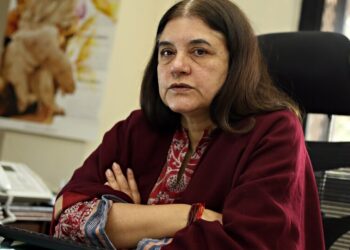
BSP chief Mayawati during an election campaign rally ahead of Lok Sabha polls

BSP chief Mayawati during an election campaign rally ahead of Lok Sabha polls

Mayawati, the former Chief Minister of Uttar Pradesh and leader of the Bahujan Samaj Party (BSP), has reignited the longstanding debate over the creation of a separate state in western Uttar Pradesh. Her recent call for the formation of a new state has sparked political controversy and revived discussions on regional identity and governance in the populous northern Indian state.

RELATED POSTS

New rules on animal testing must take India forward, not backwards: Maneka Gandhi Officials maintain the changes seek to simplify approvals for research institutions, pharmaceutical and biomedical industries. Updated on: Oct 26, 2026, 14:54:47 IST By Jasjeev Gandhiok Prefer HTPrefer HT Prefer HT on Google Share The Centre’s draft rules governing animal experimentation have triggered concerns among animal rights groups, which say the changes could weaken independent oversight and make it easier for laboratories to conduct experiments on animals. However, officials maintain the changes seek to simplify approvals for research institutions, pharmaceutical and biomedical industries. Former Union minister Maneka Gandhi. Former Union minister Maneka Gandhi. HT speaks to animal rights activist and former Union minister Maneka Gandhi, a long-time campaigner against animal experimentation. Edited excerpts: A major change to animal experimentation, proposed in the draft, is that mild and moderate experiments could be approved by an institution’s own ethics committee rather than going to the central regulator. In practical terms, what does this change mean for an animal inside a laboratory? Does it make it easier for more animals to be experimented on? It means the animal loses the one independent pair of eyes that was looking at its fate. Today, experiments on animals larger than a rat go to the central regulator, and there is at least someone outside the building asking whether this experiment is necessary at all. Under the draft, the people who want to do the experiment, their colleagues and their department heads will be the ones approving it. And it is the institution itself, through its own veterinarian, that decides whether the experiment is mild or moderate in the first place. No institution has ever turned down its own funding. So yes, it will make it easier, and it will make it faster, and that means more animals. Mild and moderate are also the bulk of experiments, so we are effectively handing over most of animal experimentation in India to self regulation. The draft classifies experiments as mild, moderate, severe and non-recovery. Is there a concern that the institution conducting the research will effectively decide how severe the experiment is. Does this leave a grey area? It isn’t grey, it is completely black. Under this draft, the institution that wants to do the experiment is also the one that decides which category it falls into. That decision matters enormously, because if the experiment is classified as mild or moderate, the institution’s own committee approves it and it never goes to the central regulator. Only severe and non-recovery experiments on larger animals go outside. So the same people who want the experiment approved are deciding whether anyone independent will ever examine it. That is a clear conflict of interest, and it will push experiments towards the lower categories. Starving a rat for a day is called mild. Keeping a social animal alone in a cage is mild. Starving it for two days, or putting it through distress it cannot escape, is moderate. So is testing herbal products, testing established drugs, and anything described as having “known and reversible effects,” which could mean almost anything. This is not a scientific list. It is the most common commercial work. The draft also creates exceptions and allows laboratories to use animals from open markets, unregistered sources, and in certain circumstances, stray, feral, wild and protected animals. What is the biggest risk that this may create for animals in practice? Could community dogs, lost pets or animals taken from the wild find their way into laboratories? The biggest risk is that nobody will know where an animal came from. The whole point of registered breeders was traceability. Once you allow open markets and unregistered sources for cattle, goats, birds and fish, you create a demand, and in this country demand is met very quickly by people who will pick up anything. Strays and wild animals can be used if a “competent authority” permits it, and the draft never says who that is. Community dogs, someone’s lost pet, birds from illegal markets, all of it can find its way into a laboratory. These exceptions should be removed completely. If a lab cannot get an animal from a registered source, it should not be doing that experiment. The draft formally incorporates the principles of replacement, reduction and refinement, but critics say these safeguards become weaker if institutions themselves are approving experiments. Do you believe India should now be moving towards replacing animal experiments altogether, particularly when the health ministry has already allowed certain drug testing through non-animal methods? What should the rules do differently? Yes, and we are not starting from zero. The health ministry has already amended the drug rules to accept non-animal methods. The world is moving this way because these methods are often more predictive for humans than a mouse ever was. Writing replacement, reduction and refinement into the rules means nothing if the person checking compliance is the institution itself. The rules should make it mandatory to show that no validated alternative exists before an animal is used, set up a national body to validate and promote alternatives, put money into them, and set timelines to phase out animal use in areas where alternatives are already available. A rule that only mentions replacement as a principle is decoration. You have worked on animal experimentation regulation for decades. What specific changes would you want the government to make to this draft? I don’t think this draft can be fixed. There is hardly a provision in it that doesn’t need changing, and when everything needs to change, it is better to start again. So the draft should be put aside and written afresh, this time with independent scientists, animal welfare organisations and legal experts at the table. The new rules must take India forward, not backwards. Animals already have certain protections under the law which cannot be taken away. New should be building on them.

Orissa High Court Rules SC/ST Status Cannot Be Carried Across State Borders

Supreme Court Seeks Centre’s Response to Challenge Against Chhattisgarh Anti-Conversion Law

The proposal put forth by Mayawati advocates for the bifurcation of Uttar Pradesh, India’s most populous state, into two separate entities, with the creation of a new state comprising the western regions. This move, she argues, would address issues of regional disparity and promote better governance by allowing for more focused attention on the development needs of the western districts.

Mayawati’s revival of the statehood debate has drawn mixed reactions from political quarters, with some supporting her stance while others dismissing it as a politically motivated tactic ahead of the upcoming state elections. The proposal has reignited discussions on the socio-economic and political dynamics of Uttar Pradesh, a state known for its diverse demographics and complex governance challenges.

Proponents of the idea argue that a separate state for western Uttar Pradesh would lead to more equitable distribution of resources and development opportunities, thereby addressing long-standing grievances of neglect and marginalization in the region. They contend that decentralization of power and resources is essential for fostering inclusive growth and addressing the diverse needs of different regions within the state.

However, critics of the proposal caution against the potential administrative and logistical challenges associated with the creation of a new state. They argue that dividing Uttar Pradesh could lead to administrative inefficiencies, resource allocation disputes, and further fragmentation of governance structures, ultimately hindering the state’s overall progress and development.

The renewed debate over the creation of a separate state in western Uttar Pradesh reflects broader discussions on regional identity and political representation in India’s federal system. It underscores the complexities of governance in a country characterized by diverse linguistic, cultural, and socio-economic landscapes.

As Uttar Pradesh gears up for crucial state elections, the issue of statehood for western Uttar Pradesh is likely to feature prominently in political discourse, shaping electoral narratives and influencing voter sentiments. The coming months are expected to witness intensified deliberations and debates on the feasibility and implications of dividing India’s most populous state.

Buy JNews
ADVERTISEMENT
Tags: Governance DebateMayawatiPolitical ControversyRegional IdentityUttar Pradesh StatehoodWest Uttar Pradesh
Share197Tweet123
News Desk

News Desk

A passionate news person, trying to reflect her views on the recent happenings around the globe, bringing you a nuanced perspective and keeping the ethics of journalism alive in the process. My journey started in an international newsroom, where I have covered major events and been to the roots of them.  The  South-Asian region has also caught my interest, where I have covered more of the features and cultural side of the South-Asian countries. As a journalist dedicated to ethical reporting and with a personal interest in exposing hidden narratives, I aim to offer complex perspectives that enhance comprehension of the modern, globalized world.

Related Posts

New rules on animal testing must take India forward, not backwards: Maneka Gandhi Officials maintain the changes seek to simplify approvals for research institutions, pharmaceutical and biomedical industries. Updated on: Oct 26, 2026, 14:54:47 IST By Jasjeev Gandhiok Prefer HTPrefer HT Prefer HT on Google Share The Centre’s draft rules governing animal experimentation have triggered concerns among animal rights groups, which say the changes could weaken independent oversight and make it easier for laboratories to conduct experiments on animals. However, officials maintain the changes seek to simplify approvals for research institutions, pharmaceutical and biomedical industries.  Former Union minister Maneka Gandhi. Former Union minister Maneka Gandhi. HT speaks to animal rights activist and former Union minister Maneka Gandhi, a long-time campaigner against animal experimentation. Edited excerpts:   A major change to animal experimentation, proposed in the draft, is that mild and moderate experiments could be approved by an institution’s own ethics committee rather than going to the central regulator. In practical terms, what does this change mean for an animal inside a laboratory? Does it make it easier for more animals to be experimented on? It means the animal loses the one independent pair of eyes that was looking at its fate. Today, experiments on animals larger than a rat go to the central regulator, and there is at least someone outside the building asking whether this experiment is necessary at all. Under the draft, the people who want to do the experiment, their colleagues and their department heads will be the ones approving it. And it is the institution itself, through its own veterinarian, that decides whether the experiment is mild or moderate in the first place. No institution has ever turned down its own funding. So yes, it will make it easier, and it will make it faster, and that means more animals. Mild and moderate are also the bulk of experiments, so we are effectively handing over most of animal experimentation in India to self regulation.  The draft classifies experiments as mild, moderate, severe and non-recovery. Is there a concern that the institution conducting the research will effectively decide how severe the experiment is. Does this leave a grey area? It isn’t grey, it is completely black. Under this draft, the institution that wants to do the experiment is also the one that decides which category it falls into. That decision matters enormously, because if the experiment is classified as mild or moderate, the institution’s own committee approves it and it never goes to the central regulator. Only severe and non-recovery experiments on larger animals go outside. So the same people who want the experiment approved are deciding whether anyone independent will ever examine it. That is a clear conflict of interest, and it will push experiments towards the lower categories. Starving a rat for a day is called mild. Keeping a social animal alone in a cage is mild. Starving it for two days, or putting it through distress it cannot escape, is moderate. So is testing herbal products, testing established drugs, and anything described as having “known and reversible effects,” which could mean almost anything. This is not a scientific list. It is the most common commercial work.  The draft also creates exceptions and allows laboratories to use animals from open markets, unregistered sources, and in certain circumstances, stray, feral, wild and protected animals. What is the biggest risk that this may create for animals in practice? Could community dogs, lost pets or animals taken from the wild find their way into laboratories? The biggest risk is that nobody will know where an animal came from. The whole point of registered breeders was traceability. Once you allow open markets and unregistered sources for cattle, goats, birds and fish, you create a demand, and in this country demand is met very quickly by people who will pick up anything. Strays and wild animals can be used if a “competent authority” permits it, and the draft never says who that is. Community dogs, someone’s lost pet, birds from illegal markets, all of it can find its way into a laboratory. These exceptions should be removed completely. If a lab cannot get an animal from a registered source, it should not be doing that experiment.  The draft formally incorporates the principles of replacement, reduction and refinement, but critics say these safeguards become weaker if institutions themselves are approving experiments. Do you believe India should now be moving towards replacing animal experiments altogether, particularly when the health ministry has already allowed certain drug testing through non-animal methods? What should the rules do differently? Yes, and we are not starting from zero. The health ministry has already amended the drug rules to accept non-animal methods. The world is moving this way because these methods are often more predictive for humans than a mouse ever was. Writing replacement, reduction and refinement into the rules means nothing if the person checking compliance is the institution itself. The rules should make it mandatory to show that no validated alternative exists before an animal is used, set up a national body to validate and promote alternatives, put money into them, and set timelines to phase out animal use in areas where alternatives are already available. A rule that only mentions replacement as a principle is decoration.  You have worked on animal experimentation regulation for decades. What specific changes would you want the government to make to this draft? I don’t think this draft can be fixed. There is hardly a provision in it that doesn’t need changing, and when everything needs to change, it is better to start again. So the draft should be put aside and written afresh, this time with independent scientists, animal welfare organisations and legal experts at the table. The new rules must take India forward, not backwards. Animals already have certain protections under the law which cannot be taken away. New should be building on them.
India

New rules on animal testing must take India forward, not backwards: Maneka Gandhi Officials maintain the changes seek to simplify approvals for research institutions, pharmaceutical and biomedical industries. Updated on: Oct 26, 2026, 14:54:47 IST By Jasjeev Gandhiok Prefer HTPrefer HT Prefer HT on Google Share The Centre’s draft rules governing animal experimentation have triggered concerns among animal rights groups, which say the changes could weaken independent oversight and make it easier for laboratories to conduct experiments on animals. However, officials maintain the changes seek to simplify approvals for research institutions, pharmaceutical and biomedical industries. Former Union minister Maneka Gandhi. Former Union minister Maneka Gandhi. HT speaks to animal rights activist and former Union minister Maneka Gandhi, a long-time campaigner against animal experimentation. Edited excerpts: A major change to animal experimentation, proposed in the draft, is that mild and moderate experiments could be approved by an institution’s own ethics committee rather than going to the central regulator. In practical terms, what does this change mean for an animal inside a laboratory? Does it make it easier for more animals to be experimented on? It means the animal loses the one independent pair of eyes that was looking at its fate. Today, experiments on animals larger than a rat go to the central regulator, and there is at least someone outside the building asking whether this experiment is necessary at all. Under the draft, the people who want to do the experiment, their colleagues and their department heads will be the ones approving it. And it is the institution itself, through its own veterinarian, that decides whether the experiment is mild or moderate in the first place. No institution has ever turned down its own funding. So yes, it will make it easier, and it will make it faster, and that means more animals. Mild and moderate are also the bulk of experiments, so we are effectively handing over most of animal experimentation in India to self regulation. The draft classifies experiments as mild, moderate, severe and non-recovery. Is there a concern that the institution conducting the research will effectively decide how severe the experiment is. Does this leave a grey area? It isn’t grey, it is completely black. Under this draft, the institution that wants to do the experiment is also the one that decides which category it falls into. That decision matters enormously, because if the experiment is classified as mild or moderate, the institution’s own committee approves it and it never goes to the central regulator. Only severe and non-recovery experiments on larger animals go outside. So the same people who want the experiment approved are deciding whether anyone independent will ever examine it. That is a clear conflict of interest, and it will push experiments towards the lower categories. Starving a rat for a day is called mild. Keeping a social animal alone in a cage is mild. Starving it for two days, or putting it through distress it cannot escape, is moderate. So is testing herbal products, testing established drugs, and anything described as having “known and reversible effects,” which could mean almost anything. This is not a scientific list. It is the most common commercial work. The draft also creates exceptions and allows laboratories to use animals from open markets, unregistered sources, and in certain circumstances, stray, feral, wild and protected animals. What is the biggest risk that this may create for animals in practice? Could community dogs, lost pets or animals taken from the wild find their way into laboratories? The biggest risk is that nobody will know where an animal came from. The whole point of registered breeders was traceability. Once you allow open markets and unregistered sources for cattle, goats, birds and fish, you create a demand, and in this country demand is met very quickly by people who will pick up anything. Strays and wild animals can be used if a “competent authority” permits it, and the draft never says who that is. Community dogs, someone’s lost pet, birds from illegal markets, all of it can find its way into a laboratory. These exceptions should be removed completely. If a lab cannot get an animal from a registered source, it should not be doing that experiment. The draft formally incorporates the principles of replacement, reduction and refinement, but critics say these safeguards become weaker if institutions themselves are approving experiments. Do you believe India should now be moving towards replacing animal experiments altogether, particularly when the health ministry has already allowed certain drug testing through non-animal methods? What should the rules do differently? Yes, and we are not starting from zero. The health ministry has already amended the drug rules to accept non-animal methods. The world is moving this way because these methods are often more predictive for humans than a mouse ever was. Writing replacement, reduction and refinement into the rules means nothing if the person checking compliance is the institution itself. The rules should make it mandatory to show that no validated alternative exists before an animal is used, set up a national body to validate and promote alternatives, put money into them, and set timelines to phase out animal use in areas where alternatives are already available. A rule that only mentions replacement as a principle is decoration. You have worked on animal experimentation regulation for decades. What specific changes would you want the government to make to this draft? I don’t think this draft can be fixed. There is hardly a provision in it that doesn’t need changing, and when everything needs to change, it is better to start again. So the draft should be put aside and written afresh, this time with independent scientists, animal welfare organisations and legal experts at the table. The new rules must take India forward, not backwards. Animals already have certain protections under the law which cannot be taken away. New should be building on them.

October 26, 2026
Orissa High Court Rules SC/ST Status Cannot Be Carried Across State Borders

Orissa High Court Rules SC/ST Status Cannot Be Carried Across State Borders

October 26, 2026
Supreme Court Seeks Centre’s Response to Challenge Against Chhattisgarh Anti-Conversion Law

Supreme Court Seeks Centre’s Response to Challenge Against Chhattisgarh Anti-Conversion Law

October 26, 2026
Lula’s Brazil Re-Election: What It Means for India’s Trade, Rare Earths and Global South Push

Lula’s Brazil Re-Election: What It Means for India’s Trade, Rare Earths and Global South Push

October 26, 2026
IAF Chief AP Singh Flies Final Sortie in Kiran Aircraft, Reunites With First Flying Instructor
India

IAF Chief AP Singh Flies Final Sortie in Kiran Aircraft, Reunites With First Flying Instructor

October 25, 2026
Rubio Backs India’s Energy Diversification, Offers US Support Amid Russian Oil Debate

Rubio Backs India’s Energy Diversification, Offers US Support Amid Russian Oil Debate

October 25, 2026
Live Cricket Scores
en English
en Englishgu Gujaratihi Hindikn Kannadaml Malayalammr Marathipa Punjabita Tamilte Telugu

Recommended Stories

PM Modi Criticizes Congress, Claims Lack of Vision for Madhya Pradesh's Development

PM Modi Criticizes Congress, Claims Lack of Vision for Madhya Pradesh’s Development

November 15, 2023
‘Pentagon Princess’: Defense Secretary Pete Hegseth Faces Backlash Over Makeup Studio Request Amid Signal Chat Blunder

‘Pentagon Princess’: Defense Secretary Pete Hegseth Faces Backlash Over Makeup Studio Request Amid Signal Chat Blunder

April 24, 2025
President Droupadi Murmu during the joint sitting of both Houses of Parliament, in New Delhi on Thursday.(ANI )

President Murmu Announces Major Expansion of Ayushman Bharat Scheme

June 27, 2024

Popular Stories

  • Incredible Health Benefits of Walking 5,000 Steps a Day

    Incredible Health Benefits of Walking 5,000 Steps a Day

    823 shares
    Share 329 Tweet 206
  • Jeet Adani Asks Anupam Mittal To Remove His Shaadi.com Profile Days Before Wedding To Diva Shah

    596 shares
    Share 238 Tweet 149
  • UK Welcomes PM Modi – Wembley Stadium

    557 shares
    Share 223 Tweet 139
  • Mangalyaan: India’s Mars Orbiter craft quietly bids goodbye

    532 shares
    Share 213 Tweet 133
  • “Vikram Vedha”; 15 cities receive live broadcasts of the song

    530 shares
    Share 212 Tweet 133
India Reflects

India Reflects

India's first truly global news portal brings you unbiased news based on facts from India and around the World.

Recent Posts

  • New rules on animal testing must take India forward, not backwards: Maneka Gandhi Officials maintain the changes seek to simplify approvals for research institutions, pharmaceutical and biomedical industries. Updated on: Oct 26, 2026, 14:54:47 IST By Jasjeev Gandhiok Prefer HTPrefer HT Prefer HT on Google Share The Centre’s draft rules governing animal experimentation have triggered concerns among animal rights groups, which say the changes could weaken independent oversight and make it easier for laboratories to conduct experiments on animals. However, officials maintain the changes seek to simplify approvals for research institutions, pharmaceutical and biomedical industries. Former Union minister Maneka Gandhi. Former Union minister Maneka Gandhi. HT speaks to animal rights activist and former Union minister Maneka Gandhi, a long-time campaigner against animal experimentation. Edited excerpts: A major change to animal experimentation, proposed in the draft, is that mild and moderate experiments could be approved by an institution’s own ethics committee rather than going to the central regulator. In practical terms, what does this change mean for an animal inside a laboratory? Does it make it easier for more animals to be experimented on? It means the animal loses the one independent pair of eyes that was looking at its fate. Today, experiments on animals larger than a rat go to the central regulator, and there is at least someone outside the building asking whether this experiment is necessary at all. Under the draft, the people who want to do the experiment, their colleagues and their department heads will be the ones approving it. And it is the institution itself, through its own veterinarian, that decides whether the experiment is mild or moderate in the first place. No institution has ever turned down its own funding. So yes, it will make it easier, and it will make it faster, and that means more animals. Mild and moderate are also the bulk of experiments, so we are effectively handing over most of animal experimentation in India to self regulation. The draft classifies experiments as mild, moderate, severe and non-recovery. Is there a concern that the institution conducting the research will effectively decide how severe the experiment is. Does this leave a grey area? It isn’t grey, it is completely black. Under this draft, the institution that wants to do the experiment is also the one that decides which category it falls into. That decision matters enormously, because if the experiment is classified as mild or moderate, the institution’s own committee approves it and it never goes to the central regulator. Only severe and non-recovery experiments on larger animals go outside. So the same people who want the experiment approved are deciding whether anyone independent will ever examine it. That is a clear conflict of interest, and it will push experiments towards the lower categories. Starving a rat for a day is called mild. Keeping a social animal alone in a cage is mild. Starving it for two days, or putting it through distress it cannot escape, is moderate. So is testing herbal products, testing established drugs, and anything described as having “known and reversible effects,” which could mean almost anything. This is not a scientific list. It is the most common commercial work. The draft also creates exceptions and allows laboratories to use animals from open markets, unregistered sources, and in certain circumstances, stray, feral, wild and protected animals. What is the biggest risk that this may create for animals in practice? Could community dogs, lost pets or animals taken from the wild find their way into laboratories? The biggest risk is that nobody will know where an animal came from. The whole point of registered breeders was traceability. Once you allow open markets and unregistered sources for cattle, goats, birds and fish, you create a demand, and in this country demand is met very quickly by people who will pick up anything. Strays and wild animals can be used if a “competent authority” permits it, and the draft never says who that is. Community dogs, someone’s lost pet, birds from illegal markets, all of it can find its way into a laboratory. These exceptions should be removed completely. If a lab cannot get an animal from a registered source, it should not be doing that experiment. The draft formally incorporates the principles of replacement, reduction and refinement, but critics say these safeguards become weaker if institutions themselves are approving experiments. Do you believe India should now be moving towards replacing animal experiments altogether, particularly when the health ministry has already allowed certain drug testing through non-animal methods? What should the rules do differently? Yes, and we are not starting from zero. The health ministry has already amended the drug rules to accept non-animal methods. The world is moving this way because these methods are often more predictive for humans than a mouse ever was. Writing replacement, reduction and refinement into the rules means nothing if the person checking compliance is the institution itself. The rules should make it mandatory to show that no validated alternative exists before an animal is used, set up a national body to validate and promote alternatives, put money into them, and set timelines to phase out animal use in areas where alternatives are already available. A rule that only mentions replacement as a principle is decoration. You have worked on animal experimentation regulation for decades. What specific changes would you want the government to make to this draft? I don’t think this draft can be fixed. There is hardly a provision in it that doesn’t need changing, and when everything needs to change, it is better to start again. So the draft should be put aside and written afresh, this time with independent scientists, animal welfare organisations and legal experts at the table. The new rules must take India forward, not backwards. Animals already have certain protections under the law which cannot be taken away. New should be building on them.
  • Orissa High Court Rules SC/ST Status Cannot Be Carried Across State Borders
  • Supreme Court Seeks Centre’s Response to Challenge Against Chhattisgarh Anti-Conversion Law
  • Lula’s Brazil Re-Election: What It Means for India’s Trade, Rare Earths and Global South Push
  • IAF Chief AP Singh Flies Final Sortie in Kiran Aircraft, Reunites With First Flying Instructor

Categories

  • Art
  • Bollywood
  • Business
  • Cricket
  • Crypto
  • Culture
  • Daily Horoscope
  • Economy
  • Elections
  • Entertainment
  • Fashion
  • Gaming
  • Health
  • History
  • India
  • Lifestyle
  • Movie Reviews
  • Photos
  • Politics
  • Sci-Tech
  • Science
  • Sports
  • Tech
  • Trending
  • TV
  • Uncategorized
  • Web Series
  • World News

Policy Pages

Privacy Policy

Copyright Policy

Terms Of Use

Disclaimer

Code of Ethics

Copyright © 2022 India Reflects - India Reflects Ltd. All Rights Reserved.

  • Login
  • Sign Up
  • Home
  • Trending
  • India
    • Politics
    • States
    • Elections
    • Results
  • World News
  • Business
    • Economy
    • Markets
    • Real Estate
    • Crypto
  • Entertainment
    • Bollywood
    • TV
    • Movie Reviews
    • Web Series
  • Sports
    • Cricket
    • Football
    • Games
  • Sci-Tech
    • Science
    • Tech
    • Gadgets
    • Gaming
  • Culture
    • History
    • Festivals
    • Art
    • Temples
    • Scriptures
  • Lifestyle
    • Fashion
    • Food
    • Health
    • Travel
  • Student’s Corner
    • Exam
    • Exam Results
    • Schools
    • Universities
  • Astrology
    • Daily Horoscope
    • Monthly Horoscope
    • Days
  • Opinion

Copyright © 2022 India Reflects - India Reflects Ltd. All Rights Reserved.

Welcome Back!

Login to your account below

Forgotten Password? Sign Up

Create New Account!

Fill the forms below to register

All fields are required. Log In

Retrieve your password

Please enter your username or email address to reset your password.

Log In

Add New Playlist