




 India


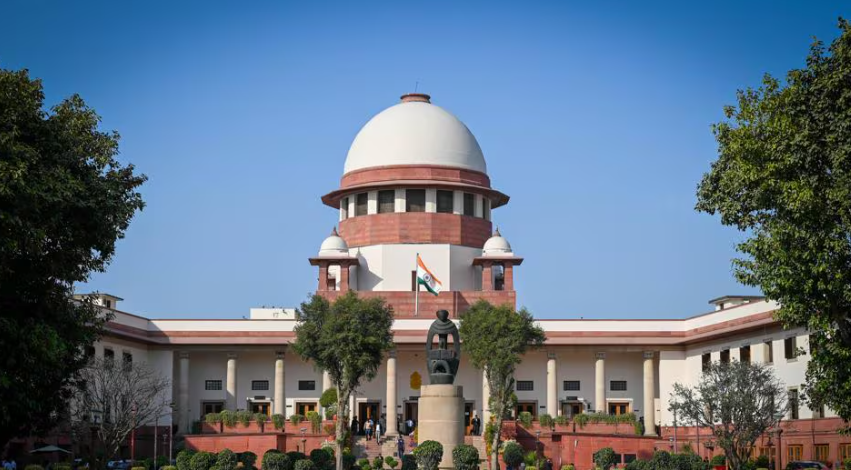
The Supreme Court on Wednesday, November 18, made a candid yet light-hearted observation about Delhi’s worsening air pollution while hearing a long-running child custody and visitation dispute. The Bench advised a Delhi-based father to wait for the Air Quality Index (AQI) to improve before asking his young son, currently living in Singapore, to visit him in the national capital.
A Bench comprising Justices JB Pardiwala and KV Viswanathan was hearing a contempt petition arising out of a matrimonial dispute involving child custody and visitation rights. According to a report by Bar and Bench, the father had alleged that his estranged wife had taken their children to Singapore in violation of court-mandated visitation arrangements.
During the proceedings, the court interacted with the estranged couple and their young son, who participated in the hearing virtually from Singapore. The father expressed his desire to have his son visit him in Delhi during the school holidays, prompting an unusual observation from Justice Pardiwala.
Responding to the father’s request, the judge suggested that the family work out a suitable arrangement but cautioned against bringing the child to Delhi while pollution levels remained high.
“Work something out. But let the AQI go down a little. Because Singapore is too clean,” Justice Pardiwala remarked.
The observation drew attention to the stark contrast between Singapore’s relatively clean environment and Delhi’s persistent air pollution crisis, which continues to affect the national capital and surrounding regions, particularly during the winter months.
Senior Advocate Siddharth Luthra, who was appearing for one of the parties, joined the exchange and suggested that the judges themselves should consider visiting Singapore to escape Delhi’s polluted air.

Justice Pardiwala responded humorously, saying, “Next birth. In our next birth,” drawing smiles in the courtroom.
The Bench also engaged with the young boy about his family, asking him about his elder sister, who is currently residing in London. In a light-hearted interaction, the judge suggested that the sister should make time to speak with her younger brother and asked the boy to convey that the judges were complaining about her absence.
The court also suggested a practical arrangement for maintaining family ties. It indicated that the father, who resides in Delhi, could travel to Singapore periodically to meet his son, while his daughter could be invited to spend a week with him.
DELHI AIR POLLUTION REMAINS A MAJOR CONCERN
The Supreme Court’s remarks came against the backdrop of continuing concerns over Delhi’s deteriorating air quality. According to the Central Pollution Control Board (CPCB), Delhi recorded an AQI of 214 at 7 am on Wednesday, placing the city in the ‘poor’ category.
The city’s pollution situation has remained a recurring concern, with vehicular emissions, construction activities, industrial pollution and seasonal factors contributing to the problem. The situation becomes particularly challenging during winter, when lower temperatures and unfavourable meteorological conditions can trap pollutants closer to the ground.
Delhi also recorded a minimum temperature of 11 degrees Celsius at Safdarjung on Wednesday, the lowest of the season so far, according to an earlier Hindustan Times report.
SUPREME COURT’S REPEATED WARNINGS OVER POLLUTION
This is not the first time the Supreme Court has made strong observations about Delhi-NCR’s air pollution crisis. Earlier in November, the court emphasised that judicial orders and government restrictions alone would not be enough to address the worsening situation.
On November 7, a Bench headed by Chief Justice of India Surya Kant called for a people-driven approach, arguing that the fight against pollution needed to become a ‘people’s movement’.
The Bench stressed that public participation, awareness and changes in everyday behaviour were essential to achieving meaningful improvements in air quality.
“No restrictions can work unless people realise the problem and act. More the orders from this court, violations will multiply… that is the tendency of people,” the Bench had observed.
The court also urged authorities to strengthen public awareness campaigns and educate citizens, particularly children, about the health risks associated with prolonged exposure to polluted air.
Vehicular emissions were separately identified as a major contributor to Delhi-NCR’s pollution levels. The court pointed towards persistent traffic congestion in Delhi and neighbouring urban centres, including Noida and Gurugram, highlighting the need for more effective measures to tackle emissions.
The latest courtroom exchange, although made in a light-hearted context, once again brought Delhi’s air pollution crisis into focus. The judge’s suggestion that the father wait for the AQI to improve before bringing his son from Singapore offered a pointed reminder of how the city’s deteriorating environmental conditions are increasingly becoming a concern in everyday life.





 English
 Gujarati
 Hindi
 Kannada
 Malayalam
 Marathi
 Punjabi
 Tamil
 Telugu