


 India
India

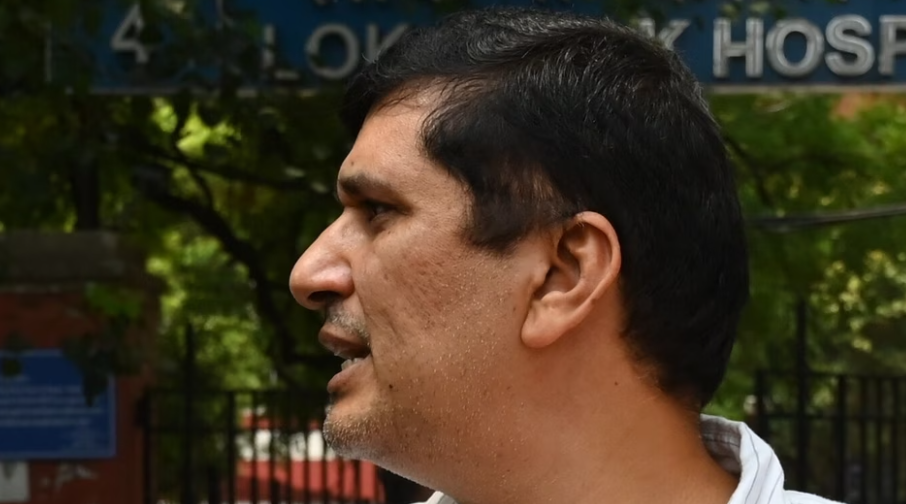
Aam Aadmi Party (AAP) Delhi president Saurabh Bharadwaj has levelled a fresh and serious allegation against the Bharatiya Janata Party-led Delhi government, claiming that subsidised rice meant for the capital’s poor was diverted through a multi-state network in what he described as a ₹22,000-crore “rice scam”.
Bharadwaj, a former Delhi minister, made the allegations in a video message shared on Sunday. According to him, the alleged arrangement involved four key actors: the Food Corporation of India (FCI), the Delhi government’s food and civil supplies department, an Assam-based corporation and a private company in Haryana.
The AAP leader alleged that the rice was procured from the FCI at heavily subsidised rates after a request from the Delhi government but was not ultimately distributed among the intended beneficiaries.
Who supplied the rice?
Bharadwaj claimed that the FCI was the source of the subsidised rice. He said such grain is supplied to state governments for distribution among specific categories of beneficiaries, including poor people without ration cards, migrant workers and daily-wage labourers.
According to Bharadwaj, the Delhi government’s food and civil supplies department formally approached the FCI seeking subsidised rice. The department is headed by Delhi minister Manjinder Singh Sirsa.
The AAP leader alleged that instead of being distributed to poor residents of Delhi, the rice was routed through another entity.
Who allegedly received the rice?
Bharadwaj said the Delhi government requested the FCI to supply around 31,000 metric tonnes of rice every week to an Assam-based corporation. He did not name the corporation.

He claimed that the supply continued for several weeks and that the rice was subsequently diverted outside Delhi rather than being distributed to eligible beneficiaries.
In his account, the Assam-based corporation allegedly acted as an intermediary before the rice was sold to a private company in Haryana.
Bharadwaj’s ₹143-crore-a-week claim
The AAP leader estimated the alleged weekly value of the arrangement at ₹143 crore. He claimed that the Assam-based corporation earned around ₹70 crore a week as commission or profit from the alleged transaction.
Bharadwaj projected the alleged financial impact over three years and claimed that the total could reach approximately ₹22,000 crore. He further alleged that the Assam-based entity’s share could amount to ₹11,000-12,000 crore over the same period.
These figures are allegations made by Bharadwaj and have not been independently established in the report.
The AAP leader also claimed that the arrangement was detected by a vigilance department of the central government and that action was subsequently taken against several individuals. However, he did not identify the officials involved, name the allegedly implicated private company or provide specific details about the alleged action.
Delhi government yet to respond
As of Sunday afternoon, there was no immediate response from Delhi minister Manjinder Singh Sirsa, the Delhi government or the FCI to Bharadwaj’s allegations.
The allegations come amid a wider political confrontation between the AAP and the BJP-led Delhi government.
Bharadwaj said the rice allegation was the third major corruption charge raised by the AAP against the Rekha Gupta government in recent months.
In June, the AAP alleged a ₹650-crore irregularity in health department procurement, citing an Anti-Corruption Bureau FIR. The party questioned why the principal accused named in the case had not been arrested.
Earlier in August, the AAP also accused the Delhi government of irregularities in a ₹90-crore bicycle tender intended for Class 9 schoolgirls, alleging that the tender specifications had been designed to favour a particular company. The Delhi government rejected those allegations.
The latest “rice scam” claim is therefore likely to intensify the political battle between the AAP and BJP in Delhi. However, the allegations remain unproven, and further details from the Delhi government, FCI, the Assam-based corporation and the alleged Haryana buyer would be required to establish what happened to the subsidised rice and whether any financial wrongdoing occurred.




 English
 Gujarati
 Hindi
Hindi Kannada
 Malayalam
 Marathi
 Punjabi
 Tamil
Tamil Telugu