




 India


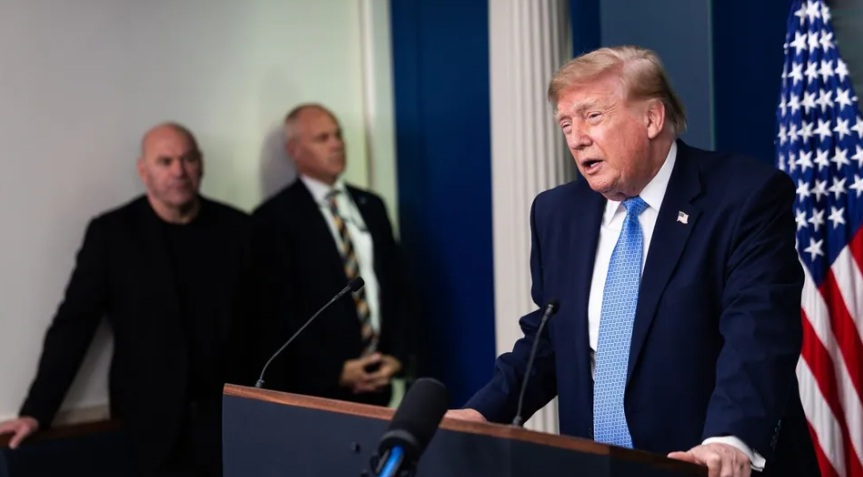
US President Donald Trump may put plans for fresh military strikes against Iran on hold if Tehran and Iran-backed Houthi forces in Yemen avoid further provocations, according to a Reuters report citing people familiar with discussions inside the administration.
Trump has reportedly told senior national security advisers in recent days that he is considering holding back from launching another round of attacks. The discussions followed several intelligence briefings and meetings with his top security officials.
The development suggests a possible shift in Washington’s approach towards the conflict, although Trump has not made a final decision on whether to continue military operations or pursue a broader de-escalation strategy.
Since launching the war alongside Israel in February, Trump has repeatedly alternated between threatening further military action and signalling his willingness to bring hostilities to an end.
According to people familiar with the discussions, the US President has also shown sympathy towards regional allies who have urged Washington not to return to a full-scale war.
Speaking to sports broadcaster Stephen A. Smith on Thursday, Trump indicated that the conflict could be ended quickly but suggested that he was taking a more cautious approach because of requests from countries the United States wants to protect.
“I could end it immediately, but at the request of the nations that I am looking to protect, we are doing it a little bit longer way, a bit more civilly,” Trump said.

Saudi Arabia and Turkey Urge Trump to Avoid Renewed Attacks
Diplomatic pressure from important regional partners appears to be playing a significant role in Trump’s calculations.
Over the past two weeks, Trump has reportedly spoken with Saudi Crown Prince Mohammed bin Salman and Turkish President Tayyip Erdogan to discuss the situation involving Iran.
According to a senior US official and another person familiar with the discussions, both leaders advised Trump against restarting military strikes.
Saudi Arabia has expressed concerns about the potential economic and security consequences of another major confrontation in the region.
Trump reportedly spoke with Mohammed bin Salman on October 31 and indicated that he was considering military action after the US midterm elections. However, the Saudi Crown Prince urged him to reconsider, arguing that economic sanctions were already putting considerable pressure on Iran.
Trump has also spoken with Erdogan three times since October 28. Following their November 7 conversation, Turkey’s official statement emphasised the need to end tensions between Washington and Tehran.
Neither Saudi Arabia nor Turkey has publicly confirmed the details of the reported discussions.
Iran’s Economy Under Pressure from US Sanctions
Another important factor influencing Washington’s strategy is the economic impact of its measures against Tehran.
US intelligence agencies have reportedly assessed that the American naval blockade and economic sanctions are significantly affecting Iran’s economy.
According to US officials familiar with the intelligence assessments, continued economic pressure could further weaken Tehran’s financial position and potentially strengthen Washington’s negotiating position.
The US military has also been working to prevent weapons and other sanctioned materials from entering Iran through land routes and the Caspian Sea, expanding its efforts beyond the existing restrictions on Iranian maritime traffic.
The Trump administration appears to believe that economic pressure could achieve strategic objectives without the immediate need for another major military campaign.
US Military Remains Prepared for Further Action
Despite indications that Trump may avoid renewed attacks, the US military continues to maintain its readiness for possible escalation.
According to people familiar with American military planning, a third aircraft carrier is expected to move into the Middle East in the coming days to replace one of the two currently operating in the region.
However, all three aircraft carriers could remain deployed if the situation requires a larger military presence.
One potential option reportedly being considered is another attack on Iran’s underground nuclear facilities. The United States has already targeted these facilities, but the effectiveness of additional strikes remains uncertain.
US intelligence assessments have also suggested that renewed military attacks may not significantly change Iran’s position in negotiations.
Another concern involves American weapons stockpiles. Trump has reportedly received briefings about the availability of military equipment and precision-guided munitions.
Reuters had previously reported in August that the US had used virtually all of its long-range precision munitions, raising questions about the pace at which depleted stocks could be replenished.
However, the White House has rejected concerns about America’s military capabilities.
A White House official said the US military had sufficient ammunition and weapons to achieve all of the President’s strategic objectives.
Israeli Pressure for Another Military Campaign
While some regional allies are reportedly encouraging restraint, Israeli officials have continued to press the Trump administration to consider another military campaign against Iran.
According to a US official, Israeli representatives have continued lobbying Washington for further military action.
Israel’s position adds another dimension to the decision facing Trump, who must balance its security partnership with Israel against the concerns of other regional allies.
The possibility of renewed attacks also raises questions about the future of diplomatic negotiations and the wider security situation in the Middle East.
Iran War Creates Political and Economic Challenges for Trump
The conflict has had consequences beyond the Middle East, particularly through its impact on international energy markets.
The war has contributed to rising global fuel prices, increasing economic pressure on consumers and businesses.
It has also become politically unpopular in the United States. A Reuters/Ipsos survey conducted shortly before the November 3 midterm elections found that 55 per cent of Americans believed the war was not worth its cost.
The conflict has become one of the political challenges facing Trump’s Republican Party, which lost control of Congress to the Democrats in last week’s elections. Vice President JD Vance also cited the war as a reason for the Republican setback.
These domestic political considerations could further complicate Trump’s decision on whether to restart military operations.
Trump Says US Does Not Need a Deal with Iran
Despite the possibility of avoiding further strikes, Trump has continued to adopt a tough public position towards Tehran.
In a social media post on Thursday, he suggested that Washington had already achieved significant objectives and did not necessarily need another agreement with Iran.
“We don’t need a deal with Iran,” Trump wrote, adding that the United States had secured substantial financial leverage and control over the Strait of Hormuz.
A White House official also described the United States as being in a strong strategic position, citing pressure on Iran’s economy and the American military presence in the region.
For now, Trump’s next move remains uncertain. While regional allies are urging restraint and economic sanctions continue to put pressure on Tehran, the US military is keeping its options open.
Whether Washington ultimately chooses diplomatic de-escalation or another round of military strikes could have significant consequences for regional stability, global energy markets and international security.



 English
 Gujarati
 Hindi
 Kannada
 Malayalam
 Marathi
 Punjabi
 Tamil
 Telugu