





 India
India

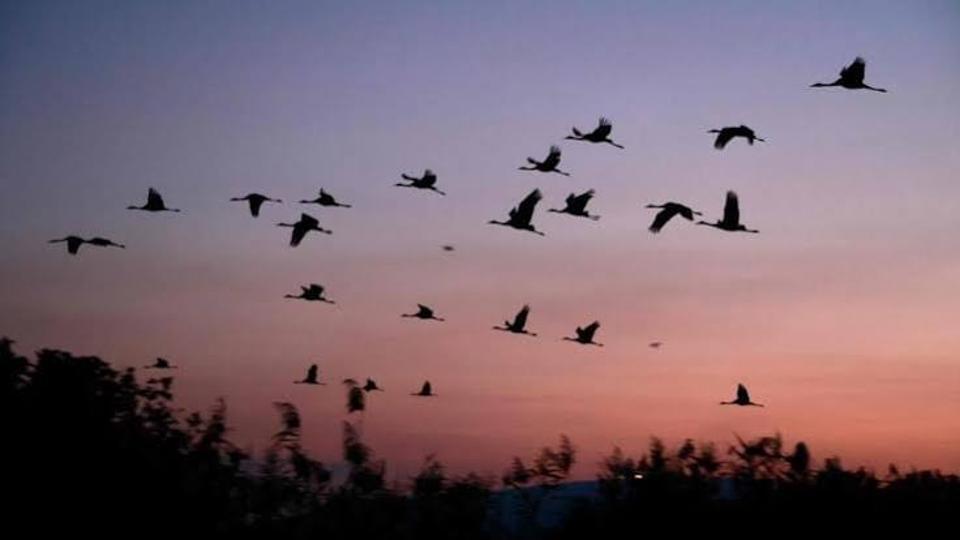
A new satellite-tracking study has mapped a vast migration network used by the critically endangered lesser florican, revealing that the world’s smallest bustard depends heavily on grasslands across western and central India despite frequently moving through croplands and other open habitats.
Published in Frontiers in Conservation Science, the study identified a broad migration flyway covering approximately 206,322 square kilometres, including a 59,826.59-square-kilometre high-density corridor. Researchers said the findings underline the importance of protecting fragmented grasslands beyond traditional wildlife sanctuaries and national parks.
The lesser florican (Sypheotides indicus) has experienced a dramatic population decline. The study estimates that its population has fallen by around 80% over the past three to four generations. A nationwide assessment cited by researchers estimated only about 480 birds remain in India, compared with an estimated 3,530 birds in 1999.
Researchers fitted GPS-GSM transmitters on 12 lesser floricans between 2020 and 2022, tracking them until 2025. The birds were tagged at Gujarat’s Blackbuck National Park in Velavadar and at the Kutch Bustard Sanctuary and adjoining Naliya grasslands in Kutch. The two tagging locations are roughly 450 kilometres apart.
The tracking effort generated 160,166 location records, with 150,147 GPS fixes ultimately used for analysis. Collectively, the transmitters remained active for 4,466 days, providing researchers with an unprecedented picture of the species’ movements.
Grasslands remain vital habitat
The study found that grasslands were the most preferred habitat during both the breeding season, from June to September, and the non-breeding season.
While migratory birds used croplands and shrublands more extensively than resident birds outside the breeding season, researchers found that grasslands remained their most strongly selected habitat. The probability of a lesser florican using an area also dropped sharply as its distance from a grassland patch increased.

This suggests that croplands cannot fully replace natural grasslands. Even when birds moved through agricultural landscapes, they remained closely associated with remaining grassland patches.
The research also revealed striking differences in migration behaviour. One tracked female travelled from Gujarat to Telangana in November 2020 and remained there for around six months before dying on her return journey after colliding with a high-tension power line in Maharashtra.
Two males followed markedly different routes. One repeatedly travelled through Maharashtra, Karnataka, Gujarat and Rajasthan, while another undertook wider movements that included an extended stay in Madhya Pradesh and a monsoon period in Gujarat.
One male travelled 3,036 kilometres during migration across 196 days, averaging 15.49 kilometres per day. Another covered 4,873 kilometres over 134 migratory days, averaging 36.36 kilometres per day.
Low-altitude flight raises collision concerns
The migration routes did not form a single narrow passage. Instead, researchers found overlapping and partially parallel routes used by different birds and during different migration cycles.
The high-density corridor measured nearly 60,000 square kilometres, with an average width of about 70.8 kilometres, although its width varied considerably across the landscape.
Another important finding was the birds’ low flight altitude. Among nine birds with reliable flight-height data, the mean flight height was just 24.4 metres. The birds rarely maintained flights above 50 metres except briefly during migration.
Researchers warned that this places lesser floricans within the height range of overhead power lines, which commonly stand between 10 and 40 metres above the ground. Power infrastructure therefore represents a significant collision threat to a species already facing severe population decline.
The study recommends measures including marking power lines with flight diverters, placing cables underground where feasible and avoiding infrastructure development near key breeding and feeding areas.
Researchers also stressed that conservation cannot be limited to protected areas. Village pastures, community grazing lands and degraded grasslands must also be restored and managed to maintain habitat connectivity.
The study concludes that controlling grassland fragmentation, regulating grazing, restoring degraded habitats and reducing infrastructure-related threats will be crucial to preventing further decline of the lesser florican. With its remaining population already extremely small, protecting the bird’s extensive migration landscape could be as important as protecting its breeding grounds.


site-verification-ok






 English
 Gujarati
 Hindi
Hindi Kannada
 Malayalam
 Marathi
 Punjabi
 Tamil
Tamil Telugu