


 India
India

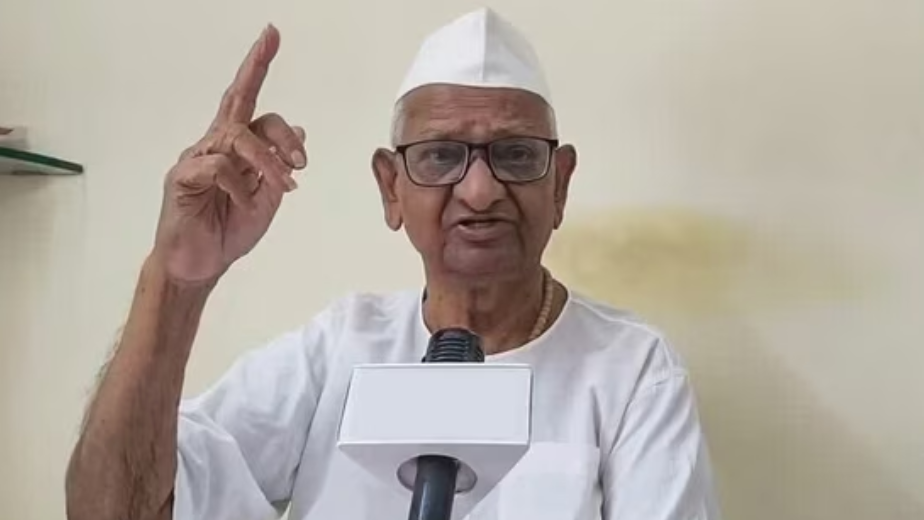
Veteran social activist Anna Hazare has appealed to Prime Minister Narendra Modi to engage in dialogue with protesters and ensure greater accountability within the government amid the ongoing CJP protest. In a letter addressed to the Prime Minister, Hazare argued that seeking the resignation of a minister over administrative failures would not weaken the government. Instead, he said, such a move would reinforce accountability and send a strong message to all ministers about their responsibilities.
Hazare stated that fixing responsibility at the ministerial level would strengthen governance by ensuring that elected representatives remain answerable for the performance of their respective departments. According to him, holding ministers accountable for lapses would improve the efficiency and credibility of the government while demonstrating that public office comes with responsibility.
Although Hazare did not mention Union Education Minister Dharmendra Pradhan by name, his remarks come at a time when opposition parties, student groups and protesters have intensified demands for the minister’s resignation over alleged irregularities in national entrance examinations. The demand has become one of the central issues during the ongoing CJP protest and climate activist Sonam Wangchuk’s hunger strike in Delhi.
The veteran activist also expressed concern over the police response to peaceful demonstrations. He urged authorities to avoid excessive use of force against students and protesters, stressing that democratic governments should protect the right to peaceful protest rather than treating such movements solely as law-and-order challenges.
Hazare further highlighted allegations surrounding the National Eligibility cum Entrance Test (NEET), pointing out that claims of question paper leaks and examination irregularities surfaced both in 2024 and again in 2026. He said these repeated controversies have severely affected the confidence of students and their families in the examination system.
In his letter, Hazare also referred to reports claiming that 22 students died by suicide following the cancellation of the medical entrance examination. He described the reports as deeply disturbing and called for serious introspection into the way competitive examinations are conducted and managed.
The social activist criticised what he described as a recurring pattern in governance, where lower-level officials are often blamed whenever scams or irregularities emerge, while ministers and senior authorities avoid responsibility. He argued that accountability should extend beyond bureaucrats to include political leadership whenever major administrative failures occur.

Hazare urged the government to adopt a constructive approach by listening patiently to the concerns of protesters instead of responding with force. He said differences should be resolved through dialogue, mutual trust and democratic engagement rooted in Gandhian principles.
Emphasising the importance of democratic values, Hazare said governments become stronger when they are willing to acknowledge shortcomings, engage with citizens and take corrective action. He maintained that accountability, transparency and open communication are essential for restoring public confidence and ensuring effective governance.
His intervention comes as protests over examination-related issues continue to draw national attention, with growing calls for reforms in the education system and greater political accountability over alleged administrative lapses.



 English
 Gujarati
 Hindi
Hindi Kannada
 Malayalam
 Marathi
 Punjabi
 Tamil
Tamil Telugu