

 India
India

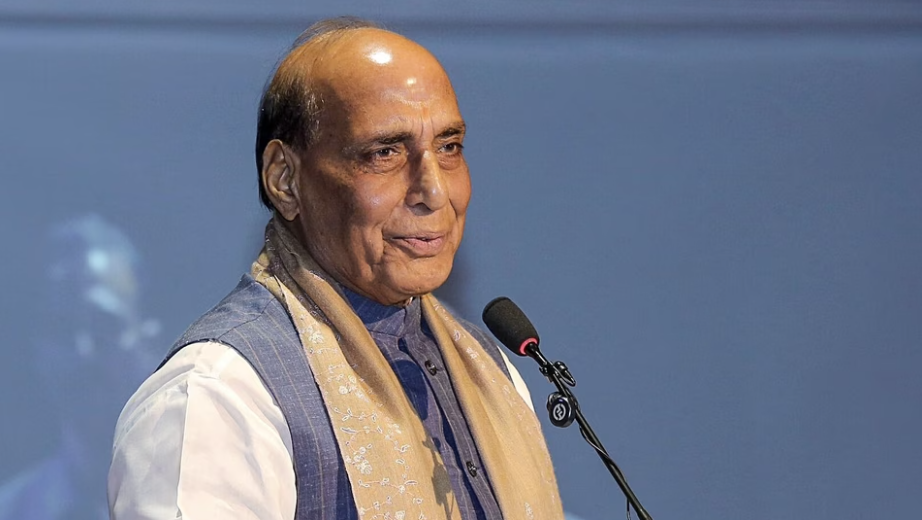
India’s push for self-reliance in aerospace and defence manufacturing reached a significant milestone on Friday as Defence Minister Rajnath Singh witnessed the handover of indigenously manufactured aircraft and helicopters by Hindustan Aeronautics Limited (HAL) to the Indian Air Force (IAF) and Pawan Hans Limited (PHL).
Addressing the ceremony, Singh described the occasion as more than a routine transfer of aircraft, calling it an important milestone in India’s journey towards indigenous aerospace capability, technological confidence and self-reliance.
The event brought together three major developments in India’s aerospace sector. The first was the handover of the indigenously designed and developed Dhruv Next Generation (Dhruv-NG) civil helicopter after it received Type Certification from the Directorate General of Civil Aviation (DGCA). Four Dhruv-NG helicopters were handed over to Pawan Hans.
The second milestone was the delivery of the final batch of Light Combat Aircraft (LCA) Final Operational Clearance (FOC) Trainer aircraft to the Indian Air Force. Two LCA FOC Trainer aircraft were handed over, completing the twin-seater deliveries under the FOC contract.
The third development was the handover of the first HTT-40 Basic Trainer aircraft from series production to the IAF. The delivery marks the beginning of aircraft deliveries under the contract for 70 HTT-40 basic trainer aircraft.
Singh said these developments demonstrated the growing maturity of India’s indigenous aerospace ecosystem across both civilian and military aviation.
Recalling India’s earlier dependence on foreign countries for defence technology and equipment, the Defence Minister said the country had historically relied heavily on imports. He credited the government’s focus on self-reliance with accelerating efforts to build domestic capabilities in defence manufacturing.

Singh also underlined the need to look beyond defence requirements while developing India’s aerospace industry. According to him, the country needs an integrated ecosystem capable of serving both civil and military aviation, rather than developing these sectors in isolation.
The Defence Minister pointed to the Dhruv-NG as an example of India’s expanding indigenous civil aerospace capabilities, while describing the LCA FOC Trainer as a symbol of the country’s military aerospace capabilities and the growing maturity of its fighter aircraft ecosystem.
He also challenged India’s scientists, engineers, designers, test pilots and technicians to develop technologies that do not currently exist. Singh said India should aim to establish a leading position in the global aerospace technology landscape over the coming decade.
Calling for greater cooperation between government-owned and private companies, Singh said the public and private sectors should be viewed as complementary rather than competitors. He argued that stronger collaboration across the aerospace industry would be necessary to build a comprehensive domestic ecosystem.
The Defence Minister further stressed that indigenous production has become increasingly important as the character of warfare changes. Future air operations, he said, would be increasingly information-intensive and technology-driven, making domestic technological capabilities crucial to national security.
Singh particularly highlighted the HTT-40, developed indigenously by HAL. Apart from reducing dependence on foreign sources for basic trainer aircraft, he said the aircraft’s capabilities could also create opportunities for exports.
The latest handovers therefore represent multiple strands of India’s aerospace ambitions coming together — from civilian helicopters and fighter trainers to indigenous basic training aircraft. The government is seeking to use such programmes to deepen domestic design, manufacturing and technological capabilities while creating an aerospace ecosystem that can cater to both India’s defence requirements and potential international markets.


 English
 Gujarati
 Hindi
Hindi Kannada
 Malayalam
 Marathi
 Punjabi
 Tamil
Tamil Telugu