India
India

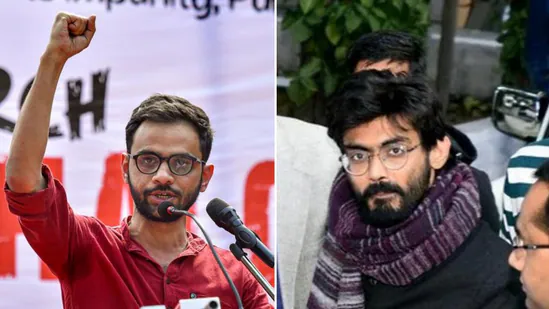
A Delhi court on Saturday rejected the bail applications filed by student activists Umar Khalid and Sharjeel Imam in connection with the larger conspiracy case related to the 2020 Delhi riots. The decision was delivered by Additional Sessions Judge Sameer Bajpai of the Karkardooma Courts after hearing arguments from both the prosecution and the defense.
The Delhi Police strongly opposed the bail pleas, contending that there had been no material change in circumstances that would justify granting relief to either accused. According to the prosecution, Khalid and Imam allegedly held senior and significant positions in the conspiracy case and their roles were distinct from those of several other co-accused individuals.
Special Public Prosecutor Madhukar Pandey, representing the Delhi Police, argued before the court that the grounds cited by the two activists did not warrant reconsideration of their custody status. The prosecution maintained that the allegations against them remain serious and that the evidence presented during the investigation continues to support the charges.
The bail applications were filed last month, with both Khalid and Imam relying heavily on a recent Supreme Court judgment delivered on May 18 in a separate case involving Jammu and Kashmir resident Syed Iftikhar Andrabi. The case, investigated by the National Investigation Agency (NIA), involved allegations linked to narco-terror activities.
In their petitions, the two activists argued that the Supreme Court’s observations in the Andrabi case represented a significant change in legal circumstances. The apex court had expressed reservations regarding an earlier judgment and emphasized the importance of considering prolonged incarceration and delays in trial proceedings while deciding bail applications under the Unlawful Activities (Prevention) Act (UAPA).
The Supreme Court referred to principles laid down in the landmark Union of India vs KA Najeeb (2021) judgment, which held that constitutional courts can grant bail in cases where extended detention and delayed trials undermine an accused person’s fundamental rights, even when stringent provisions of the UAPA apply.
Khalid and Imam sought to use these observations to support their argument that their continued incarceration warranted reconsideration. However, the Delhi Police countered that the circumstances of their case were different and that the legal principles cited did not automatically justify their release.

After hearing submissions from both sides, the court reserved its order before ultimately rejecting the bail applications. The ruling means that Umar Khalid and Sharjeel Imam will continue to remain in judicial custody as proceedings in the larger conspiracy case linked to the February 2020 Delhi riots move forward.
The 2020 Delhi riots case remains one of the most closely watched legal proceedings in recent years, involving multiple accused persons and extensive investigations into allegations of conspiracy, violence, and unlawful activities surrounding the communal unrest that claimed dozens of lives and caused widespread damage across parts of the national capital.


 English
 Gujarati
 Hindi
Hindi Kannada
 Malayalam
 Marathi
 Punjabi
 Tamil
Tamil Telugu