


 India
India

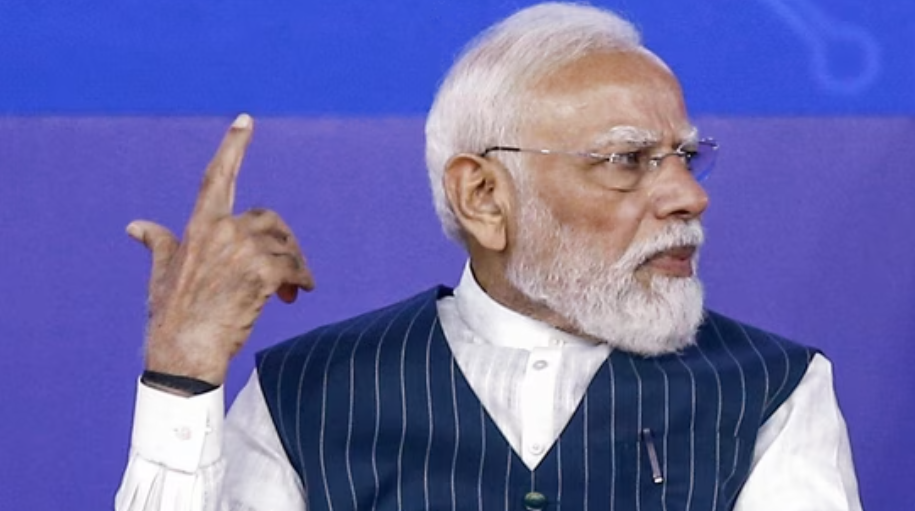
As Parliament prepares for the Monsoon Session starting July 20, the Narendra Modi-led government is entering the session with stronger numbers than it had just a few months ago. Recent defections from opposition parties have boosted the strength of the BJP-led National Democratic Alliance (NDA), prompting fresh political debate over the government’s ability to push through major constitutional amendments.
The Congress has alleged that the BJP is attempting to improve its parliamentary arithmetic through defections in order to secure the numbers required for constitutional changes. Congress general secretary Jairam Ramesh claimed that despite efforts to increase its strength, the ruling alliance still lacks the two-thirds majority needed to amend the Constitution under Article 368.
Unlike ordinary legislation, constitutional amendments require a special majority. With the Lok Sabha’s effective strength currently at 540 members, a constitutional amendment would need support from at least two-thirds of members present and voting, in addition to a simple majority of the House. This means the government remains dependent on support from regional parties or opposition abstentions to successfully pass such measures.
One of the key proposals expected to return during the Monsoon Session is the Constitution (130th Amendment) Bill. The legislation seeks to automatically remove the Prime Minister, Union ministers, Chief Ministers and state ministers from office if they remain in judicial custody for more than 30 consecutive days in cases carrying a punishment of at least five years imprisonment.
The proposal was previously referred to a Joint Parliamentary Committee, which is expected to finalise its report shortly before the session begins. Union Home Minister Amit Shah has defended the amendment, arguing that elected executives should not continue governing while in jail. He has maintained that courts provide safeguards against politically motivated cases through the bail process. Opposition parties, however, contend that the proposal risks penalising individuals before conviction and could be misused for political purposes.
Another major constitutional proposal likely to feature prominently is the Constitution (131st Amendment) Bill, which seeks to facilitate the implementation of the Women’s Reservation Act. The bill proposes increasing the maximum strength of the Lok Sabha and conducting delimitation based on the 2011 Census.
The proposal was defeated during the previous parliamentary session after the government failed to secure the necessary majority. The government argues that expanding parliamentary seats is essential to implement the 33 percent reservation for women while maintaining adequate representation across states.

Opposition parties, particularly the Congress and regional parties from southern India such as the DMK, have expressed concerns that delimitation based on population could disproportionately increase the representation of northern states such as Uttar Pradesh and Bihar. Critics argue that the issue requires broader political consultation before any constitutional changes are enacted.
Beyond these immediate proposals, the government’s larger constitutional agenda includes the One Nation, One Election (ONOE) initiative. The Constitution (129th Amendment) Bill remains under examination by a Joint Parliamentary Committee. Prime Minister Modi has repeatedly argued that simultaneous Lok Sabha and Assembly elections would reduce governance disruptions and improve administrative efficiency.
However, legal experts and constitutional scholars remain divided. Some have raised concerns about the implications for federalism and the potential powers that may be granted to election authorities to synchronise electoral cycles across states.
The renewed focus on constitutional amendments has also revived political debates surrounding reservation policies. Opposition leaders continue to argue that constitutional changes could eventually impact reservations for Scheduled Castes, Scheduled Tribes and Other Backward Classes. The government has strongly denied such claims, with Prime Minister Modi repeatedly asserting that reservations will remain protected.
At present, no constitutional amendment relating to the removal or alteration of reservation provisions for SCs, STs or OBCs is before Parliament. Nevertheless, the issue is expected to remain a significant political flashpoint as the Monsoon Session approaches.


 English
 Gujarati
 Hindi
Hindi Kannada
 Malayalam
 Marathi
 Punjabi
 Tamil
Tamil Telugu