





 India
India

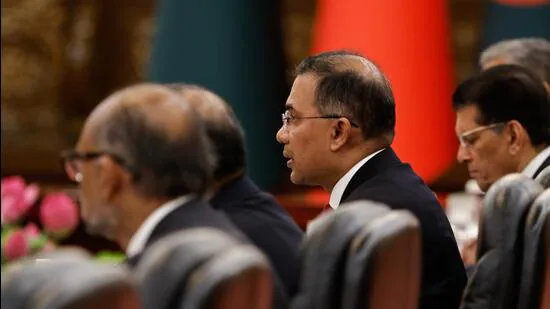

India has reacted cautiously to Bangladesh’s decision to move forward with the development of the Teesta River and a proposed economic corridor with Chinese assistance, signaling that New Delhi is closely tracking the developments and will respond as necessary.
Speaking at a regular media briefing, External Affairs Ministry spokesperson Randhir Jaiswal said India remains attentive to strategic and infrastructure initiatives in its neighborhood. His remarks came after Bangladesh and China reached an understanding on cooperation related to the Teesta River Comprehensive Management and Restoration Project during Bangladeshi Prime Minister Tarique Rahman’s visit to Beijing in June.
“We closely follow all such developments in our neighbourhood and take appropriate measures as required,” Jaiswal said, while emphasizing that India’s development assistance projects in Bangladesh continue to be guided by a mutually agreed roadmap that is reviewed regularly.
On the Teesta issue specifically, Jaiswal noted that India’s position has already been communicated to the Bangladeshi side. He added that New Delhi would consider all recent developments while shaping its overall approach to the river-related discussions.
The Teesta River has long been a sensitive issue between India and Bangladesh. It is the only one of the 54 shared rivers between the two countries that still lacks a formal water-sharing agreement. The river is crucial for agriculture and livelihoods on both sides of the border, making any major development project politically and strategically significant.
Bangladesh’s engagement with China on the Teesta project gained momentum during the tenure of the caretaker administration led by Muhammad Yunus and has continued under the current Bangladesh Nationalist Party (BNP) government headed by Tarique Rahman.
During his visit to Beijing, Rahman met Chinese Water Resources Minister Li Guoying and sought technical assistance for several river management initiatives, including the Teesta project. According to Bangladeshi officials, China has expressed full support for water resource management efforts in the country. Chinese experts have already completed a feasibility study related to the proposed project.
China’s involvement extends beyond river management. Beijing has also renewed efforts to advance the proposed China-Bangladesh-Myanmar Economic Corridor (CBMEC), a regional connectivity initiative that could significantly enhance trade and infrastructure links across South Asia.
Speaking in Dhaka on Thursday, Chinese Ambassador Yao Wen reiterated Beijing’s commitment to advancing both the CBMEC and the Teesta project through government-to-government cooperation. He said China remains determined to work with Bangladesh and Myanmar to move the economic corridor forward.
The CBMEC holds strategic importance because it could eventually provide China with direct access to the Bay of Bengal, expanding its economic and logistical footprint in the region. Such a development has raised concerns in India, which has traditionally viewed Chinese infrastructure investments in neighboring countries through a strategic lens.
Indian security planners are also believed to be concerned about the presence of Chinese personnel in areas connected to the Teesta project. The proposed work site lies relatively close to the strategically sensitive “Chicken’s Neck” corridor, a narrow strip of land in northern India that connects the country’s northeastern states to the rest of the mainland.
India had earlier shown interest in participating in Teesta-related conservation efforts. During former Bangladeshi Prime Minister Sheikh Hasina’s visit to India in June 2024, Prime Minister Narendra Modi announced that an Indian technical team would visit Bangladesh to discuss conservation and management of the Bangladeshi section of the river.
As Bangladesh deepens cooperation with China on major infrastructure and connectivity projects, India appears to be balancing diplomatic caution with strategic vigilance, keeping a close watch on developments that could have long-term implications for regional geopolitics and security.



 English
 Gujarati
 Hindi
Hindi Kannada
 Malayalam
 Marathi
 Punjabi
 Tamil
Tamil Telugu