India
India

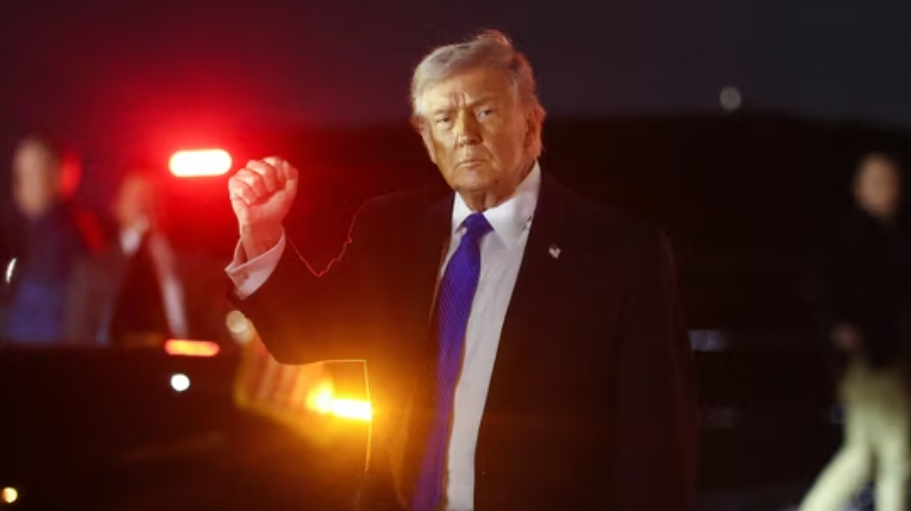
US President Donald Trump has suggested that several major global powers could deploy warships alongside the United States to ensure the security of the Strait of Hormuz, one of the world’s most crucial maritime trade routes. His remarks come as tensions with Iran continue to escalate following recent military confrontations in the region.
In a message posted on Truth Social, Trump indicated that an international naval effort may be necessary to guarantee that shipping through the strategic waterway remains uninterrupted. The strait, which connects the Persian Gulf to global sea lanes, is a critical corridor for global energy supplies, with a significant portion of the world’s oil shipments passing through it every day.
Trump said that nations heavily dependent on the passage for energy imports and trade could join Washington’s efforts to secure the route. Among the countries he specifically mentioned were China, France, Japan, South Korea and the United Kingdom. According to Trump, these nations may “hopefully” deploy naval vessels to help maintain freedom of navigation in the strategically vital waterway.
The US president also made a sweeping claim about the recent conflict with Iran, asserting that American forces had destroyed what he described as “100 percent of Iran’s military capability.” However, he cautioned that Tehran could still attempt limited attacks that might threaten commercial shipping in the region.
Despite suffering significant military losses, Trump suggested that Iran could rely on smaller, asymmetric tactics to disrupt maritime traffic. These could include the use of drones, sea mines, or short-range missiles positioned along the coastline or deployed within the narrow shipping lanes of the strait.
Such tactics, while smaller in scale compared with conventional warfare, could still pose serious risks to commercial vessels and energy tankers passing through the busy maritime corridor. Any disruption to shipping in the strait would likely have immediate consequences for global energy markets and international trade.
Trump also warned that US forces remain ready to conduct further military operations if necessary. He said American troops could continue strikes along Iran’s coastline and target Iranian boats or vessels operating in the area if they are perceived as threats to maritime security.

“We will soon get the Hormuz Strait open, safe and free,” Trump said, emphasizing that Washington intends to ensure the waterway remains operational regardless of potential Iranian actions.
His remarks also signaled a broader push for international cooperation in securing the passage. Trump argued that countries whose economies rely heavily on oil shipments moving through the Strait of Hormuz should contribute naval assets to protect the route.
The Strait of Hormuz remains one of the most strategically important maritime chokepoints in the world. Any instability in the region can rapidly affect global oil prices and shipping flows. With tensions continuing to simmer between the United States and Iran, Trump’s call for a multinational naval presence suggests that the crisis could soon draw in a wider coalition of global powers seeking to keep the critical waterway open for international trade.


 English
 Gujarati
 Hindi
Hindi Kannada
 Malayalam
 Marathi
 Punjabi
 Tamil
Tamil Telugu