


 India
India

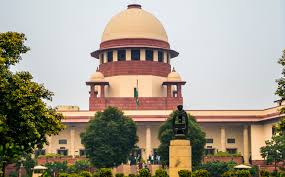

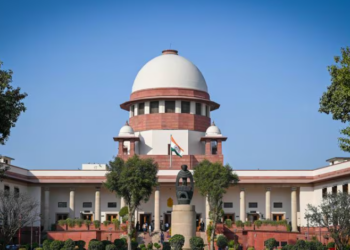
The Supreme Court of India on Friday delivered a strong oral rebuke against dowry-related harassment while hearing an appeal connected to a 2010 case from Chhattisgarh involving the death of a married woman who died by hanging within three years of marriage.
A bench comprising Justice BV Nagarathna and Justice Ujjal Bhuyan refused to interfere with the findings of the lower courts and dismissed the appeal, while making sharp observations on the alleged treatment of brides and their families in matrimonial homes.
During the hearing, the bench questioned the pattern of repeated financial demands and alleged humiliation faced by the woman’s family. Justice Nagarathna reportedly asked why women are married only to be insulted later, stating that such behaviour cannot be normalized in society. The court observed that a message must go out clearly that brides and their families cannot be subjected to continuous harassment after marriage.
The case pertains to an incident in Chhattisgarh where the woman was found dead by hanging at her matrimonial home. According to prosecution records cited during the trial, the woman was allegedly subjected to ongoing harassment over dowry demands, including cash and a car. The courts noted that the alleged cruelty occurred “soon before” her death, establishing a legal link under provisions related to dowry death.
Both the trial court and the Chhattisgarh High Court had earlier upheld the conviction, finding that the death occurred under unnatural circumstances within seven years of marriage, thereby attracting the statutory presumption of dowry death under Indian law. Medical evidence confirmed death by hanging, while witness statements and material on record indicated repeated financial pressure on the deceased.
Several members of the husband’s family were convicted under Sections 304B, 306, and 498A of the Indian Penal Code. The appeal before the Supreme Court was filed by the deceased woman’s brother-in-law, who sought relief from his conviction under the cruelty-related charge. However, the apex court remained unconvinced by the arguments presented by the defence counsel.
At one point during the hearing, Justice Nagarathna made strong remarks on the alleged conduct of the accused side, noting the repeated financial demands and alleged humiliation directed at the bride’s family. The bench also questioned attempts to justify the behaviour and expressed concern that such conduct is sometimes socially tolerated despite its serious consequences.
Justice Bhuyan also highlighted that educated individuals were involved in the case, raising concern over the normalisation of such practices in modern society. The Supreme Court ultimately dismissed the appeal and upheld the convictions recorded by the lower courts.

 English
 Gujarati
 Hindi
Hindi Kannada
 Malayalam
 Marathi
 Punjabi
 Tamil
Tamil Telugu