 India
India

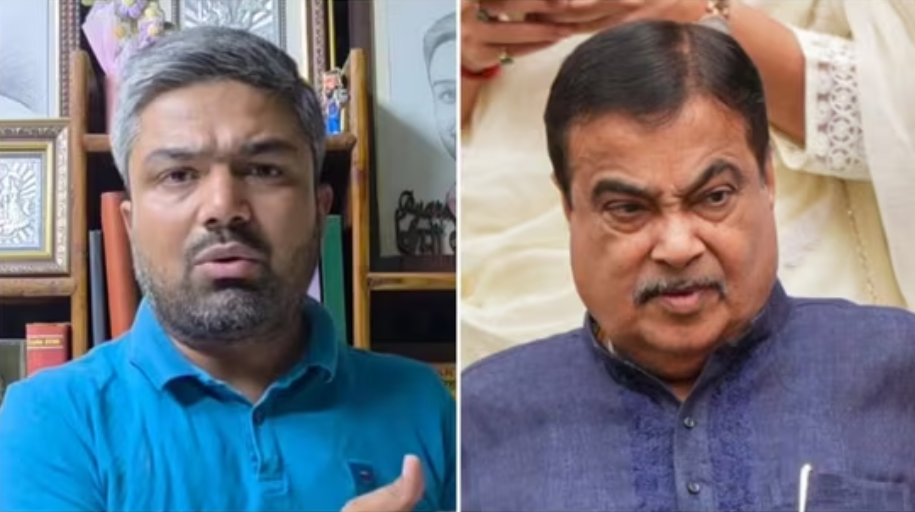
The controversy surrounding India’s E20 fuel programme has intensified after the Nagpur Cyber Police registered an FIR against several social media content creators for allegedly spreading misleading information about ethanol-blended petrol and Union Road Transport and Highways Minister Nitin Gadkari.
The case was filed following a complaint submitted by Shishir Arun Tripathi, Convener of the BJP Nagpur City Social Media Cell. According to the complaint, certain videos and social media posts circulated what were described as baseless and objectionable claims regarding E20 fuel and Gadkari, potentially misleading the public and creating confusion among citizens.
Among those named in the complaint are popular YouTuber Manish Kasyap and social media accounts identified as “Desi Boys,” “Harshit Rathi,” and “Anklesh Inwati.” The police reportedly registered the case under Sections 356, 352, and 296 of the Bharatiya Nyaya Sanhita (BNS), 2023, along with Section 67 of the Information Technology Act, 2000.
The FIR follows weeks of heated public discussion over E20 petrol, which contains 20 percent ethanol blended with conventional petrol. Critics have raised concerns about the impact of the fuel on older vehicles, while the government maintains that ethanol blending is a key part of India’s energy security and emissions-reduction strategy.
Responding to the FIR, Manish Kasyap released a video rejecting allegations that he had spread false information. He stated that his comments were based on concerns raised by vehicle owners and his own experiences. Kasyap questioned the government’s ethanol policy and argued that consumers should be allowed to openly discuss problems they believe are linked to E20 fuel.
He further claimed that ethanol production in India exceeds current demand from the petroleum sector and questioned whether the push toward higher ethanol blends such as E20, E25, and E30 was justified. Kasyap also criticized legal action against individuals voicing concerns about fuel performance and vehicle compatibility.
The issue gained additional political attention after Aam Aadmi Party (AAP) national convenor Arvind Kejriwal wrote to Prime Minister Narendra Modi, urging the Centre to reconsider the mandatory use of E20 petrol in vehicles not specifically designed for ethanol-blended fuel.

In his letter, Kejriwal argued that owners of older vehicles could face reduced mileage, higher maintenance costs, and increased engine wear. He called for petrol pumps to offer consumers a choice between pure petrol and E20 fuel. He also demanded a reduction in E20 fuel prices to compensate for what he described as lower fuel efficiency.
Addressing the media, Kejriwal encouraged citizens experiencing difficulties with E20 petrol to share their experiences online through videos and social media posts. He said public feedback was necessary to draw attention to consumer concerns.
The debate recently escalated after popular vlogger Sourav Joshi posted a viral video claiming that his Mercedes-Benz SUV’s fuel efficiency had drastically dropped after using E20 petrol. Joshi suggested the blended fuel was responsible for reduced mileage and potential engine damage.
However, Mercedes-Benz India later issued a customer advisory clarifying that all its BS VI petrol vehicles are compatible with E20 fuel and certified by relevant authorities. After taking his vehicle to a service centre, technicians reportedly discovered an engine-related fault that had caused the mileage issue.
Subsequently, Joshi publicly apologized, acknowledging that the problem was linked to a mechanical issue rather than E20 petrol. Despite the clarification, the episode added momentum to the wider national debate over ethanol blending, fuel efficiency, vehicle compatibility, and the balance between environmental goals and consumer concerns.
 English
 Gujarati
 Hindi
Hindi Kannada
 Malayalam
 Marathi
 Punjabi
 Tamil
Tamil Telugu