
 India
India

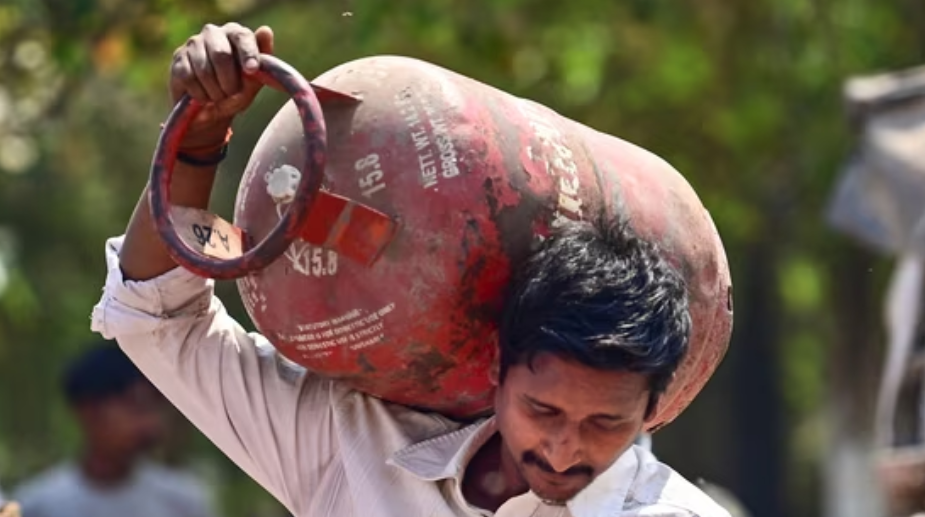
The Delhi government has announced a major welfare initiative in its 2026–27 budget, allocating ₹260 crore to provide free LPG cylinders to households during two major festivals—Holi and Diwali. Chief Minister Rekha Gupta, who also holds the finance portfolio, unveiled the ₹1,03,700 crore budget, describing it as a “green budget” aimed at balancing welfare with long-term development.
Under the scheme, every eligible household in Delhi will receive one free LPG cylinder each during Holi and Diwali. The move is expected to ease the financial burden on families amid rising living costs, especially during festive seasons.
A significant allocation of ₹11,666 crore has been made for the Municipal Corporation of Delhi (MCD), reinforcing the government’s commitment to improving civic infrastructure and services. The budget estimates tax revenues of ₹74,000 crore, reflecting confidence in economic growth.
While presenting the budget, Gupta highlighted that Delhi’s per capita income remains among the highest in the country. However, she also took a critical stance on previous fiscal policies, stating that a “culture of freebies” had slowed growth, particularly during the tenure of Arvind Kejriwal between 2018 and 2020.
Infrastructure development remains a key focus area. The government has earmarked ₹5,921 crore for the Public Works Department (PWD) and ₹7,887 crore for urban development and housing projects. Additionally, ₹1,352 crore has been allocated to make roads dust-free and improve connectivity through recarpeting of 750 km of roads.
To address water and sanitation challenges, ₹9,000 crore has been allocated to the Delhi Jal Board, along with ₹475 crore for the Chandrawal water treatment plant. These measures aim to ensure uninterrupted water supply and reduce dependency on tankers.
The power sector will receive ₹3,942 crore, while ₹200 crore has been set aside for removing overhead wiring to improve safety and city aesthetics. The government has also announced ₹300 crore for the development of trans-Yamuna areas and ₹787 crore for rural development through the Gram Vikas Board.
Other key allocations include ₹674 crore for strengthening firefighting infrastructure following recent incidents, ₹454 crore for the Najafgarh drain project, and ₹151 crore for extending the Modi Mill flyover.
The budget also includes plans to build an integrated secretariat and residential complex for government employees, reflecting a broader vision for administrative efficiency.
Ahead of the budget session, the government conducted consultations with various groups, including gig workers, labourers, and members of the transgender community, to incorporate diverse perspectives into policymaking.
Overall, the budget aims to combine welfare schemes like free LPG cylinders with strong investments in infrastructure, sustainability, and public services, positioning Delhi for future growth.


 English
 Gujarati
 Hindi
Hindi Kannada
 Malayalam
 Marathi
 Punjabi
 Tamil
Tamil Telugu